






Key Elements of the Standard Business Contract Template
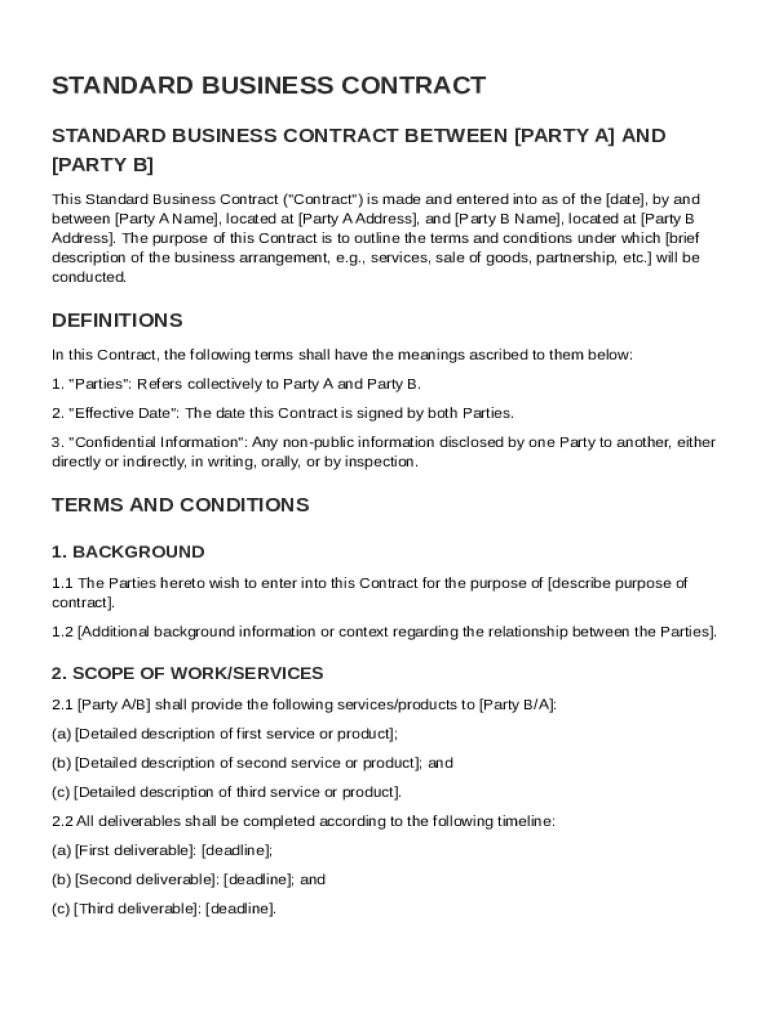
A Standard Business Contract Template is a vital legal document that establishes a business agreement between parties. This document should encompass several essential components to ensure clarity and legal enforceability:
- Definitions: This section sets out specific terms used throughout the contract to ensure mutual understanding and avoid ambiguity.
- Scope of Work: Explicitly details the tasks, milestones, or deliverables expected under the contract, including timelines and standards for completion.
- Compensation Details: Covers payment terms including amounts, methods, schedules, and any conditions related to financial transactions.
- Confidentiality Obligations: Includes clauses to safeguard sensitive information, outlining what constitutes confidential data and obligations for both parties.
- Indemnification Clauses: Protects parties from future claims or liabilities resulting from contractual obligations.
- Limitations of Liability: Specifies the maximum extent of liability each party would bear concerning potential breaches or damages.
- Governing Law and Dispute Resolution: Identifies the jurisdiction’s laws that will govern the contract and the agreed method for resolving disputes.
- Miscellaneous Provisions: Covers other relevant points such as amendments, assignment rights, and termination clauses.
Including these elements ensures a well-rounded and legally sound contract.
How to Use the Standard Business Contract Template
Using a Standard Business Contract Template effectively requires several steps to ensure the document aligns with your specific needs:
- Customization: Tailor the template to fit the unique aspects of the business arrangement.
- Consultation: Engage with legal professionals to review the template for compliance and sufficiency.
- Review and Negotiate: Each party should review the contract thoroughly, proposing adjustments where necessary.
- Finalization: Conclude with both parties agreeing upon and signing the final version.
- Storage: Securely store executed contracts for reference and in case of future disputes.
These measures maintain the relevance and enforceability of the agreement.
Who Typically Uses the Standard Business Contract Template
The Standard Business Contract Template is widely applicable across various industries and sectors:
- Small Business Owners: For establishing terms with vendors, clients, or partners.
- Corporations: To formalize internal and external business transactions.
- Entrepreneurs and Startups: To set clear terms and expectations during collaborations.
- Freelancers and Contractors: To define service provisions and payment with clients.
Each category benefits by having a structured approach to business dealings, minimizing the risk of misunderstandings.


Steps to Complete the Standard Business Contract Template
Filling out a Standard Business Contract Template involves comprehensive attention to detail:
- Gather Information: Collect all pertinent details from both parties, including identification and contact information.
- Detail Scope and Terms: Clearly define the work scope, compensation, performance timelines, and responsibilities.
- Incorporate Legal Terms: Ensure all legal obligations and protections are outlined, such as confidentiality and liability clauses.
- Review for Accuracy: Double-check for completeness and accuracy of information.
- Obtain Signatures: Acquire necessary signatures and dates from all involved parties to validate the contract.
Careful adherence to these steps ensures precision and mutual consent.
Examples of Using the Standard Business Contract Template
The Standard Business Contract Template can be applied in various real-world scenarios:
- Service Agreement: Used by a marketing firm to contract with clients for service deliverables.
- Vendor Agreement: Retail businesses employ it to secure consistent supply chains with distributors.
- Partnership Agreement: Two startups use it to formalize a collaboration resulting in shared resources and development efforts.
These examples demonstrate the contract’s versatility across different contexts.
Important Terms Related to Standard Business Contract Template
Understanding key terms related to the template is crucial for clarity and contract effectiveness:
- Parties: Refers to the individuals or entities entering into the contract.
- Breach: Describes a violation or failure to adhere to a contractual term.
- Consideration: The value exchanged between parties as part of the agreement.
- Force Majeure: A clause that relieves parties from obligations due to unforeseeable events.
Comprehensive familiarity with these terms aids in navigating and crafting the contract effectively.
Legal Use of the Standard Business Contract Template
Ensuring the legality of the Standard Business Contract Template involves:
- Compliance: Verifying that the contract complies with federal, state, and local regulations.
- Validity: Confirming that parties involved have the legal capacity to enter into an agreement.
- Enforcement: Understanding enforceability under relevant jurisdictions.
These legal considerations ensure the contract is sound and can be upheld in legal circumstances.
Versions or Alternatives to the Standard Business Contract Template
Several variations or alternatives to the standard template exist, providing customization aligned with different business contexts:
- Non-Disclosure Agreements (NDAs): Focused solely on protecting confidential information.
- Employment Contracts: Tailored to outline terms for employee and employer relationships.
- Lease Agreements: Specific to renting or leasing property or equipment.
Each alternative serves unique purposes depending on the requirements of the business relationship involved.