




Definition & Meaning
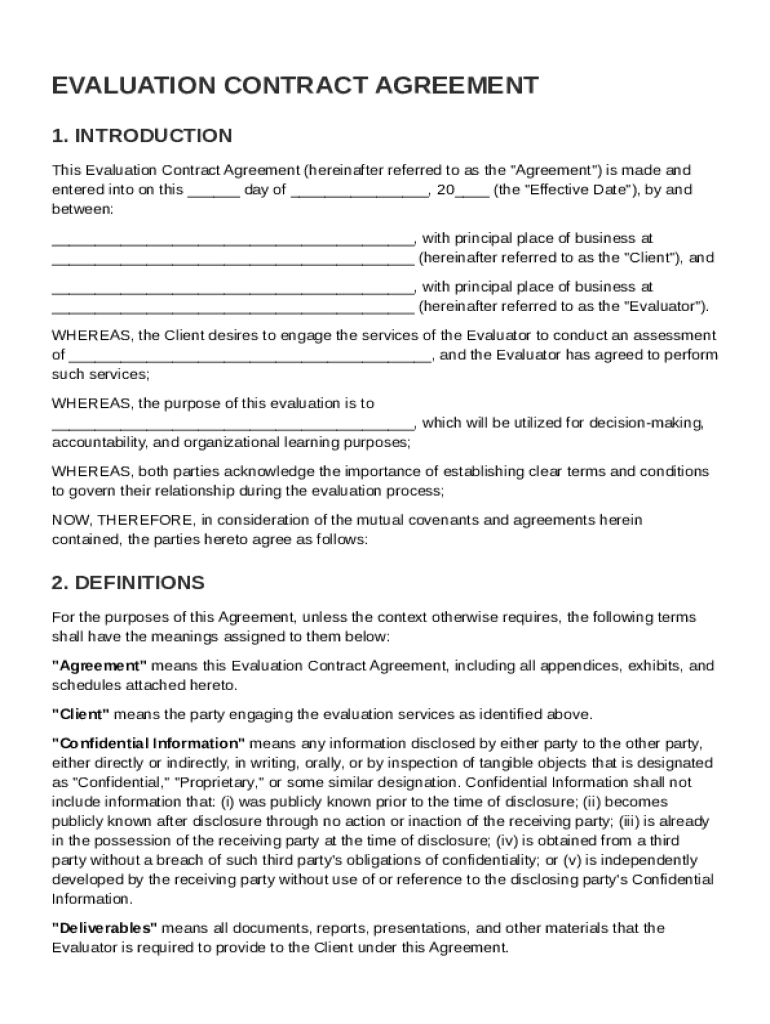
The Evaluation Contract Template serves as a structured agreement outlining the responsibilities, objectives, and expectations between two parties involved in an evaluation process, typically a Client and an Evaluator. It is designed to clarify the scope of work, objectives, deliverables, and terms of cooperation. This comprehensive template ensures both parties are aligned on the detailed aspects of the evaluation project, minimizing misunderstandings and setting clear boundaries.
Essential Components
- Parties Involved: Identifies and defines the Client and Evaluator along with their roles and contact information.
- Evaluation Scope: Details the specific areas, items, or processes to be evaluated.
- Objectives and Deliverables: Outlines the intended outcomes and specific deliverables expected from the evaluation.
Utility in Professional Settings
Organizations often use this template to formalize agreements in project assessments, ensuring accountability and transparency throughout the evaluation period.
How to Use the Evaluation Contract Template
Having a structured approach in deploying the Evaluation Contract Template can make the process efficient and effective in capturing all necessary details.
Step-by-step Instructions
- Understand the Template: Review each section to ensure you comprehend the standard terms and can tailor them appropriately.
- Customize the Details: Modify the template to fill in specific details related to the project, parties involved, and expectations.
- Review Legal Implications: Ensure the legal terms align with jurisdiction-specific requirements for enforceability.
Practical Tips
- Collaborative Edits: Use collaborative document platforms to allow multiple stakeholders to review and propose edits to the contract.
- Save and Backup: Keep digital backups in secure, encrypted storage for easy retrieval and record-keeping.
Key Elements of the Evaluation Contract Template
The contract is typically segmented into various key components that collectively form the comprehensive agreement.
Major Sections
- Roles and Responsibilities: Specifies tasks and duties each party is accountable for during the evaluation.
- Timeline and Milestones: Sets out clear deadlines for each stage of the evaluation process to prevent delays.
- Financial Terms: Includes the payment schedule, rates, and provisions for additional costs.
Additional Provisions
- Confidentiality Agreements: Ensures information shared during the evaluation is protected and used only for the intended purpose.
- Dispute Resolution: Establishes mechanisms for resolving any conflicts that arise regarding the contract terms.
Legal Use of the Evaluation Contract Template
Ensure the template is legally binding by aligning it with jurisdictional requirements and standard legal practices.
Legal Considerations
- Review by Legal Counsel: Have a lawyer review the contract to ensure all terms meet legal standards and protect your interests.
- Compliance with Regulations: Verify the contract's provisions adhere to local, state, and federal laws relevant to the evaluation scope.
Benefits of Legal Compliance
- Enforceability: A legally compliant contract is enforceable in court, providing security against breaches.
- Minimized Disputes: Clear legal terms reduce the likelihood of misunderstandings leading to legal disputes.
Who Typically Uses the Evaluation Contract Template
This template is versatile and used across various industries and organizational settings.

Common Users
- Consultants and Advisors: Engage clients with structured agreements that outline consultancy projects.
- Nonprofit Organizations: Utilize for grants, program evaluations, and audited reviews of operational practices.

Sector-Specific Applications
- Corporate Enterprises: Implement for internal audits, project evaluations, and vendor assessments.
- Educational Institutions: Use to establish partnerships for program reviews and academic evaluations.
State-Specific Rules for the Evaluation Contract Template
Contracts may need to be adapted to comply with specific state regulations that affect contract terms and conditions.
State-Level Considerations
- Governing Law Clause: Specify which state's laws will govern the contract to provide certainty in legal interpretations.
- State-Specific Clauses: Include any additional clauses required by state law, such as specific termination provisions or disclosure requirements.
Impact of Non-Compliance
Failure to adhere to state-specific rules can render the contract unenforceable or result in legal penalties.
Examples of Using the Evaluation Contract Template
Real-world applications illustrate the template’s versatility in structuring professional evaluations.
Case Studies
- Technology Company Evaluation: A tech firm used the template to formalize the assessment of upcoming software solutions conducted by an external evaluator, ensuring clear deliverables and IP rights.
- Healthcare Program Review: A nonprofit organization employed the template to outline roles and responsibilities in their program assessment by an independent consultant.
Outcome Benefits
These examples illustrate how using a structured template can streamline evaluation processes and enhance mutual understanding.
Versions or Alternatives to the Evaluation Contract Template
While the Evaluation Contract Template is robust, alternative forms or versions may be more suitable in specific circumstances.
Alternative Formats
- Memorandum of Understanding (MOU): Used when a less formal agreement is needed, without enforceable legal terms.
- Non-Disclosure Agreement (NDA): Complementary to the evaluation contract for handling sensitive information disclosures.
Considerations for Choosing Alternatives
- Project Complexity: Opt for the full template for intricate evaluations, while simpler projects might only require an MOU.
- Legality Needs: Confirm enforceability aligns with the intended collaboration and legal framework.