




01. Edit your joint commission environment of care checklist online
Type text, add images, blackout confidential details, add comments, highlights and more.

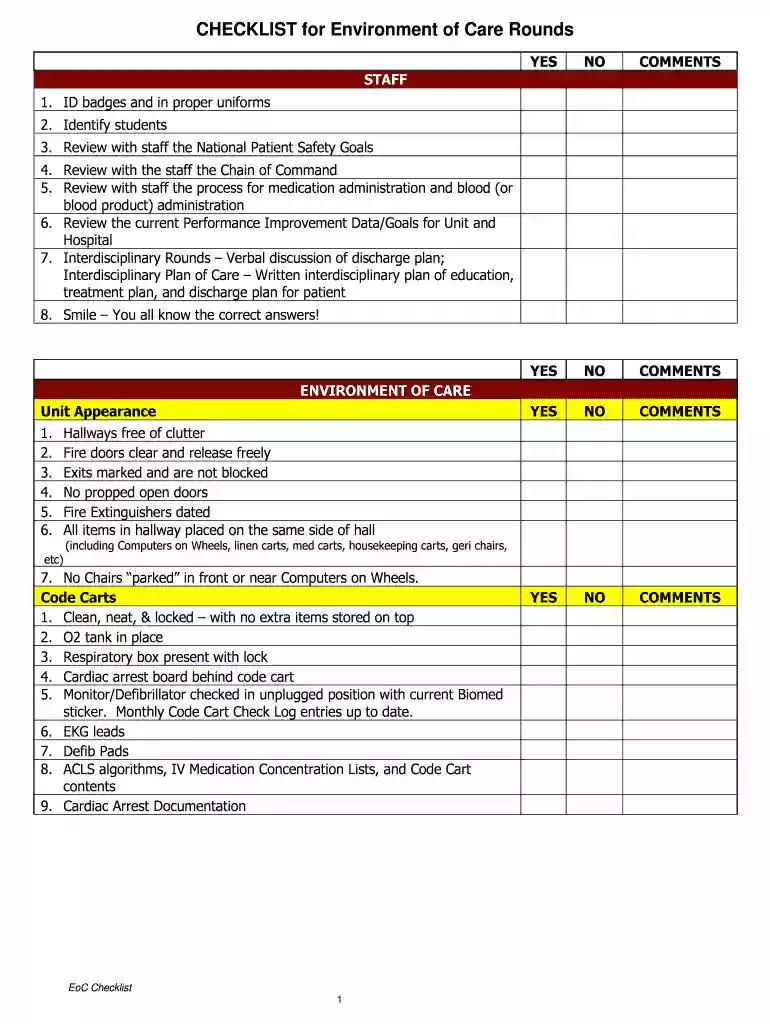
Type text, add images, blackout confidential details, add comments, highlights and more.

Draw your signature, type it, upload its image, or use your mobile device as a signature pad.

Send environment of care rounds template via email, link, or fax. You can also download it, export it or print it out.
The environment of care rounds template serves as a structured framework utilized within healthcare settings to evaluate and enhance the safety, quality, and compliance of the environment where patient care occurs. It is an essential tool that facilitates systematic observations related to various aspects of healthcare facilities, including patient rooms, nurses' stations, medication storage, and overall safety protocols.
This template is particularly relevant for staff involved in the upkeep and oversight of healthcare environments, providing a means to ensure adherence to standards set forth by regulatory bodies such as the Joint Commission. By utilizing this template, teams can thoroughly assess compliance with safety measures, cleanliness standards, and operational procedures, ultimately supporting a culture of safety and continuous improvement.
The environment of care rounds template includes several critical components designed to guide staff in conducting thorough inspections and evaluations. Key elements of the template might include:
By including these elements, the template provides comprehensive coverage of the environment of care and helps foster a culture where safety and quality are prioritized.
Using the environment of care rounds template involves a systematic and collaborative approach. Here is a step-by-step guide to effective implementation:
This structured method not only improves the quality of your care environment but also fosters ongoing dialogue about safety and quality improvements within the organization.
Familiarity with key terminology related to the environment of care rounds template is crucial for effective use. Important terms may include:
Understanding these terms can greatly enhance staff engagement in the rounds process and support meaningful discussions about care quality.
The environment of care rounds template is primarily utilized by various healthcare professionals who play a role in maintaining patient safety and environmental quality. Typical users include:
Engagement from this diverse group fosters a comprehensive approach to improving the hospital environment and ensuring continual quality improvement initiatives.


Implementing the environment of care rounds template can vary across different healthcare settings, but some common examples include:
These examples illustrate the practical application of the environment of care rounds template, promoting a proactive approach to maintaining and improving care environments.
We've got more versions of the joint commission environment of care checklist form. Select the right joint commission environment of care checklist version from the list and start editing it straight away!
| Versions | Form popularity | Fillable & printable |
|---|---|---|
| 2009 | 4.1 Satisfied (51 Votes) |
At DocHub, your data security is our priority. We follow HIPAA, SOC2, GDPR, and other standards, so you can work on your documents with confidence.
Aug 22, 2024 The Safety Officer will review the Environment of. Care Rounds Assessment Checklist and will report findings at the Safety Committee meetings.Read more
A streamlined inspection process with a flexible workflow using customized checklists. The safety-round team uses INSPECT on their mobile devices.Read more


