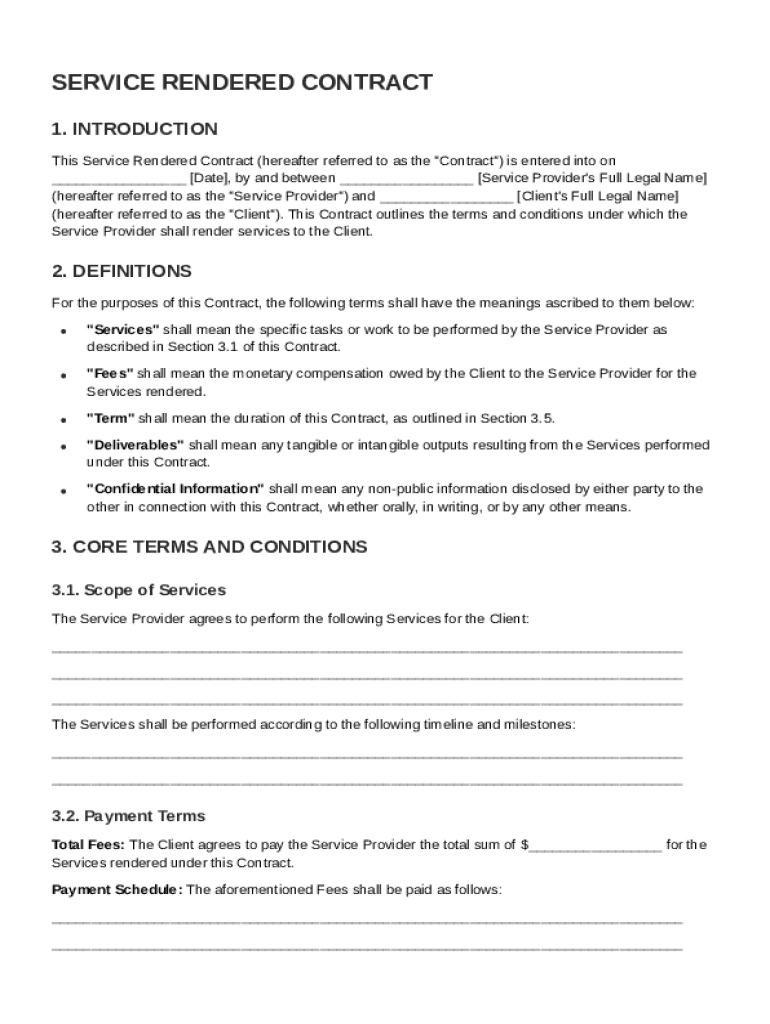







Definition & Meaning
The Service Rendered Contract Template defines the agreement between a service provider and a client, detailing the terms under which specific services are to be delivered. It establishes expectations by clearly outlining roles, responsibilities, scope, and conditions essential for both parties' satisfaction. This contract ensures both entities understand their duties, therefore minimizing disputes and protecting their legal interests.
Key Elements of the Service Rendered Contract Template
A Service Rendered Contract Template typically includes several critical elements:
- Scope of Services: Clearly describes the services to be performed, including any limitations or exclusions.
- Payment Terms: Specifies the pricing model, payment schedule, and penalties for late payments. It may include details about required deposits or milestones tied to payment.
- Responsibilities: Outlines the duties and obligations of both the service provider and the client, ensuring each party understands their role.
- Confidentiality Obligations: Ensures that any proprietary or sensitive information exchanged remains private and restricts unauthorized use.
- Termination Conditions: Defines scenarios where the contract can be terminated by either party, with or without cause.
- Indemnification and Liability: Specifies liability terms, including indemnification clauses that protect against certain losses or claims.
- Governing Law: Indicates which jurisdiction's laws will apply in the event of a dispute and outlines the mechanism for dispute resolution.
Steps to Complete the Service Rendered Contract Template
- Gather Necessary Information: Collect details on both parties involved, including names, addresses, and contact information.
- Define Services: Clearly describe the services, including objectives, deliverables, and any specific methodologies to be followed.
- Agree on Payment Terms: Specify the amount, payment method, due dates, and any conditions affecting financial transactions.
- Specify Confidentiality Terms: Outline any need for nondisclosure agreements or specific confidentiality clauses.
- Set Termination Guidelines: Define conditions and procedures for ending the contract early, ensuring clarity on potential outcomes for both parties.
- Negotiate Indemnity Clauses: Agree on terms related to indemnification and liability to cover unforeseen situations.
- Review Governing Laws: Ensure there's an understanding of the laws governing the contract, including conflict resolution processes.
- Final Review and Signatures: Have both parties review the completed contract, make any necessary amendments, and sign to formalize the agreement.
How to Use the Service Rendered Contract Template
Using the Service Rendered Contract Template involves customizing the document to fit specific needs:
- Tailor the Template: Adjust the template to your circumstances by incorporating unique terms or conditions pertinent to your situation.
- Consult Professionals: Consider seeking legal advice for complex contracts or when dealing with high-stakes arrangements.
- Ensure Compliance: Verify the template complies with relevant state or industry-specific regulations.
- Store Securely: Once signed, securely store the contract in both physical and digital formats for future reference and compliance.
Who Typically Uses the Service Rendered Contract Template
This template is commonly used by:
- Freelancers and Independent Contractors: Secure agreements for services delivered to clients across various industries.
- Small Business Owners: Establish formal agreements with service providers or vendors to protect business interests.
- Consulting Firms: Engage clients with clearly defined projects, often with tailored deliverables and schedules.
- Creative Professionals: such as graphic designers, photographers, and writers, clarify terms for creative projects.


Legal Use of the Service Rendered Contract Template
- Compliance with Laws: Ensure the contract adheres to pertinent federal, state, and local laws.
- ESIGN Act Compliance: Electronic signatures in the contract should comply with the Electronic Signatures in Global and National Commerce Act.
- Amendments: Allow for modifications to adapt to changing circumstances, clearly stating how and when changes can occur.
- Dispute Resolution: Include clauses for arbitration or mediation as alternatives to litigation to resolve disputes effectively.
Examples of Using the Service Rendered Contract Template
Real-world scenarios for utilizing the template include:
- Web Design Services: A web developer defines project stages, payments, deliverables, and timelines with a new client.
- Event Planning: An event planner outlines services, venue responsibilities, costs, and liability considerations for a wedding.
- Consulting Agreements: A business consultant formalizes a strategy project with a corporate client, specifying KPIs and payment intervals.
Digital vs. Paper Version
Advantages and considerations for each format include:
- Digital Version: Allows for easy editing, electronic signing, and secure, remote storage. Suitable for businesses with frequent contract modifications or distant clients.
- Paper Version: Preferred when physical signing is mandated or preferred, often providing tangible proof of agreement.
- Hybrid Use: Deploy both digital and paper versions for maximum flexibility, aligning with specific client or business requirements.