






Definition and Purpose of a Modeling Agreement Template
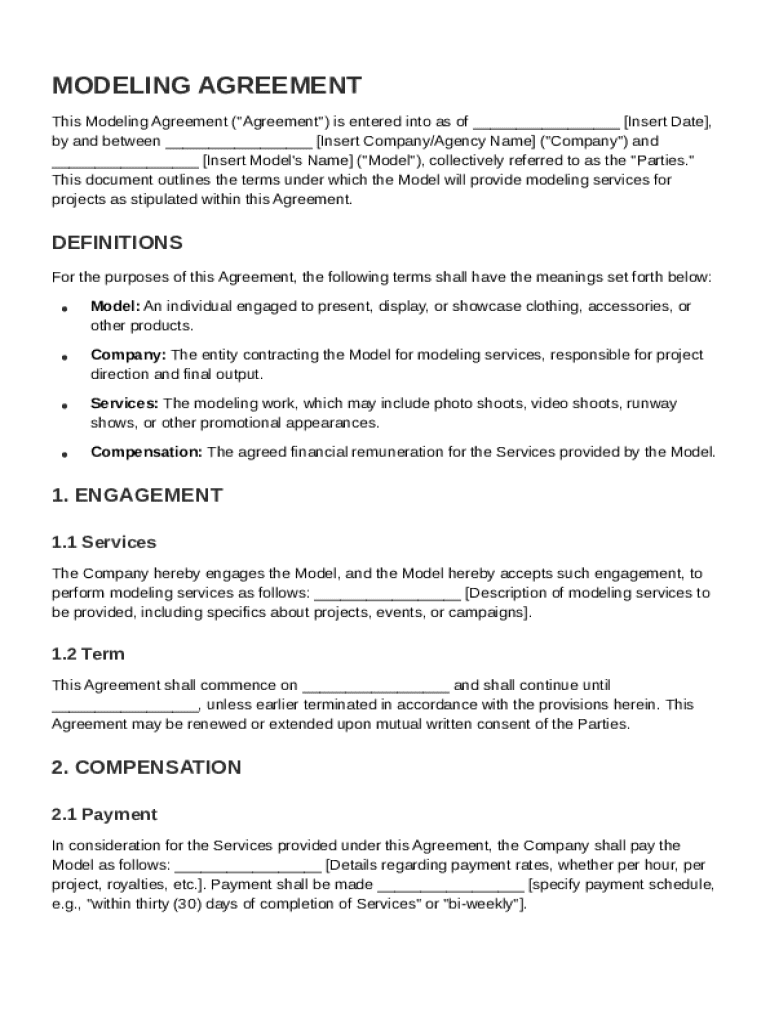
A Modeling Agreement Template is a standardized document that outlines the terms and conditions between a company, agency, or client and a model engaged in providing modeling services. It serves as a mutual agreement, ensuring clarity and setting expectations for both parties involved. The template includes various sections essential for protecting both the model's and the company's interests, avoiding misunderstandings or disputes as the professional relationship progresses.
Modeling agreements typically cover a wide range of stipulations, including the duration of services, types of modeling activities required, payment and compensation structure, and the rights and usage of the model's likeness. By using a template, both parties can ensure that such critical elements are uniformly addressed, promoting fair treatment and clear communication. The employment of such a template also simplifies the negotiation process, saving time and reducing legal ambiguities.
Key Elements of the Modeling Agreement Template
The main components of a Modeling Agreement Template are designed to capture the necessary legal and operational terms required for a comprehensive agreement between the parties involved. Key elements usually included are:
- Engagement Details: Specifies the nature of the modeling work, including location, duration, and specific requirements.
- Compensation Structure: Outlines how and when the model will be paid, including any bonuses or royalties.
- Rights and Usage: Details the extent to which the model's images can be used, along with any restrictions.
- Confidentiality Clauses: Protects the privacy and proprietary information of both parties.
- Termination Conditions: Describes how and when the contract can be terminated by either party.
- Indemnification Provisions: Ensures protection against specific legal liabilities.
- Governing Law: Indicates the jurisdiction under which the contract will be governed and interpreted.
Each of these sections is critical in protecting the rights and ensuring the liabilities are known and managed for both parties, thereby reducing the risk of disputes.
Steps to Complete the Modeling Agreement Template
Creating a modeling agreement involves precise steps to ensure all necessary details are thoroughly covered. Here’s a step-by-step guide to completing this form:
- Review the Template: Begin by reading the template thoroughly to understand each section's requirements and legal implications.
- Gather Required Information: This includes both parties' details, such as names, addresses, and contact information.
- Define the Engagement: Clearly explain the type of modeling work, including timeline and specific duties expected of the model.
- Set Compensation Terms: Detail the payment terms, including rates, payment schedule, and any additional compensation.
- Outline Usage Rights: Specify how the model’s work will be used and any restrictions on the usage.
- Include Confidentiality Clauses: Address how proprietary and private information will be handled.
- Finalize and Sign: Both parties should review the final document, make necessary revisions, and provide signatures to enforce the agreement.
Following these steps will ensure that both the model and the company are protected and in agreement on all terms.
Legal Use of the Modeling Agreement Template
The Modeling Agreement Template ensures compliance with legal standards governing modeling contracts and offers clear guidelines for resolving potential disputes. To legally enforce the agreement, both parties must clearly understand and consent to the terms outlined in the contract.
Legal use also involves adhering to intellectual property rights, ensuring that the usage of the model's likeness strictly follows the stipulations within the agreement. Compliance with regional laws and regulations is critical, particularly in cases involving minors or when the work is to be performed in various jurisdictions. Understanding these legal boundaries assures both parties that their commitments are valid and protect against potential legal complications.
State-Specific Rules for Modeling Agreements
State-specific rules can significantly affect the terms and execution of a Modeling Agreement. Various states in the U.S. may have unique regulations or laws impacting modeling contracts. For example, states like California have stringent labor laws and regulations governing contracts in the entertainment industry.
Key considerations often include:
- Minimum Wage Laws: Complying with state-specific labor wage laws.
- Right to Work: Understanding employee rights and permissible contract clauses.
- Guardian Consents for Minors: Required consent for models who are minors.
- Usage Rights: States may have differing laws on the usage rights for photographs and digital content.
Parties entering into a modeling agreement should be aware of these variations and consider consulting with legal professionals familiar with the relevant state laws to ensure full compliance.
Examples of Using the Modeling Agreement Template
Modeling agreements are used across a spectrum of scenarios within the modeling industry. Here are some typical use cases:
- Fashion Shows: Where models agree to participate in specific events promoting clothing lines.
- Advertising Campaigns: Involving the use of model images for promotional material in print and digital media.
- Product Endorsements: Where models are engaged to represent products or brands in various media.
- Artistic Projects: Including photography or video projects where the model’s appearance is a central focus.
Each scenario involves specific considerations detailed within the agreement, addressing remuneration, usage rights, and specific obligations of the parties involved. Understanding the context and the specific requirements of each modeling assignment contributes to the creation of a more precise and meaningful agreement.
Who Typically Uses the Modeling Agreement Template
The Modeling Agreement Template is primarily used by professionals within industries related to fashion, entertainment, and advertising. Typical users include:
- Modeling Agencies: These organizations draft agreements to formalize contracts between their represented models and third parties such as fashion houses or media agencies.
- Brands and Advertisers: Companies engaging models for campaigns use these templates to protect brand integrity and ensure proper usage of marketing materials.
- Independent Models: Freelance models use these agreements to define and protect their rights when directly engaging with clients for assignments.
- Legal Advisors: Attorneys specializing in commercial and contract law use these templates as a basis for advising clients on contractual negotiations and compliance.
Each of these groups benefits from a clear, robust agreement template to guide professional engagements while protecting their interests and fulfilling obligations effectively.


Form Variants and Alternatives to the Modeling Agreement Template
While a standard Modeling Agreement Template is comprehensive for most needs, there are variations and situations warranting modifications or alternative documents. Some alternatives include:
- Short-Term Engagement Contracts: For brief assignments such as a single-day photo shoot.
- Exclusivity Agreements: When a model agrees to represent only one brand in a specific product category.
- Non-Disclosure Agreements (NDAs): Separate legal documents may be used to cover confidentiality where sensitive information is involved.
- Minor Modeling Contracts: Special agreements tailored for models under the age of 18, incorporating guardian consents.
These variants reflect the versatility needed when addressing specific types of modeling engagements, ensuring both legal compliance and the satisfaction of specific project needs.