
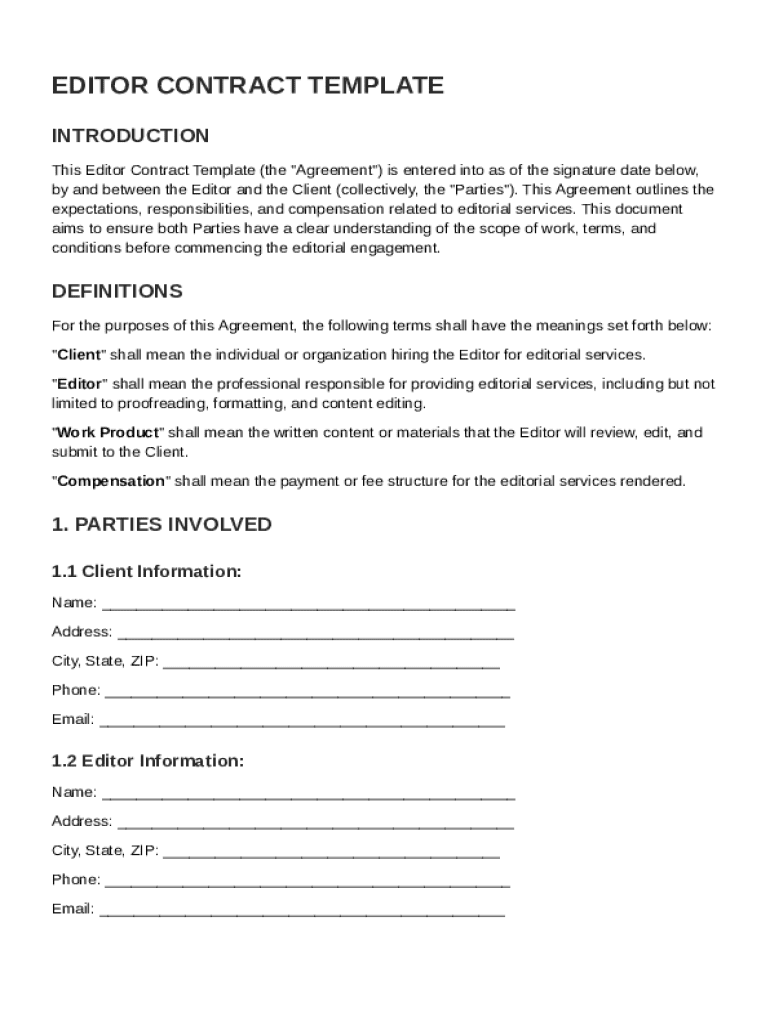







Understanding the Editor Contract Template
An Editor Contract Template is a legally binding document that establishes the relationship between an editor and a client, defining the terms under which editorial services are provided. It ensures mutual understanding and clarity before work commences. Key elements often included in this template cover scope of work, compensation, timelines, revision policies, ownership rights, confidentiality, termination conditions, and governing law.
Key Elements of the Editor Contract Template
-
Scope of Work: Details the tasks and responsibilities of the editor, specifying the type of content to be edited, the style or format required, and any additional services such as fact-checking or formatting. This section ensures both parties are aligned on what is expected.
-
Compensation Structure: Outlines the payment terms, including the amount, frequency, and method of payment. This could involve hourly rates, flat fees, or per-project payments. Additionally, it might specify terms for additional expenses incurred during the editing process.
-
Timelines and Deliverables: Specifies when the editorial work is to be completed and delivered. This section includes deadlines for initial drafts, revisions, and final delivery, helping to manage expectations and align schedules.
-
Revision Policies: Clarifies the number of revisions included within the agreed price, and how additional revisions or changes will be handled in terms of timing and costs. This can prevent misunderstandings and ensure the client receives the desired outcome.
-
Ownership Rights of the Work Product: Specifies who retains ownership of the edited work post-completion, addressing the transfer of rights upon final payment. It is crucial for both parties to understand who can use, publish, or modify the finished product.
-
Confidentiality Obligations: Ensures that any sensitive information shared during the editorial process remains confidential. This section often includes clauses that prohibit the sharing of unpublished work or proprietary information.
-
Termination Conditions: Details the circumstances under which the contract can be terminated by either party, including breach of terms or non-performance. It may also include a notice period necessary before termination.
-
Governing Law and Jurisdiction: States the legal framework under which the contract will be interpreted, often including the state laws that apply and the jurisdiction for any legal disputes.
How to Use the Editor Contract Template
To effectively use the Editor Contract Template, follow these steps:
-
Review and Customize: Begin by thoroughly reviewing the template to ensure it suits your specific needs. Customize sections to reflect the nature of the engagement, such as scope, timelines, and compensation.
-
Consult Legal Advice: Especially for complex arrangements, consider consulting with a legal expert to ensure all terms are fair, comprehensive, and legally sound.
-
Negotiate Terms: Discuss and negotiate terms with the other party to reach a mutual agreement. Ensure that all alterations to the template are documented and agreed upon by both parties.
-
Execute the Contract: Once finalized, both parties should sign the document. Consider collecting signatures electronically for convenience and security.
-
Maintain Records: Keep a signed copy of the contract for future reference, particularly in case of disputes or audits.
Who Typically Uses the Editor Contract Template
The Editor Contract Template is used by:
- Freelance Editors: To formalize engagements with clients and ensure payment for services rendered.
- Publishing Companies: To hire external editors for specific projects or publications.
- Media Organizations: When contracting editors for content creation, editing, and proofreading.
- Businesses: For engaging editors to refine marketing materials, reports, and other corporate documents.
- Authors: Who hire editing services to polish manuscripts before submission to publishers.


Legal Use of the Editor Contract Template
The Editor Contract Template is structured to comply with applicable laws, including those relating to intellectual property, contracts, and confidentiality. It should include clauses that ensure legal compliance across various jurisdictions, emphasizing the importance of explicit terms regarding ownership and the confidentiality of proprietary content.
Examples of Using the Editor Contract Template
Consider a freelance editor hired by a publishing house to edit a series of articles. The contract could define deadlines for each stage, specify payment per article, and outline the number of revisions included. By using the template, both parties avoid potential disputes over deadlines or scope, ensuring a smooth working relationship.
State-Specific Rules for the Editor Contract Template
While this template provides a general framework, it's essential to tailor it to conform to state-specific rules and regulations. For instance, laws related to electronic signatures and contract enforceability may vary by state. Checking these local regulations ensures the contract remains valid under the intended jurisdiction.




