Definition & Meaning
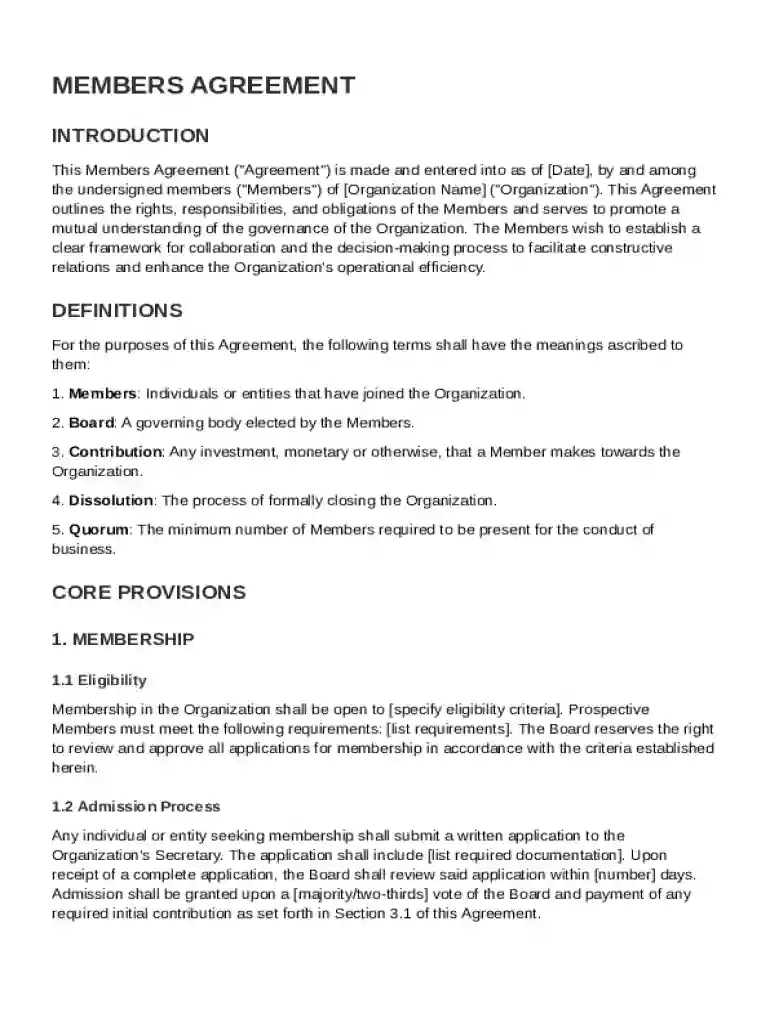
A Members Agreement Template is a foundational document used by organizations to delineate the rights and responsibilities of their members. It sets forth the governance structure, eligibility criteria, and processes related to membership admission. This agreement is essential for ensuring clear communication among members and promoting collaboration within the organization. The template establishes guidelines for financial contributions, confidentiality, termination of membership, and indemnification, among other critical elements.
Key Aspects of the Agreement
- Governance Structure: Defines hierarchical roles and decision-making processes.
- Eligibility Criteria: Lists the qualifications necessary for potential members.
- Member Rights and Obligations: Identifies what members can expect and what is expected of them.
Key Elements of the Members Agreement Template
This template incorporates various elements that are crucial for the smooth functioning and legal compliance of an organization. Each section of the agreement plays a vital role in defining the relationships and responsibilities within the group.
Components of the Agreement
- Financial Contributions: Details the dues or fees members are expected to pay.
- Confidentiality: Establishes protocols to protect sensitive information.
- Dispute Resolution: Outlines methods for resolving conflicts among members.
- Amendment Procedures: Provides guidance on how the agreement can be modified.
Practical Examples
- Indemnification Clauses: Protects members from liabilities incurred during official duties.
- Termination of Membership: Specifies conditions under which a member may be expelled.
How to Use the Members Agreement Template
Efficient utilization of the Members Agreement Template involves several steps that ensure all aspects of the organization's operations are addressed. It serves as a comprehensive guide for creating a document tailored to an organization's specific needs.
Step-by-Step Usage
- Identify Relevant Sections: Review the template to select applicable sections for your organization.
- Gather Information: Collect necessary details from all potential members.
- Customize the Template: Adjust clauses and sections to fit the particular requirements of your organization.
- Review Legally: Have the document reviewed by a legal professional to ensure compliance.
Additional Tips
- Make sure to outline specific roles for each type of membership.
- Use clear language to avoid ambiguities.
Steps to Complete the Members Agreement Template
Completing the Members Agreement Template requires careful attention to detail and collaboration among potential members. Each step ensures the agreement is all-inclusive and legally sound.
Process Overview
- Draft Initial Version: Using the template as a guide, draft the first version of the agreement.
- Consult Stakeholders: Discuss the draft with key members to gain input.
- Revise and Edit: Make revisions based on feedback to align with collective goals.
- Finalize Document: Complete the final version and circulate for signatures.
Comprehensive Checklist
- Verify all eligibility criteria are clear.
- Confirm that financial obligations are accurately detailed.
- Ensure that all legal terminologies comply with state laws.
Who Typically Uses the Members Agreement Template
This template is widely used across various organizational and business types, particularly those requiring clear membership and governance structures.

Common Users
- Non-profit Organizations: To formalize the membership process and establish governing rules.
- Clubs and Associations: For detailing member responsibilities and benefits.
- Corporations and LLCs: To outline member roles in business operations.
Real-World Scenarios
- A non-profit organization uses the template to outline member roles and contributions.
- An LLC employs the agreement to define equity stakes and voting rights among partners.
Eligibility Criteria
Defining who is eligible to become a member is a fundamental part of the Members Agreement Template. Clear criteria help streamline the admission process and avoid conflicts.

Essential Criteria Examples
- Experience Level: Certain qualifications such as years of experience in the field.
- Financial Commitment: Ability to meet membership dues or contribution requirements.
- Nondisclosure Agreements: Willingness to agree to confidentiality as part of membership.
Variations and Exceptions
- Membership can vary based on the organization’s mission:
- Advocacy groups might prioritize passion and willingness to volunteer.
- Business partnerships may emphasize financial capacity and industry expertise.
Legal Use of the Members Agreement Template
The Members Agreement serves a crucial legal function by providing a structured outline of the rights and obligations of members within an organization.
Legal Framework
- ESIGN Act: Electronic signatures are recognized and enforceable.
- Contract Law: The agreement defines legally binding terms to which all members must adhere.
Important Legal Considerations
- It is critical to ensure clauses do not conflict with federal or state laws.
- Litigation can arise from poorly defined terms; legal review is recommended.
State-Specific Rules for the Members Agreement Template
While the Members Agreement Template serves as a general framework, state laws and requirements can affect its implementation. Understanding these differences is essential for compliance and effective governance.
Key Considerations by State
- Membership Termination Rights: Varies in terms of notice period and grounds for removal.
- Non-Disclosure Agreements: State laws dictate the enforceability of confidentiality clauses.
- Dispute Resolution: Some states may require specific mediation or arbitration procedures.
Examples of State Variations
- California: Stricter regulations on confidentiality and member rights.
- New York: May have different financial disclosure requirements for members.
This comprehensive breakdown illustrates not only the functional and decision-making capacity of the Members Agreement Template but also its versatility across different organizational contexts and legal landscapes.