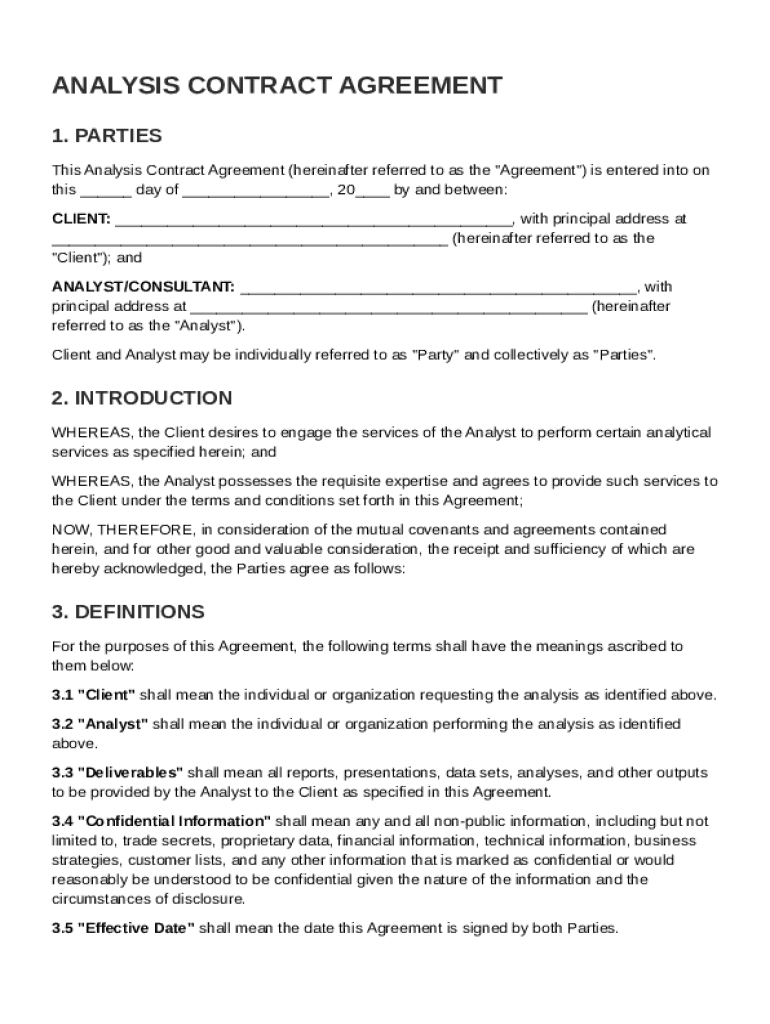







Definition and Meaning of the Analysis Contract Template
The Analysis Contract Template is a structured document designed to outline the terms and conditions for analytical services between a client and an analyst or consultant. This template sets out the scope of work, establishes roles and responsibilities, and defines key terms to ensure that both parties have a clear understanding of their commitments. It serves as a foundational document to protect the interests of both parties by clearly delineating the expectations and deliverables associated with the analytical engagement.
The template typically includes sections that address payment terms, confidentiality obligations, intellectual property rights, and termination conditions. It provides a comprehensive framework that aids in establishing a mutually beneficial relationship, offering both legal protection and clarity regarding the tasks to be performed. This contract is particularly useful in formalizing the professional relationship between an analyst and a client, ensuring that all parties are aligned in their objectives and responsibilities.
Key Elements of the Analysis Contract Template
Several fundamental components make up the Analysis Contract Template. Understanding these elements helps in tailoring the template to meet specific needs:
-
Parties Involved: Clearly identifies the client and the analyst or consultant. This section includes full legal names and contact information.
-
Scope of Work: Details the specific analytical services to be provided, including methodologies and deliverables.
-
Roles and Responsibilities: Defines each party's duties to ensure accountability throughout the project.
-
Payment Terms: Outlines the financial agreement, such as fees, payment schedules, and any penalties for late payment.
-
Confidentiality: Establishes how sensitive information shared between parties will be protected.
-
Intellectual Property: Clarifies ownership rights of any work products or findings from the analysis.
-
Termination Conditions: Specifies how the contract can be terminated by either party, including any notice requirements or conditions.
-
Limitation of Liability: Limits the extent of liability for each party in cases of disputes or negligence.
These elements serve as the backbone of an Analysis Contract Template, ensuring that all critical aspects of the collaboration are addressed.
Steps to Complete the Analysis Contract Template
Completing an Analysis Contract Template requires careful attention to detail and collaboration between the involved parties. Here are the steps to follow:
-
Review Template Structure: Begin by familiarizing yourself with the template and its sections to understand what information is needed.
-
Input Information: Enter relevant details for each section, including identifying both parties, defining the scope of work, and listing any specific deliverables.
-
Negotiate Terms: Collaborate with the other party to agree on payment terms, confidentiality clauses, and intellectual property rights.
-
Draft Roles and Responsibilities: Clearly define the duties and responsibilities of each party to avoid misunderstandings.
-
Establish Termination and Liability: Finalize the conditions under which the contract can be terminated and any limitations on liability.
-
Review and Revise: Thoroughly review the entire contract with the other party to ensure accuracy and comprehensiveness.
-
Sign and Execute: Once both parties agree to the terms, sign the document and retain copies for future reference.
Who Typically Uses the Analysis Contract Template
The Analysis Contract Template is utilized by a range of professionals and organizations that require analytical services. Here are some common users:
-
Consultants: Independent analysts or consultancy firms that provide specialized analytical services in fields such as data science, financial analysis, market research, or business intelligence.
-
Businesses: Companies seeking expert analysis to support strategic decision-making, improve operations, or enter new markets.
-
Non-Profit Organizations: Entities interested in assessing program impacts, optimizing resource allocation, or conducting feasibility studies.
-
Government Agencies: Departments requiring in-depth analysis to inform policy decisions or evaluate public programs.
By using this template, these users can ensure clear communication and legally binding agreements with their analysts.


Legal Use of the Analysis Contract Template
The legal application of the Analysis Contract Template involves several critical considerations to ensure compliance and enforceability:
-
Jurisdiction Selection: Specify the legal jurisdiction under which the contract will be governed. This is crucial in resolving any potential disputes.
-
Compliance with Regulations: Ensure that all contract terms comply with relevant laws and industry regulations.
-
Enforceability: Clearly stated terms that align with legal standards enhance the contract's enforceability in case of a breach.
-
Signatory Authorization: Verify that all signatories have the legal authority to enter into the agreement on behalf of their respective parties.
Adhering to these legal considerations helps protect both parties and adds credibility to the contractual agreement. Legal counsel can be sought to provide guidance in drafting or reviewing the contract.
Important Terms Related to the Analysis Contract Template
Understanding specific terminology used within the Analysis Contract Template is essential for clarity and precision:
-
Deliverables: Defined outputs that the analyst is expected to provide as part of the service, such as reports, data sets, or presentations.
-
Confidential Information: Any sensitive data shared between parties that must be protected from unauthorized disclosure.
-
Force Majeure: A clause that releases parties from liability or obligations in the event of unforeseen circumstances, such as natural disasters or acts of war.
-
Non-Disclosure Agreement (NDA): A legal agreement that prevents the sharing of proprietary or sensitive information.
-
Indemnification: A provision that requires one party to compensate the other for any harm or losses resulting from third-party claims related to the contract's execution.
These terms, among others, aid in defining the contract's obligations and limits, providing a clear framework for both the client and the analyst.
Examples of Using the Analysis Contract Template
To illustrate the practical use of the Analysis Contract Template, consider the following scenarios:
-
A marketing firm hires a data analyst to assess the effectiveness of a new advertising campaign. The contract specifies the data to be analyzed, the timeline for the project, and the format of the deliverables, such as a presentation to the firm's executive team.
-
A tech company works with a financial consultant to analyze its fiscal strategy. The contract outlines the scope, including a review of budgets, forecasting, and recommendations for cost-saving measures.
These examples showcase the versatility and necessity of an Analysis Contract Template in various industries, ensuring roles and expectations are clearly defined.
Software Compatibility with Analysis Contract Template
Modern-day contracts often require electronic management and execution. The Analysis Contract Template benefits from software compatibility with platforms that can streamline these processes:
-
DocHub: Enhance document workflows with tools for editing, signing, and collaborating on analysis contracts using both desktop and mobile browsers.
-
Integration with Google Workspace: Allows for the seamless importation and exportation of contracts via Google Drive for efficient document management.
-
Cloud Storage Platforms: Compatibility with services like Dropbox and OneDrive ensures easy storage and retrieval of contract documents.
-
Electronic Signature Solutions: Platforms supporting e-signatures simplify contractual sign-off processes by providing legally binding options for digital signing.
These tools ensure that the contract template is versatile and can be efficiently utilized in digital environments, accommodating remote collaborations and simplifying document handling processes.