





Definition and Meaning
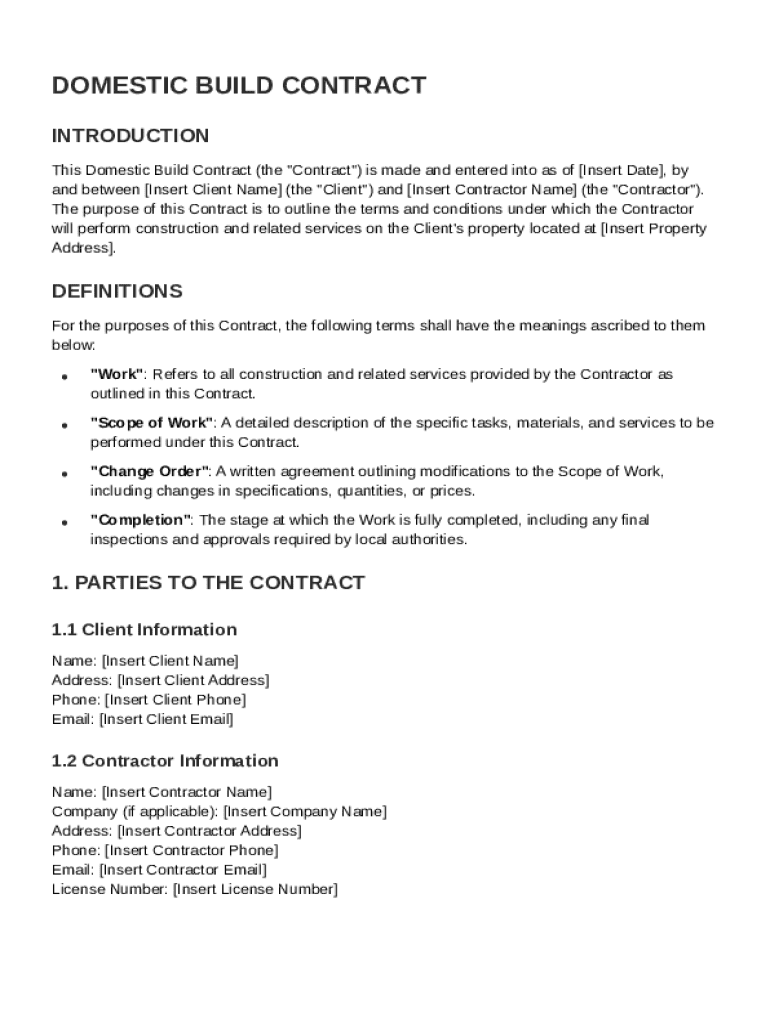
A Domestic Build Contract Template is a structured agreement used between a client and a contractor to outline the terms and conditions of a construction project on residential property. This document details the scope of work, payment terms, roles and responsibilities, warranties, insurance stipulations, dispute resolution processes, and termination conditions. Designed to promote clarity and mutual understanding, this contract ensures all parties are aware of their obligations and rights throughout the project duration. It serves as a legal framework guiding project execution and minimizing potential conflicts.
Key Elements of the Domestic Build Contract Template
The Domestic Build Contract Template encompasses several crucial elements relevant to construction agreements:
-
Scope of Work: Clearly defines the tasks the contractor will perform, including detailed descriptions of each phase of construction. This section may also specify any materials or designs to be used and standards to be met.
-
Payment Terms: Outlines the payment schedule, amounts, milestones, and methods. It may include provisions for adjustments, contingencies, or penalties for late payments.
-
Responsibilities and Obligations: Details the responsibilities of both the client and the contractor, including project management duties, site access, and timelines. It often specifies the party responsible for obtaining necessary permits and approvals.
-
Insurance and Liability: Specifies insurance coverage requirements for both parties, protecting against liabilities such as property damage, worker injuries, or unforeseen incidents.
-
Dispute Resolution: Describes the processes for addressing disagreements, including negotiation, mediation, or litigation, and the jurisdiction under which disputes will be settled.
-
Termination Conditions: Explains the circumstances under which the contract can be terminated, including default conditions, breaches, or mutual consent.
Steps to Complete the Domestic Build Contract Template
Completing the Domestic Build Contract Template involves several detailed steps:
-
Gather Necessary Information: This includes contact details of both parties, project location, and specifics regarding the construction work to be performed.
-
Define the Scope of Work: Collaboratively develop a detailed project outline with the contractor, specifying tasks, materials, and project phases.
-
Agree on Payment Terms: Determine a mutually acceptable payment schedule, detailing timing and amounts. Include any terms for adjustments or penalties.
-
Assign Responsibilities: Clarify each party's roles and duties, including the procurement of permits, site access, and daily project monitoring responsibilities.
-
Review Insurance Requirements: Secure and document appropriate insurance coverage, ensuring it aligns with the contract terms regarding liability and damage protection.
-
Settle Dispute Resolution Methods: Agree upon dispute resolution procedures, from informal negotiations to formal mediation or legal action.
-
Outline Termination Clauses: Establish conditions under which the contract may be prematurely ended, ensuring provisions for fair notice and cost recovery.
-
Final Review and Signatures: Conduct a thorough review to ensure accuracy and mutual understanding before signing.
Important Terms Related to Domestic Build Contract Template
Understanding key terms is vital when using a Domestic Build Contract Template:
-
Force Majeure: Refers to unforeseeable circumstances that prevent participants from fulfilling the contract, such as natural disasters.
-
Substantial Completion: Marks the stage when the work is sufficiently complete according to contract requirements, enabling occupancy.
-
Retainage: A portion of the agreed-upon contract price withheld until project completion to ensure contractor performance.
-
Punch List: A document noting incomplete or unsatisfactory items that must be resolved before final payment.
-
Change Order: A written amendment to the contract altering the scope, terms, or timeline, often resulting from unforeseen project developments.
Legal Use of the Domestic Build Contract Template
The legal use of the Domestic Build Contract Template is governed by state-specific construction laws and regulations:
-
Enforceability: To be legally binding, the contract must include clear terms, conditions, and the consent of both parties.
-
Compliance with Local Laws: Construction contracts must adhere to federal and state regulations, involving zoning laws, building codes, and permit requirements.
-
Conflict of Laws: The contract must specify the jurisdiction when conflicts arise, influencing the resolution process and applicable legal standards.
State-Specific Rules for the Domestic Build Contract Template
State-specific variations play a critical role in how the Domestic Build Contract Template is utilized:
-
Licensing Requirements: Contractors may need specific state licenses based on the project scope and nature.
-
Permit Protocols: States have distinct procedures and requirements for obtaining necessary building permits, affecting project timelines.
-
Lien Laws: Protects contractors’ payment rights through mechanic’s liens, differing by state in terms of filing requirements and enforcement.
Who Typically Uses the Domestic Build Contract Template
The primary users of a Domestic Build Contract Template include:
-
Homeowners: Individuals embarking on new builds or significant renovations, ensuring clarity and protection throughout the project.
-
Contractors: Building professionals seeking to formalize agreements with clients, mitigating risks and ensuring project-specific standards.
-
Lawyers: Legal advisors preparing or reviewing contract agreements on behalf of clients, ensuring compliance with legal and regulatory requirements.


Examples of Using the Domestic Build Contract Template
Real-world examples illustrate how the Domestic Build Contract Template is employed:
-
Residential Renovation: Homeowners planning a kitchen remodel use the template to contract with a local builder, detailing deliverables and payment schedules.
-
New Home Construction: A family securing a contractor for a new house project utilizes the template to outline timelines, milestones, and material selections.
-
Complex Additions: A property owner expanding their home adds clauses to the template for phased construction, accommodating ongoing occupancy and habitation needs.
In all cases, the Domestic Build Contract Template provides a structured and legally binding framework that facilitates clear communication, agreement, and execution of construction projects.