Definition and Meaning
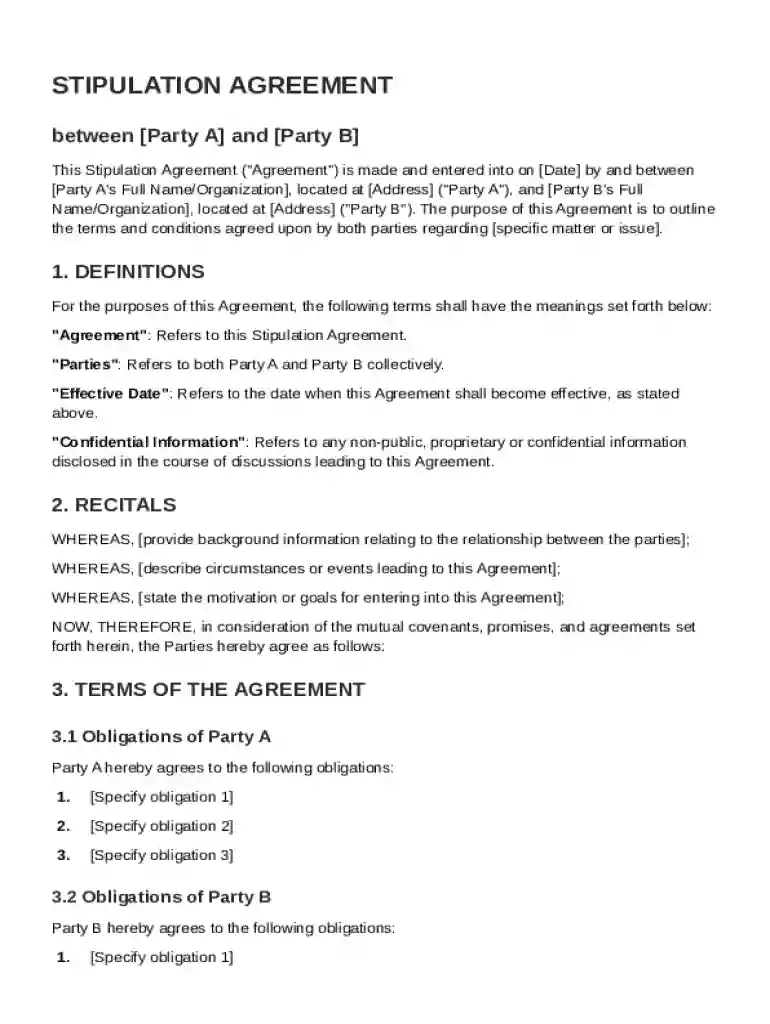
A Stipulation Agreement Template is a legal document used to formalize the terms and conditions agreed upon by two or more parties concerning a particular matter. This type of agreement is often used to avoid litigation by ensuring all parties are on the same page regarding their rights and obligations. It typically includes essential components such as definitions of key terms, obligations of each party, timelines for performance, and methods for dispute resolution. By using a stipulation agreement, involved parties aim to clarify responsibilities, reduce misunderstandings, and establish a framework for compliance and enforcement.
Key Elements of the Stipulation Agreement Template
The key elements of a Stipulation Agreement Template comprise various sections integral to the document's effectiveness and legality:
- Definitions: Specifies the meaning of terms used throughout the agreement to ensure clarity.
- Obligations: Details each party's duties and responsibilities, including specific actions and timelines for completion.
- Confidentiality: Outlines any confidentiality requirements and obligations to prevent unauthorized disclosure of sensitive information.
- Dispute Resolution: Provides methods for resolving potential conflicts, often including mediation or arbitration clauses.
- Termination Conditions: Lists the circumstances under which the agreement may be legitimately terminated by any party.
- Miscellaneous Provisions: Includes any additional clauses that address scenarios not covered elsewhere in the agreement, such as amendments and notices.
Steps to Complete the Stipulation Agreement Template
- Review the Template: Begin by thoroughly reading the entire template to understand its structure and the sections that need attention.
- Fill in Party Details: Enter the names and addresses of all parties involved in the agreement.
- Define Terms and Conditions: Clearly state the agreed-upon terms, duties, and responsibilities of each party, ensuring all parties reach a mutual understanding.
- Set Timelines and Milestones: Establish specific deadlines for the performance of obligations and any critical milestones that need to be achieved.
- Specify Confidentiality Requirements: If necessary, outline any confidentiality provisions to safeguard proprietary information.
- Include Dispute Resolution Methods: Choose and insert the preferred method for resolving disputes, making sure all parties agree on this approach.
- Finalize the Document: Once all sections are completed, review the document for accuracy, consistency, and completeness before signing.
Who Typically Uses the Stipulation Agreement Template
Various entities and individuals utilize the Stipulation Agreement Template for different purposes:

- Legal Professionals: Lawyers and legal teams often prepare these agreements during the course of negotiations to ensure all parties formally agree on terms.
- Business Entities: Corporations, partnerships, and LLCs may use this template to resolve business disputes without resorting to litigation.
- Individual Parties: Individuals involved in legal or contractual arrangements, such as property disputes or family law matters, can benefit from clarity provided by such agreements.
Legal Use of the Stipulation Agreement Template
Stipulation agreements are primarily used in legal contexts to:
- Formalize Settlements: Legally bind parties to the terms agreed upon to settle disputes.
- Facilitate Court Procedures: Provide clarity and agreement on certain procedural matters during a litigation process.
- Prevent Litigation: As a preemptive measure to settle differences outside the courtroom and reduce legal expenses.
The template ensures accurate representation of the agreed terms and adherence to the law, making these agreements enforceable by the courts.
Examples of Using the Stipulation Agreement Template
Stipulation agreements can be applied in various scenarios, such as:
- Business Agreements: Two companies agree on terms for a merger or joint venture, using the template to ensure all operational and financial aspects are documented.
- Family Law: In divorce proceedings, parties may use a stipulation agreement to agree on child custody arrangements or division of assets.
- Real Estate: Parties involved in a property dispute can use the agreement to formalize a settlement on boundary adjustments or zoning issues.
Important Terms Related to the Stipulation Agreement Template
Understanding key terminology is crucial for effectively using a stipulation agreement:
- Breach: The violation or non-performance of a stipulated term within the agreement.
- Enforcement: Legal measures taken to ensure compliance with the agreement terms.
- Amendment: Official changes or additions made to an existing agreement, usually requiring consent from all parties.
Software Compatibility
Stipulation Agreement Templates can be managed efficiently using document management software such as DocHub. The platform allows users to:
- Edit and Annotate: Modify text, insert images, and make notes directly on the document.
- Share and Collaborate: Facilitate input from multiple parties, set permissions, and synchronize changes in real-time.
- Sign Electronically: Use legally binding electronic signatures to finalize the agreement, streamlining the execution process.
Such software tools enhance the ease of creating, managing, and sharing agreements efficiently and securely.
State-Specific Rules for the Stipulation Agreement Template
While stipulation agreements are standardized in many respects, some rules or practices might vary by state:
- Statutory Requirements: Certain states may have specific statutory rules that must be complied with when drafting a stipulation agreement.
- Jurisdictional Clauses: A stipulation agreement might need to specify which state's laws govern the agreement for clarity and enforcement.
- Filing Requirements: Some states may require stipulation agreements to be filed with the court or in other legal or administrative records.
Being aware of these state-specific considerations helps ensure that the agreement is both valid and enforceable across different jurisdictions.