
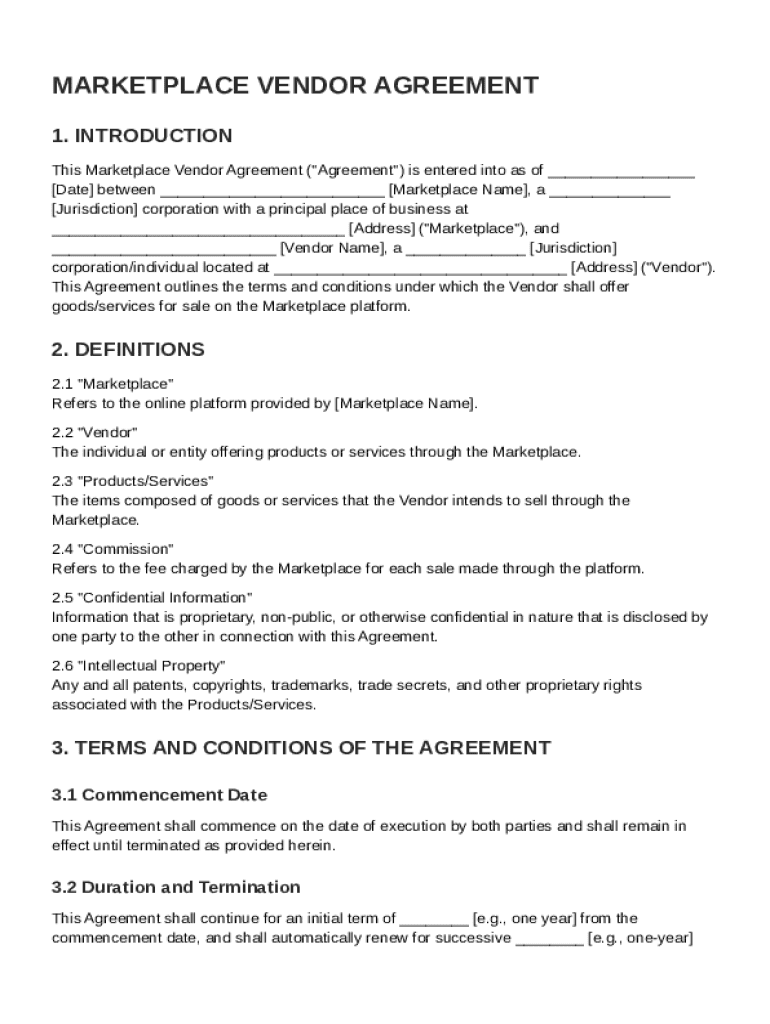







Definition and Scope of the Marketplace Vendor Agreement Template
The Marketplace Vendor Agreement Template outlines the terms and conditions under which a vendor operates and offers products or services on an online marketplace. It serves as a formal contract between the marketplace operator and the vendor, establishing the framework for their relationship. This legal document typically includes detailed sections such as the vendor’s responsibilities, payment structures, intellectual property rights, confidentiality obligations, indemnification clauses, and dispute resolution procedures. It also ensures compliance with applicable laws and regulations, defines commission terms, and outlines the limitations of liability. Vendors can customize this template to fit the specific requirements of different marketplaces, ensuring that both parties have a clear understanding of their roles and obligations.
How to Use the Marketplace Vendor Agreement Template
To effectively use the Marketplace Vendor Agreement Template, vendors should follow a structured approach. Start by thoroughly reviewing the template to ensure it covers all necessary components relevant to your business and marketplace. Customize the template by filling in specific details, such as the vendor's name, the marketplace's name, and any particular conditions or clauses that might be unique to the marketplace or industry. It is advisable to consult with a legal professional to ensure the agreement aligns with local laws and adequately protects your interests. Once the template is customized, both the vendor and the marketplace representative should review and agree upon the terms before signing. Regularly reviewing and updating the agreement can help address any changes in marketplace policies or vendor offerings.
Key Elements of the Marketplace Vendor Agreement Template
A comprehensive Marketplace Vendor Agreement Template comprises several key elements, each essential for a well-rounded contract. These elements include:
- Definitions: Clearly defined terms to avoid ambiguity.
- Vendor Responsibilities: Details on the obligations vendors must uphold.
- Marketplace Obligations: The duties of the marketplace, such as payment processing and customer service support.
- Payment Terms: Information on how and when vendors will receive payment for their products or services.
- Intellectual Property Rights: Clauses that protect both parties’ intellectual property.
- Confidentiality: Obligations concerning the handling of sensitive information.
- Indemnification: Protections against certain liabilities or legal actions.
- Dispute Resolution: Procedures for resolving conflicts, which might include mediation or arbitration.
- Miscellaneous Provisions: Other crucial terms, such as how amendments to the agreement will be handled.
Steps to Complete the Marketplace Vendor Agreement Template
Completing the Marketplace Vendor Agreement Template involves a methodical approach to ensure all aspects are thoroughly addressed:
- Review Template Sections: Go through each section of the template to understand its purpose.
- Input Specific Details: Fill in information unique to your business and marketplace situation.
- Customize Terms: Add any specific terms or clauses that are relevant to your business dealings.
- Consult Legal Advice: Engage with a lawyer to verify legal compliance and adequacy.
- Agree and Sign: Both parties should review the finalized document, agree to the terms, and sign.
- Store and Review: Keep a signed copy for records and periodically review the agreement as needed.
Important Terms Related to the Marketplace Vendor Agreement Template
To navigate the Marketplace Vendor Agreement Template efficiently, it's crucial to understand certain terminologies that frequently appear:
- Commission Structure: The percentage or amount taken by the marketplace from each sale.
- Liability Limitations: The extent of legal responsibility each party holds.
- Breach of Contract: Instances that constitute a violation of the agreement's terms.
- Force Majeure: Clauses that cover unexpected events that prevent fulfilling contractual obligations.
- Termination Conditions: Circumstances under which the agreement can be dissolved.
Understanding these terms ensures both parties are on the same page and can operate smoothly within the agreement's framework.
Examples of Using the Marketplace Vendor Agreement Template
Real-world scenarios can illustrate how the Marketplace Vendor Agreement Template is applied:
- E-commerce Platforms: A vendor selling handmade crafts on a renowned online platform uses the template to outline commission fees and intellectual property rights concerning unique designs.
- Service Marketplaces: A freelance graphic designer contracts with a digital service provider marketplace, incorporating specific payment terms and project delivery obligations within the agreement.
- B2B Marketplaces: A supplier of office equipment uses the template to stipulate bulk order terms and the marketplace's promotional responsibilities.
These examples demonstrate the flexibility of the template in accommodating various business models and marketplace types.
Legal Use of the Marketplace Vendor Agreement Template
Legally using the Marketplace Vendor Agreement Template requires ensuring compliance with jurisdiction-specific laws. The template must be reviewed by legal counsel to validate that all clauses meet state and federal regulations specific to the marketplace's location. It should also ensure the vendor’s business activities align with industry standards and legislative requirements, such as consumer protection laws and data privacy regulations. A legally sound agreement must articulate the consent of both parties with clear, unambiguous language, ultimately facilitating a legally binding and enforceable document.
Versions or Alternatives to the Marketplace Vendor Agreement Template
Various versions or alternatives of the Marketplace Vendor Agreement Template may suit different contexts:
- Standard Version: This includes necessary clauses suitable for general use across most marketplaces.
- Industry-Specific Template: Tailored for specific industries, such as technology or retail, with relevant provisions.
- Shortform Agreement: A condensed version for marketplaces requiring simpler contractor relationships.
- Bilateral Agreement: Used when comprehensive mutual obligations are present between the marketplace and the vendor.
Select the version that best aligns with the specific needs and conditions of the business to ensure an effective agreement.




