






Definition & Meaning
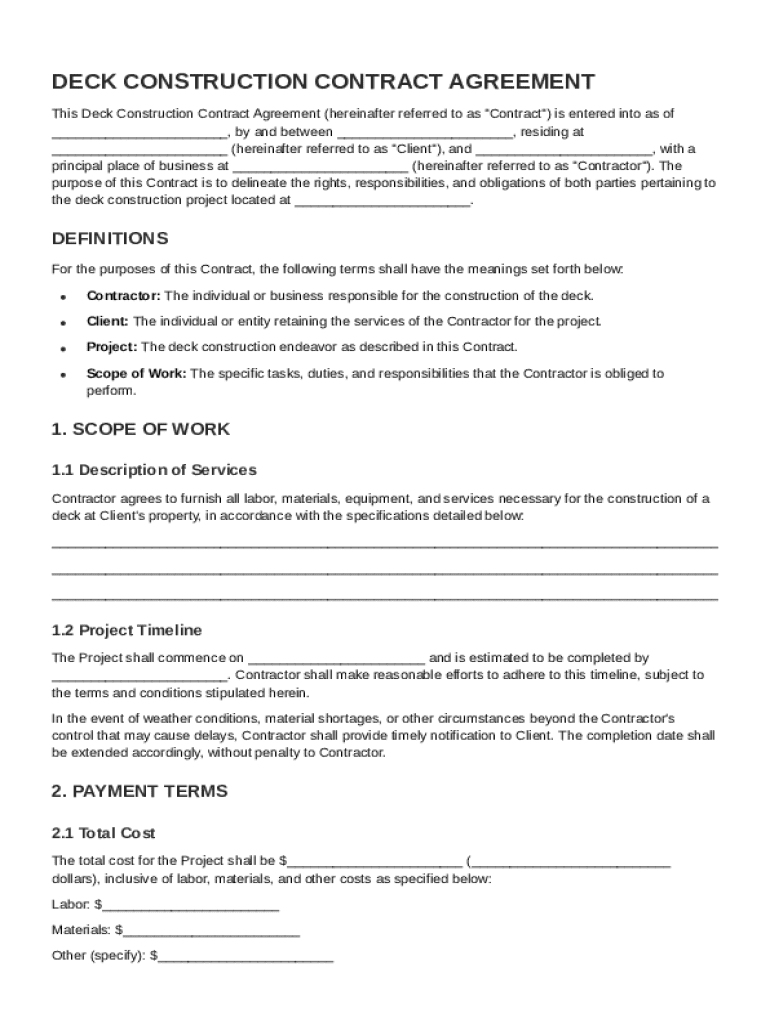
A Deck Contract Template is a legally binding document outlining the terms and conditions between a client and a contractor for a deck construction project. This form ensures both parties have a clear understanding of the obligations, responsibilities, and expectations involved. It typically details aspects such as the scope of work, payment terms, and timelines. Establishing these guidelines helps prevent disputes by providing a reference point for any clarifications needed during the course of the project. This template can be adapted to suit specific project needs, making it a versatile tool for both clients and contractors.
Key Elements of the Deck Contract Template
A well-structured Deck Contract Template includes several vital components that define the agreements between the parties involved. These elements typically cover:
- Scope of Work: Clearly outlines the tasks and services the contractor will provide. This section specifies what constitutes completion of the project, including design, materials, and any additional work components such as railing or staining.
- Payment Terms: Details the agreed-upon payment schedule, including deposit amounts, billing intervals, and final payments. It might also specify methods of payment and any conditions for withholding payments.
- Project Timeline: Provides estimated start and completion dates for the project, allowing both parties to prepare for commencement and ensure timely completion.
- Warranties and Guarantees: Addresses any warranties the contractor offers on workmanship or materials, ensuring peace of mind for the client.
- Termination Clause: Specifies conditions under which the contract can be terminated by either party, providing a clear protocol for addressing serious issues.
Legal Use of the Deck Contract Template
The legal utilization of a Deck Contract Template involves ensuring that the contract meets jurisdictional requirements while protecting the rights of both client and contractor. It should adhere to relevant construction laws and codes, which may vary by state. By explicitly stating legal responsibilities, such as obtaining necessary permits or ensuring safety compliance, the contract safeguards against legal disputes. Including clauses for dispute resolution—like arbitration or mediation—further strengthens the contract's legal robustness, encouraging amicable resolution of disagreements.
How to Use the Deck Contract Template
Using a Deck Contract Template involves several steps to ensure a thorough and effective agreement:
- Template Selection: Choose a template that best fits the project's requirements, ensuring it contains all necessary sections relevant to your specific needs.
- Customization: Adapt the template by filling in specific details such as contractor and client names, project specifics, payment schedules, and other relevant terms.
- Review and Amend: Both parties should review the contract for any adjustments or clarifications. Engaging a legal professional can provide additional assurance of completeness and compliance.
- Finalization and Signing: Once both parties agree on the terms, finalize the contract by signing. Each party should retain a copy for their records.
Steps to Complete the Deck Contract Template
- Gather Information: Collect all necessary project details, including design plans, materials needed, and a timeline.
- Fill in Contract Details: Use the gathered information to complete sections related to scope, payment terms, and timelines.
- Set Terms and Conditions: Establish conditions for payment schedules, warranties, and dispute resolution mechanisms.
- Review and Negotiate: Review the filled template with the other party to discuss any adjustments. Agree upon any changes before finalizing the document.
- Sign and Distribute Copies: Once finalized, both parties should sign and retain copies for their records, ensuring that the document is legally binding.
Who Typically Uses the Deck Contract Template
Primarily, the Deck Contract Template is used by contractors and clients engaged in deck construction projects. Contractors use it to formalize their service offerings, while clients rely on it to ensure their expectations are documented and met. This template is crucial for architects, designers, and project managers who need clear construction guidelines. In addition, legal professionals may use these templates when assisting clients in drafting or reviewing contracts to ensure compliance with local laws and regulations.


Important Terms Related to Deck Contract Template
Understanding key terms associated with a Deck Contract Template is essential for clarity and preventing misunderstandings:
- Change Order: A document detailing any modifications to the contracted work or terms agreed upon by both parties.
- Indemnification: A provision ensuring one party is protected against any loss or damages claimed by third parties.
- Force Majeure: Includes unforeseen events that can impact project timelines, excusing the involved parties from liability.
- Retainage: A percentage of the payment withheld until the project's satisfactory completion.
- Substantial Completion: A stage where the work is sufficiently complete, allowing the client to use the deck while final touches are being made.
State-Specific Rules for the Deck Contract Template
When using a Deck Contract Template, it's important to be aware of state-specific regulations that could affect the contract terms. These may include:
- Licensing Requirements: Ensure the contractor is licensed in the state where the work is taking place.
- Building Codes: Adherence to local building codes and standards is mandatory to ensure compliance and safety.
- Permitting: Certain states require permits for different types of construction work, including decks.
- Insurance Requirements: Contractors might need specific insurance coverage to operate legally within a state.
- Lien Laws: Familiarity with state lien laws is essential to protect the client's property from claims by subcontractors or suppliers.