
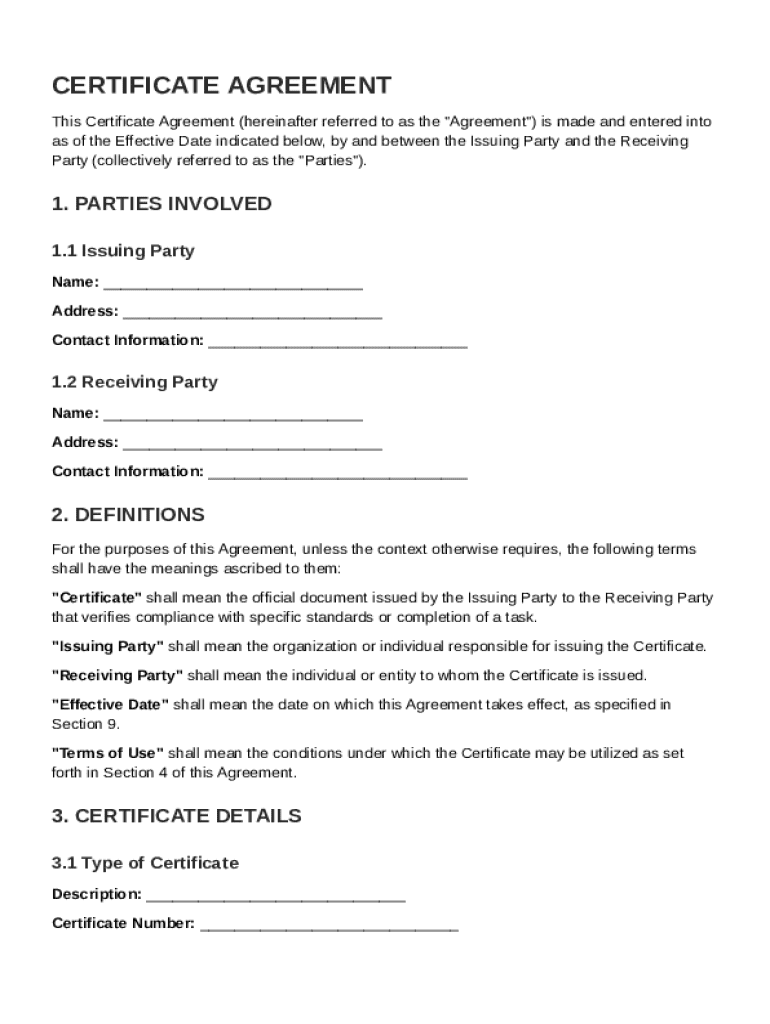







Definition & Meaning
A Certificate Agreement Template is a standardized document used to outline the terms and conditions associated with the issuance of a certificate. This certificate verifies compliance with certain standards set by an Issuing Party and agreed upon by a Receiving Party. The template is critical in establishing responsibilities, defining the validity period, and setting the framework for confidentiality, dispute resolution, and potential amendments or termination of the agreement. Examples might include agreements related to professional certifications, quality control standards, or safety compliance certificates, ensuring mutual understanding and adherence to specified conditions.
How to Use the Certificate Agreement Template
Using the Certificate Agreement Template involves several straightforward steps to fully customize it to your specific requirements. Initially, review the template to ensure all necessary clauses are relevant to the certificate you are dealing with. Modify sections like responsibilities and obligations to clearly reflect the roles of both parties. Once customized, share the template with the concerned parties for review and input. After finalizing any alterations, both parties should agree and sign the document, possibly using a platform like DocHub for electronic signatures. This ensures all modifications are formally recognized and legally binding.
Steps to Complete the Certificate Agreement Template
Completing the Certificate Agreement Template requires attention to detail.
-
Review the Template: Start by reading the entire template to understand its structure and content.
-
Edit Relevant Sections: Customize sections pertaining to both parties' responsibilities, certificate validity, and confidentiality obligations according to your needs.
-
Consult Legal Experts: It's wise to consult legal professionals to ensure that all clauses comply with applicable laws and accurately reflect the agreement's intentions.
-
Fill in Specific Details: Add specific details such as parties' names, certificate type, and effective dates.
-
Agree on Dispute Resolution: Clearly outline processes for dispute resolution to preemptively address potential future conflicts.
-
Finalize and Sign: After all sections are agreed upon, finalize the document and utilize platforms like DocHub to collect legally binding electronic signatures from all parties involved.
Key Elements of the Certificate Agreement Template
Several components are essential within a Certificate Agreement Template:
-
Parties Involved: Include full names and contact information for both the Issuing and Receiving parties.
-
Responsibilities: Clearly outline the obligations and duties of both parties in relation to the certificate's issuance and ongoing compliance.
-
Validity Period: Define the duration for which the certificate remains valid and any renewal procedures.
-
Confidentiality Clauses: Detail the requirements for maintaining confidentiality of the certificate and associated information.
-
Amendment Procedures: Provide guidelines for modifying the agreement, should the need arise.
-
Termination Conditions: State conditions under which the agreement may be terminated by either party.
Legal Use of the Certificate Agreement Template
The legal utilization of a Certificate Agreement Template ensures compliance with necessary standards and statutes. It acts as a legally binding document that protects both the Issuer and Receiver by clearly stating all terms and obligations. Legal use also involves ensuring all components of the agreement adhere to relevant laws, such as the ESIGN Act for electronic signatures, and any applicable industry regulations. The template can be tailored to comply with specific state laws if required, which is crucial for agreements spanning multiple jurisdictions.
Examples of Using the Certificate Agreement Template
The Certificate Agreement Template finds use across various scenarios:
-
Professional Certification: Used by training organizations to outline the terms for certificating students or professionals.
-
Quality Assurance Certification: Employed by companies to confirm that products meet specified standards.
-
Safety Compliance Certificates: Applied in industries such as construction or manufacturing to ensure operational standards are met.
In each case, the template ensures upfront clarity for both parties regarding their roles, expectations, and the framework for maintaining compliance.
Software Compatibility
With digital document management becoming increasingly important, platforms like DocHub provide effective solutions for handling Certificate Agreement Templates. DocHub supports formats such as PDF, DOC, and XLS, ensuring compatibility with most document types used in professional settings. Seamless integration with Google Workspace allows for easy import and export of documents from services like Google Drive, enhancing workflow efficiency. This compatibility ensures that completing and managing Certificates Agreements is straightforward and effective, even in collaborative and digitally-focused environments.
Compliance and Penalties for Non-Compliance
Failure to adhere to the terms set out within a Certificate Agreement can lead to several repercussions:
-
Legal Action: Non-compliance may result in legal proceedings initiated by the issuing body.
-
Financial Penalties: Fines or other financial penalties could be imposed for failing to meet stipulated standards.
-
Certificate Revocation: The certificate's validity could be nullified if terms and conditions are not adhered to.
Staying compliant with the agreement's terms is essential to avoid these potential penalties and to ensure smooth and continuous operations under the certificate's purview.




