







Definition and Meaning
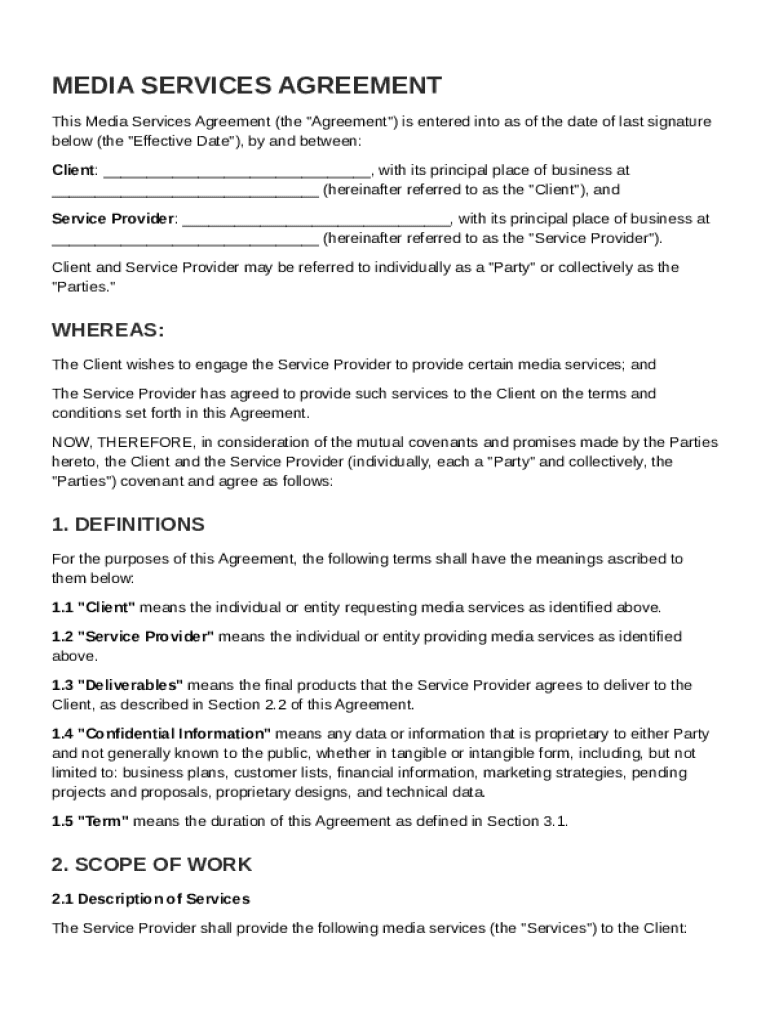
The Media Contract Template serves as a legally binding document that outlines the framework for media-related agreements between two parties, usually a client and a service provider. This template effectively captures the essential components of a Media Services Agreement, specifying the responsibilities and expectations of both parties, thereby minimizing misunderstandings. By using this template, parties can outline clear deliverables, define the scope of work, and establish payment terms, creating a solid foundation for professional relationships.
Key Features
- Scope of Work: Clearly defines the media services to be provided, ensuring both parties have a mutual understanding.
- Compensation Details: Specifies payment terms, including upfront deposits and schedules for balance payments upon completion.
- Rights and Ownership: Addresses copyright and intellectual property rights for deliverables, establishing who retains ownership.
- Confidentiality Clauses: Protects sensitive information disclosed during the agreement, ensuring non-disclosure between parties.
How to Use the Media Contract Template
To effectively utilize the Media Contract Template, parties should collaboratively complete each section, ensuring all relevant information is accurately captured. Begin by entering the names and contact details of both parties, followed by a detailed description of the services offered. Negotiating the payment terms upfront and defining clear timelines for project milestones are crucial steps in this process.
Steps to Follow
- Identify Parties: Clearly list details of the client and service provider.
- Define Scope: Describe the specific services and deliverables.
- Set Deadlines: Establish timelines for deliverables and project completion.
- Agree on Payment Terms: Outline upfront costs and payment schedules.
- Address Ownership: Specify who owns the rights to the final media product.
- Include Confidentiality Terms: Ensure protection of sensitive information.
Key Elements of the Media Contract Template
Precision and thoroughness are integral to the template’s effectiveness. By dissecting each section, users can ensure comprehensive coverage of all necessary legal terms.
- Definitions: Establishes terminology used within the contract to avoid ambiguities.
- Indemnity and Liability: Outlines responsibility for potential risks and liabilities.
- Termination Clauses: Specifies conditions under which the contract may be annulled.
- Governing Law: States the applicable jurisdiction for legal disputes.
- Miscellaneous Provisions: Includes any additional terms agreed upon by both parties.
Legal Use of the Media Contract Template
The template facilitates legally compliant contract preparation in accordance with U.S. law. Parties should verify that the contract adheres to state-specific regulations and includes provisions for legal enforceability under the applicable jurisdiction.
Important Legal Considerations
- Legally Binding Nature: Ensures enforceability via signatures from both parties.
- Compliance with U.S. Law: Aligns with federal and state regulations for media contracts.
- Use of Electronic Signatures: Accepted as legally binding under the ESIGN Act.
Who Typically Uses the Media Contract Template
The template suits a broad range of media industry professionals, from freelance artists and photographers to marketing agencies and filmmakers. It's an essential tool for anyone providing or receiving media services, ensuring clear communication and legal protection.


Common Users
- Freelancers: Protects independent contractors in creative industries.
- Agencies: Allows companies to formalize client agreements.
- Corporations: Utilized by businesses for internal and external media needs.

Important Terms Related to the Media Contract Template
Understanding legal terminology used within the template is vital for proper execution. By familiarizing themselves with these terms, parties can better negotiate and document their agreements.
Key Terminologies
- Confidentiality: Obligations to protect sensitive information.
- Indemnification: Compensation for harm or loss.
- Intellectual Property: Rights to creations of the mind.
- Arbitration: Method of resolving disputes outside court.
State-Specific Rules for the Media Contract Template
When engaging in media contracts across different states, it is essential to consider specific regulatory differences that might affect contract terms. Each state might have unique statutes affecting the legality and enforceability of certain contract provisions.
State-Specific Variations
- Governing Laws: Variability in legal requirements for contract enforcement.
- Consumer Protection Laws: Differences in state regulations for protecting parties.
- Tax Obligations: State-specific taxes applicable to services rendered.
Step-by-Step Instructions to Complete the Media Contract Template
The process of completing this template involves a series of steps designed to ensure that all essential elements are covered in detail. This comprehensive guide facilitates accurate and effective contract completion.
Procedures for Completion
- Read the Entire Template: Familiarize with all sections and clauses.
- Fill Out Party Information: Accurately input details for both client and service provider.
- Negotiate and Document Terms: Discuss and finalize all clauses.
- Review the Contract Thoroughly: Double-check for errors or omissions.
- Signing and Storage: Obtain signatures and store the contract securely.




