






Key Elements of the Construction Design Contract Template
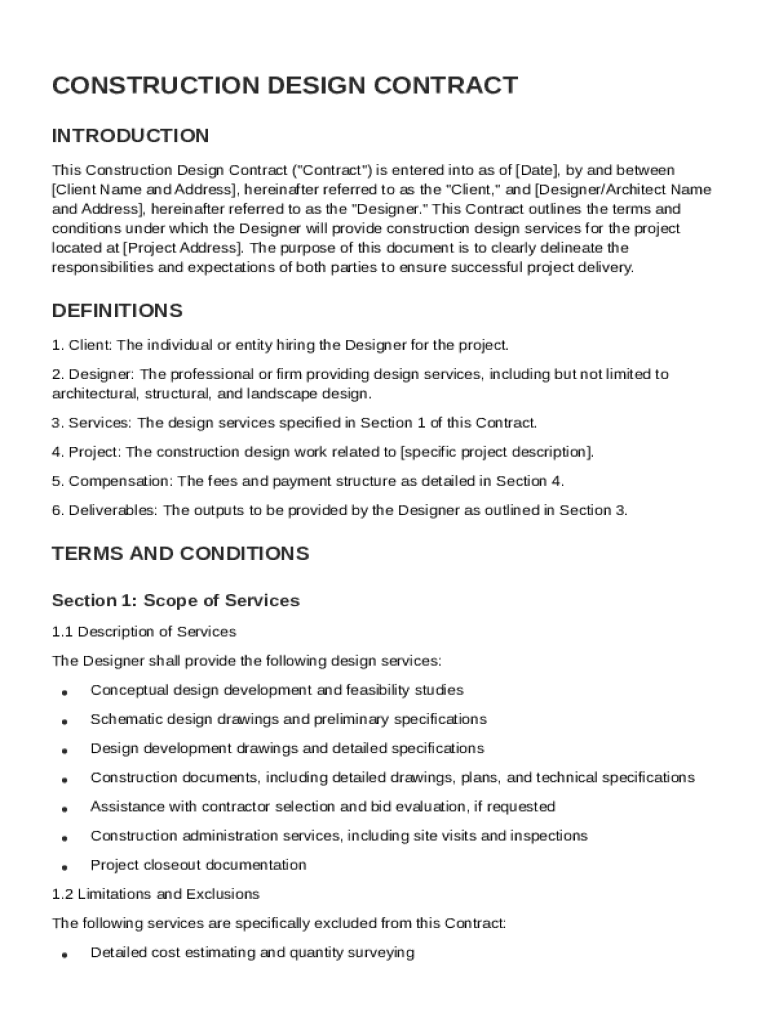
The Construction Design Contract Template serves as a cornerstone in specifying the terms between clients and designers in construction projects. Key elements within this document ensure that all parties involved have a clear understanding of their responsibilities and the project's scope. These components often include:
- Scope of Services: Clearly defines what the designer is expected to deliver. This might encompass architectural plans, engineering specifications, and design consultations.
- Project Timeline: Outlines the critical milestones and deadlines for the project, ensuring all parties have a timeline to follow.
- Deliverables: Lists all the specific outputs that the designer must provide, such as drafts, final plans, and any other design elements.
- Compensation Structure: Specifies the payment terms, including rates, payment schedule, and any conditions for additional costs.
Each element plays a critical role in guiding the project from conception to completion, reducing the potential for disputes by clarifying expectations upfront.
Steps to Complete the Construction Design Contract Template
Completing the Construction Design Contract Template involves several steps to ensure all necessary information is captured accurately. Here's a breakdown of the process:
- Review the Template: Familiarize yourself with its sections and requirements before beginning.
- Input Contractor and Client Information: Enter names, addresses, and contact details for both parties.
- Define Scope of Work: Clearly articulate what services are being provided, using clear and precise language.
- Set Timeline and Milestones: Establish project phases and deadlines for key deliverables.
- Specify Payment Terms: Detail the compensation arrangement, including how and when payments will be made.
- Outline Terms for Changes: Provide guidance on how modifications to the scope of work will be handled.
- Review and Finalize: Double-check all entries are correct and agreed upon by both parties before signing.
By following these steps, you ensure all contractual obligations are transparent and comprehensible.
Legal Use of the Construction Design Contract Template
The Construction Design Contract Template is not just a formal agreement but a legally binding document under U.S. law. Compliance with legal standards is crucial:
- Adherence to the ESIGN Act: This template can incorporate electronic signatures, which are legally recognized and enforceable.
- Confidentiality Clauses: Protects sensitive information shared between parties, aligning with U.S. privacy laws.
- Termination Conditions: Outlines legitimate reasons and processes for contract termination.
- Dispute Resolution: Specifies the procedure for resolving disagreements, often through arbitration or mediation.
These legal components protect both parties and provide a clear path for problem resolution, ensuring the contract holds up in court if necessary.
Who Typically Uses the Construction Design Contract Template
A variety of professionals and organizations utilize the Construction Design Contract Template:
- Architects and Designers: Primary users who need to formalize their agreements with clients for various design projects.
- Construction Firms: Work with designers to ensure alignment on project deliverables and expectations.
- Real Estate Developers: Engage designers for projects ranging from residential to large commercial developments.
- Legal Advisors: Assist clients in drafting and understanding commitments within the contract.
This document's flexibility makes it suitable for a wide range of design-related services, providing essential clarity and security.


Why Should You Use a Construction Design Contract Template
Using a Construction Design Contract Template provides significant benefits, such as:
- Clarity: Establishes clear expectations and reduces misunderstandings between parties.
- Standardization: Offers a structured format that can streamline negotiations.
- Protection: Legal safeguards ensure all parties are aware of their rights and obligations.
- Efficiency: Saves time over crafting a contract from scratch, allowing focus on actual project work.
These advantages make the template a valuable tool for enhancing the efficiency and effectiveness of contractual agreements within the construction industry.
Important Terms Related to Construction Design Contract Template
Understanding specific terminology in the Construction Design Contract Template is vital for clarity. Some key terms include:
- Deliverables: Refers to the tangible outputs or outcomes expected from the designer.
- Milestones: Intermediate stages where progress is evaluated, often tied to partial payments.
- Force Majeure: Provisions for unforeseen events that might delay project completion.
- Indemnification: Agreement where one party agrees to protect the other from certain damages or legal claims.
Familiarity with these terms helps ensure proper adherence to and enforcement of contract obligations.
State-Specific Rules for the Construction Design Contract Template
While the general structure of the Construction Design Contract Template is widely applicable, specific states may have unique regulations or requirements. Considerations might include:
- Licensing Requirements: Certain states may require verification of professional licenses for architects or designers.
- Zoning and Building Codes: Compliance with local standards can vary and must be accounted for in the contract.
- Legal Precedents: State laws influence how terms such as indemnification and liability are interpreted.
Adapting the template to state-specific rules ensures it remains valid and enforceable across different jurisdictions.
Software Compatibility with the Construction Design Contract Template
The Construction Design Contract Template is designed for use in versatile digital formats, making it compatible with a range of software, ensuring ease of access and modification:
- DocHub: Allows for seamless editing, sharing, and signing of the template online.
- Google Workspace: Facilitates integration with Google Drive and Gmail for efficient document management.
- PDF Editors: Compatible with Adobe Acrobat and other PDF-editing tools for traditional document handling.
By supporting multiple platforms and formats, users can engage with the template using their preferred tools, enhancing flexibility and productivity.