






Definition & Meaning
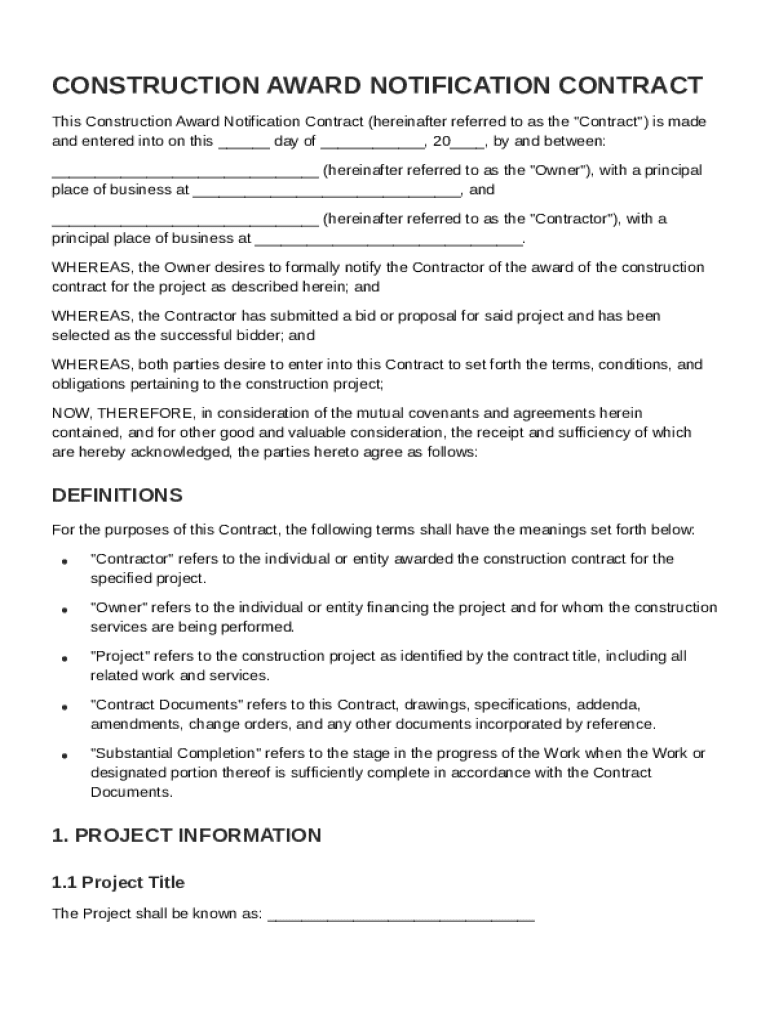
The Construction Award Notification Contract Template serves as a binding agreement between the owner of a construction project (often referred to as the Owner) and the contractor responsible for executing the project work. This contract formalizes the understanding between both parties regarding the scope of work, timelines, payment terms, and other critical project details. It sets out clear expectations, responsibilities, and conditions under which the project will be completed, ensuring both parties have a mutual agreement that reduces the potential for disputes.
Key Features:
- Scope of Work: Details the specific tasks and responsibilities expected of the contractor.
- Timeline: Outlines the start and end dates for the project, ensuring clarity on the schedule.
- Payment Terms: Specifies the agreed-upon payment schedule and amounts.
Key Elements of the Construction Award Notification Contract Template
When constructing the template, certain fundamental elements ensure that the document is thorough and effective. These elements offer a framework for accountability and clarity for both parties involved.
Important Sections:
- Project Details: Includes specifics about the construction site, project description, and objectives.
- Contractor Responsibilities: Defines what is expected from the contractor, including labor, materials, and adherence to project specifications.
- Insurance Requirements: Lists any necessary insurance policies that must be kept during the project's duration to manage risks effectively.
- Termination Clauses: Provides guidelines on how to dissolve the contract prematurely if necessary, including conditions under which this can occur.
Steps to Complete the Construction Award Notification Contract Template
Completing this template involves a series of steps to ensure accuracy and adherence to legal requirements. These steps help streamline the documentation process, making it easier for both the owner and contractor.
- Gather Necessary Information: Before filling out the template, collect all pertinent project details, including names, contact information, project description, and timeline.
- Input Project Specifics: Precisely document the scope of work, payment terms, and any additional responsibilities or requirements.
- Review Insurance and Legal Requirements: Ensure that the insurance policies meet the required thresholds and legal obligations.
- Finalize and Sign: After filling out the template, review for completeness and have both parties sign to render it legally binding.
Practical Example:
If a contractor is working on residential housing, they should input details about each housing unit's construction phases, expected completion times, and payment milestones.
Who Typically Uses the Construction Award Notification Contract Template
This template is commonly used by various stakeholders in the construction industry who seek clarity and legal security in their engagements. It’s tailored for different types of users, providing flexibility and specificity based on the project's nature.


Common Users:
- Project Owners: Individuals or companies commissioning the construction project.
- Contractors and Subcontractors: Responsible for executing the work as outlined in the agreement.
Case Study: A real estate development firm uses the template to hire a contractor for a new apartment complex, ensuring that all construction phases are documented and expectations clearly communicated.

Legal Use of the Construction Award Notification Contract Template
Using this template in a legal capacity ensures that all agreements are enforceable and protects the interests of both parties in case of disputes. Understanding legal uses prevents misunderstandings and promotes smooth project execution.
Considerations:
- Compliance with Local Laws: The contract must adhere to local legal requirements, which might vary between states or municipalities.
- Dispute Resolution Procedures: Specifies the mechanisms for resolving disputes, such as mediation or arbitration, before escalating to legal proceedings.
Examples of Using the Construction Award Notification Contract Template
Providing examples of how this template is applied in real-world scenarios helps users understand its broad application and utility. These examples also highlight common situations where the template adds value.
Example Scenarios:
- A large commercial project uses the template to clearly outline phased work and financial obligations, ensuring no lapses in project progression.
- A homeowner employs the template when hiring a contractor to remodel their property, setting clear parameters for work scope and cost.
State-Specific Rules for the Construction Award Notification Contract Template
Understanding that construction rules and regulations can vary significantly from one state to another is crucial. Each state may have the unique stipulations that need to be incorporated into the contract for legality and effectiveness.
Variations:
- License Requirements: Some states mandate that contractors have specific licenses to undertake certain types of construction work.
- Specific Clauses: States like California may have different lien requirements that need to be addressed within the contract.
Why You Should Use the Construction Award Notification Contract Template
This template serves as more than just a legal formality; it’s a strategic tool for mitigating risks and promoting successful project completion. Using the template offers numerous benefits that help prevent common pitfalls in construction projects.
Benefits:
- Clarity and Transparency: Ensures all parties have a clear understanding of their roles and responsibilities.
- Risk Management: Addresses potential areas of risk, such as delay penalties and unexpected project changes.
- Efficiency in Execution: Streamlines the process by establishing a sound agreement framework from the outset.
By incorporating these blocks, the content structure comprehensively covers essential aspects of the Construction Award Notification Contract Template, providing users with in-depth knowledge and practical insights.