




Definition & Meaning
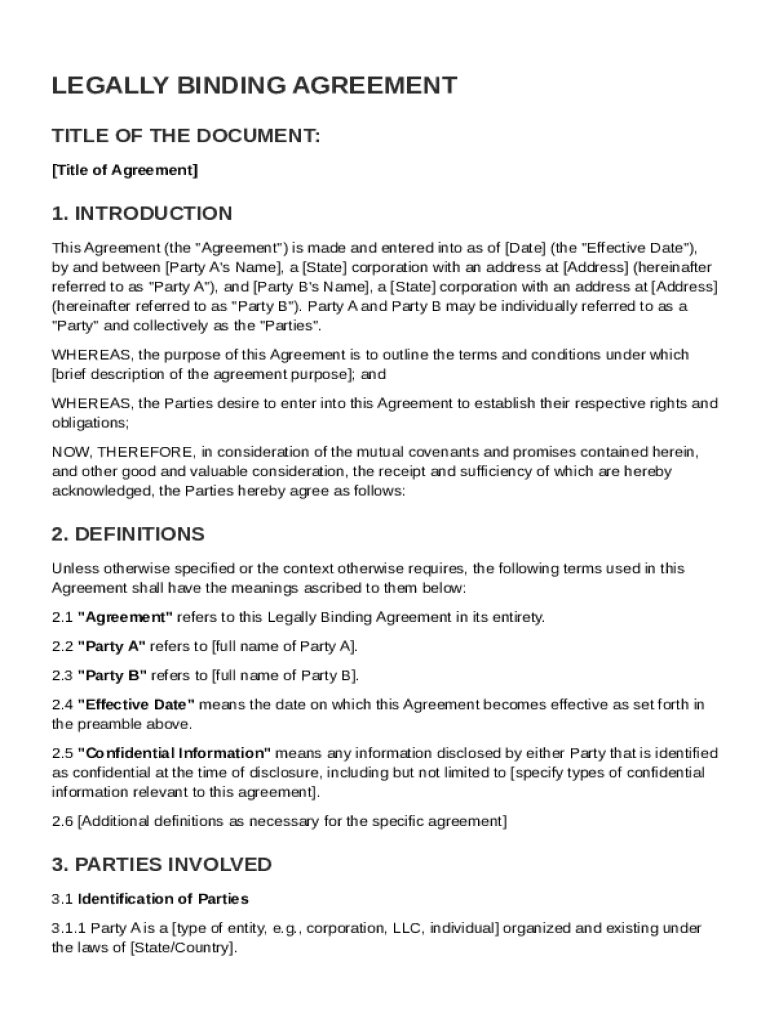
A legally binding agreement template is a pre-structured document used to formalize an agreement between two or more parties. This template outlines the rights, responsibilities, and obligations of each party involved. It typically includes sections on definitions, the purpose of the agreement, terms and conditions, confidentiality, duration and termination, amendments, governing law, and dispute resolution. Utilizing a template ensures all critical components are addressed, facilitating the creation of a legally sound contract. For businesses and individuals alike, these templates serve as a foundational tool to establish clear expectations and prevent misunderstandings.
Key Elements of the Legally Binding Agreement Template
Definitions
- Clearly define key terms and terminology used throughout the agreement to avoid ambiguities.
Purpose and Scope
- Detail the objectives and scope of the agreement, outlining the services or goods involved.
Terms and Conditions
- Specify the obligations of each party, including deliverables, timelines, and performance expectations.
Confidentiality
- Include clauses that protect sensitive information shared between parties.
Duration and Termination
- Define the agreement's effective date, duration, and conditions under which it can be terminated.
Governing Law
- Indicate which jurisdiction’s laws will govern the agreement.
How to Use the Legally Binding Agreement Template
-
Customize the Template: Adapt the generic template to fit specific needs by filling in relevant details such as party names, specific terms, and deadlines.
-
Review Legal Requirements: Ensure compliance with applicable laws and regulations, particularly those specific to the governing jurisdiction.
-
Add Specific Provisions: Incorporate any additional clauses tailored to the nature of the agreement, like non-compete clauses or indemnity agreements.
Steps to Complete the Legally Binding Agreement Template
-
Identify Parties: Clearly state the full legal names and addresses of all parties involved.
-
Detail Specifics: Complete sections detailing the scope, terms, duration, and termination conditions.
-
Seek Legal Review: Have the draft reviewed by legal counsel to ensure legality and completeness.
-
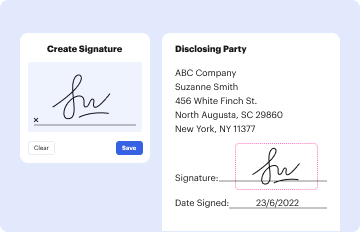
Sign and Date: Each party must sign and date the agreement, making it legally binding.
Legal Use of the Legally Binding Agreement Template
Legally binding agreement templates must adhere to the legal standards required by relevant jurisdictions. This involves incorporating necessary legal jargon and clauses that align with the ESIGN Act when dealing with electronic signatures. Ensuring that each party consents to the terms and conditions is essential for the enforcement of the agreement. Additionally, legal provisions such as dispute resolution or arbitration clauses should be included to specify how conflicts will be managed.
State-Specific Rules for the Legally Binding Agreement Template
Variations Across States
- Contractual Age: The legal age for entering contracts may differ by state.
- Governing Law: Some states require a specific choice of law clause.
- Formality Requirements: Certain agreements may need witnessing or notarization in specific states.
Understanding these variations ensures the enforceability of the template according to local laws.
Who Typically Uses the Legally Binding Agreement Template
- Businesses: For partnerships, vendor agreements, and client contracts.
- Individuals: For personal dealings such as rental agreements or freelance services.
- Organizations: Non-profits and educational institutions for collaborations and partnerships.
By streamlining the agreement process, templates provide a practical solution for different entities intending to formalize their interactions.

Digital vs. Paper Version
In an increasingly digital world, the choice between digital and paper versions of a legally binding agreement template depends on several factors:
- Convenience: Digital versions allow for easier edits and e-signatures.
- Security: Digital agreements can be encrypted and password protected.
- Record-keeping: Digital records are easier to archive and maintain over time.
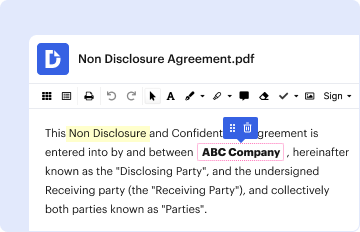
Regardless of the form selected, both versions aim to serve the same purpose: to capture and enforce the terms agreed upon by all parties involved. Utilizing platforms like DocHub facilitates the digital management of these templates, ensuring a seamless process from creation to execution.