






Definition & Meaning
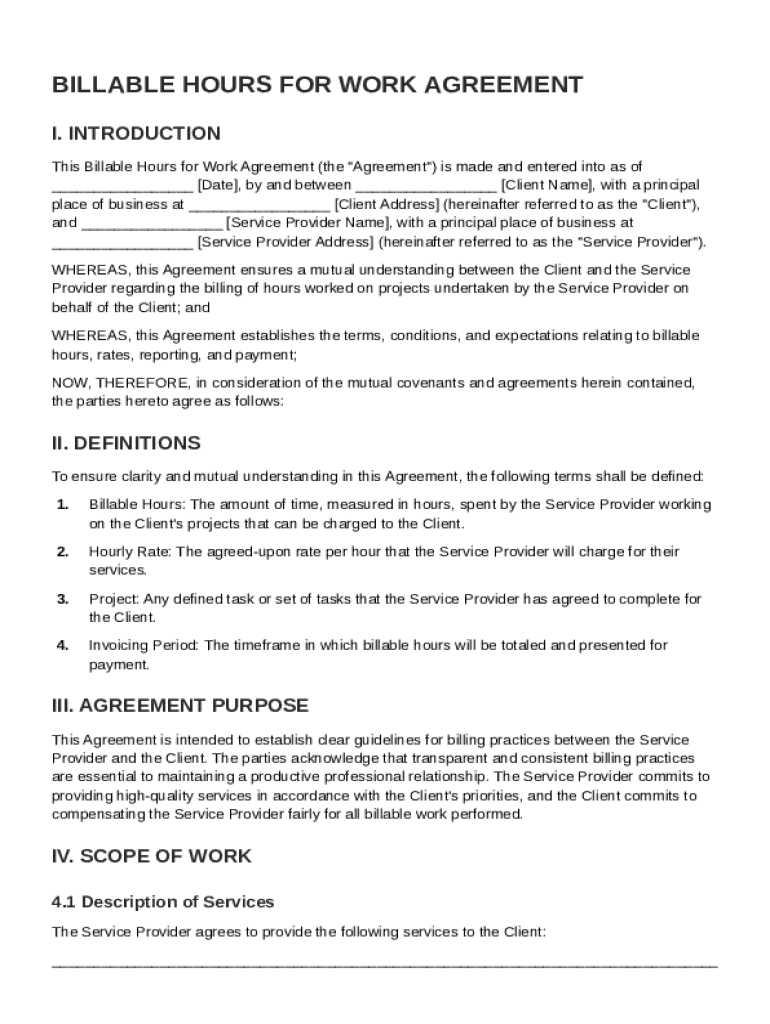
A Billable Hours for Work Agreement Template is a document that formalizes the terms and conditions between a client and a service provider concerning the billing of hours worked on projects. This document plays a crucial role in defining the parameters around services rendered, including aspects like hourly rates, billing cycles, and the scope of work. Establishing these terms helps to ensure clarity and mutual understanding between all parties involved.
Components of the Template
- Billable Hours: The number of hours worked that can be billed to the client.
- Hourly Rate: The fee charged per hour of work.
- Invoicing Periods: The timeframe within which billing occurs, such as weekly or monthly.
This template is essential for businesses that rely on hourly billing, as it provides a clear record and basis for client-provider interactions and billing communications.
How to Use the Billable Hours for Work Agreement Template
Using the Billable Hours for Work Agreement Template involves various steps that ensure both compliance with legal obligations and efficient billing practices. The process starts with customization and continues through to the finalization and use of the agreement.
Customizing the Template
- Download and Open: Obtain the template in a compatible format, such as DOC or PDF.
- Input Custom Details: Enter specifics such as the client’s name, service provider details, and the project scope.
- Set Rates and Terms: Define your hourly rate and the billing cycle in accordance with client expectations and industry norms.
Finalizing the Agreement
- Review and Edit: Ensure all sections are complete and accurate.
- Client Approval: Share the document with the client for acknowledgment and feedback.
- Sign and Date: Use electronic signature tools to formalize the document.
By following these steps, you create a reliable framework that both parties can refer back to throughout the project's duration.
Key Elements of the Billable Hours for Work Agreement Template
A comprehensive Billable Hours for Work Agreement Template includes several critical sections. These sections ensure clarity, legal protection, and mutual agreement on the project’s scope and payment obligations.
Core Sections
- Scope of Work: Detailed description of the tasks and responsibilities.
- Payment Terms: Information about billing cycles, timeframes for payment, and any applicable late fees.
- Change Provisions: How alterations to the agreement or scope of work will be handled.
- Termination Clause: Conditions under which the agreement can be ended by either party.
Including these elements in the agreement is vital for minimizing disputes and ensuring a well-organized working relationship.
Steps to Complete the Billable Hours for Work Agreement Template
Completing the Billable Hours for Work Agreement Template involves a systematic approach to ensure that all necessary information is accurately captured and agreed upon.
Step-by-Step Process
- Gather Information: Collect necessary details, such as project objectives and client contact information.
- Fill Out the Template: Use the information gathered to populate each section of the template.
- Customization: Adjust any generic terms to better fit the specific situation and parties involved.
- Review and Revise: Carefully check for errors and omissions, then make any necessary corrections.
- Finalize for Signing: Ensure the template is complete and ready for digital signatures.
This structured approach aids in creating a document that serves the project's needs effectively and professionally.
Important Terms Related to Billable Hours for Work Agreement Template
Familiarity with certain key terms is essential when dealing with the Billable Hours for Work Agreement Template. Understanding these terms can help prevent misunderstandings and ensure the template is utilized accurately.
Essential Terms
- Billable Hours: Time spent on tasks directly associated with a client project that can be charged.
- Non-Billable Hours: Activities related to a project but not directly charged to the client.
- Retainer: A pre-paid amount for services, which covers agreed-upon future hours of work.
- Time Tracking: The process of recording working hours to substantiate billing.
Knowing these terms will enhance the efficiency and clarity of managing client relations and project billing.
Legal Use of the Billable Hours for Work Agreement Template
The legal use of a Billable Hours for Work Agreement Template ensures both parties adhere to the stipulated terms and protects against potential disputes. It frames the professional engagement in a way that is recognized by law.
Legal Considerations
- Confidentiality Clauses: Obligations to keep certain project components confidential.
- Governing Law: The jurisdiction that will enforce the terms of the agreement.
- Dispute Resolution: Steps outlining how disagreements will be resolved, including mediation or arbitration.
These considerations are crucial for establishing an enforceable and fair agreement that benefits both parties.
Who Typically Uses the Billable Hours for Work Agreement Template
The template is used by a wide array of professionals and industries that engage in project-based work. This template helps structure and manage their billing practices.


Common Users
- Freelancers and Consultants: Professionals who work independently and bill clients based on hours worked.
- Agencies: Marketing, design, and consulting firms that require detailed documentation of billable work.
- Legal Firms: Lawyers who bill clients by the hour for consultations and legal services.
The template provides a structured method for these entities to ensure predictable income and manage client expectations effectively.

Examples of Using the Billable Hours for Work Agreement Template
Real-world examples illustrate how the Billable Hours for Work Agreement Template can be utilized across different industries. These scenarios showcase the template's versatility and practical application.
Practical Scenarios
- Consultancy Engagements: A business consultant enters an agreement with a client detailing project scope and billing methods.
- Design Projects: A graphic design firm lays out its pricing structure and deliverables for a new brand identity project.
- Software Development: A development team outlines phases of work and corresponding billing rates to develop an application.
These examples demonstrate how varied professional relationships use the template to structure their work and financial interactions effectively.