




Key Elements of the Probation Period Contract Template
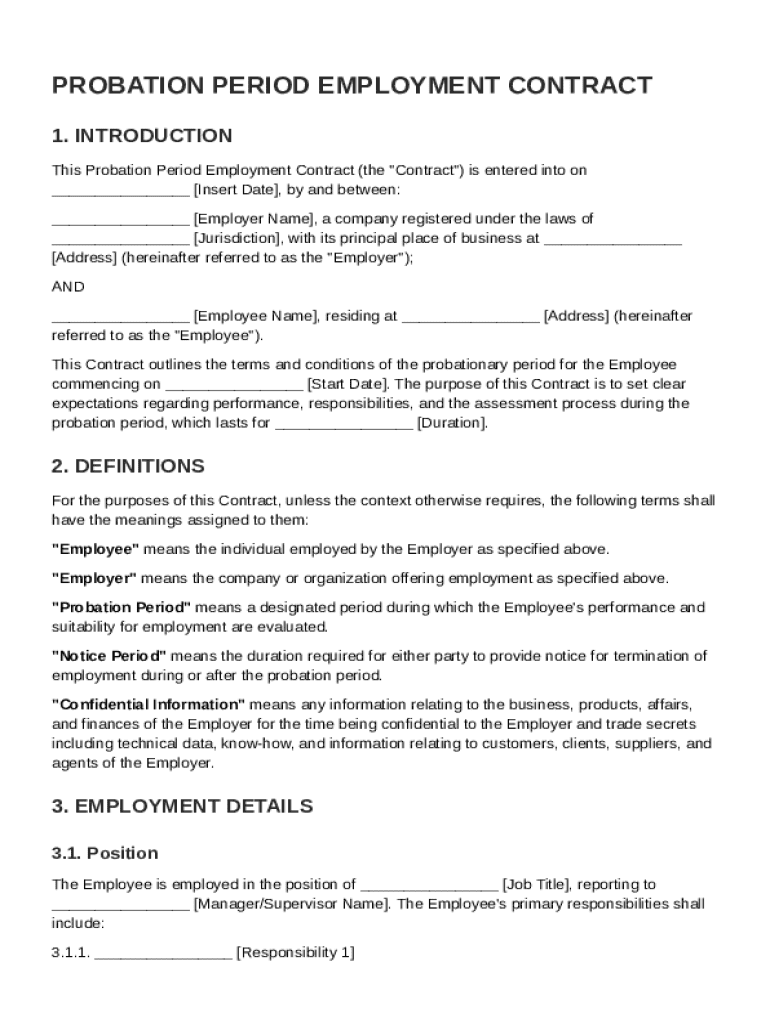
The Probation Period Contract Template serves as a foundational document to outline the terms and conditions of employment during a probationary period. Key elements include:
-
Employment Details: Specifies the employee's position, responsibilities, and any specific duties during the probationary period.
-
Compensation and Benefits: Details the salary or hourly wage, along with any applicable benefits like health insurance or leave entitlements.
-
Performance Evaluation Criteria: Establishes the metrics or benchmarks for assessing the employee's performance during the probation period.
-
Termination and Notice Requirements: Outlines the conditions under which either party can terminate the employment relationship, as well as the required notice period.
-
Confidentiality Obligations: Ensures that the employee agrees to maintain the confidentiality of sensitive company information.
-
Governing Law and Jurisdiction: Specifies the legal framework and jurisdiction that governs the contract.
These elements work together to clearly define the expectations and obligations of both the employer and the employee during the probationary period.
How to Use the Probation Period Contract Template
Using the probation period contract template involves a series of structured steps to ensure both employer and employee clearly understand their obligations. Here’s a detailed process:
-
Review and Customize: Begin by reviewing the entire template to ensure it aligns with your organization’s policies. Customize sections such as job descriptions, performance criteria, and specific benefits to reflect organizational standards.
-
Consult Legal Advisors: Before finalizing, it’s prudent to consult with a legal advisor familiar with employment law to ensure compliance and address any atypical employment arrangements.
-
Discuss with Employee: Arrange a meeting with the employee to go over key sections of the contract. This meeting is an opportunity for the employee to ask questions and ensure they understand all terms.
-
Signatures and Execution: Once both parties agree on the terms, obtain signatures from both employer and employee. This formalizes the agreement and makes it legally binding.
Ensuring that these steps are followed helps in creating a mutual understanding and avoids future discrepancies.
Important Terms Related to Probation Period Contract Template
Understanding the terminology used in a probation period contract is critical to grasp its full implications. Here are key terms often encountered:
-
Probationary Period: A trial period during which the employee's performance and suitability are evaluated.
-
Performance Metrics: Specific criteria or standards used to assess the employee’s job performance.
-
Notice Period: The length of time that either party must give before terminating the employment contract.
-
Governing Law: The legal framework under which the contract is interpreted and enforced.
-
Confidential Information: Sensitive data or information that must remain private as per the contract’s confidentiality clause.
Familiarity with these terms aids in comprehending contract stipulations and upholding compliance.
Steps to Complete the Probation Period Contract Template
Completing a probation period contract requires careful attention to detail. Follow these structured steps:
-
Fill Personal and Employment Information: Start with the employee’s personal details and the designated job title and role description.
-
Detail Compensation Structure: Add information regarding salary, benefits, and any bonuses or incentives applicable during the probation.
-
Define Performance Standards: Clearly outline performance evaluation criteria, including quantitative and qualitative metrics.
-
Set Terms for Extension or Confirmation: Specify how and when the decision regarding employment confirmation is communicated.
-
Include Termination Clauses: Provide clear terms under which the contract can be terminated by either party including notice periods.
-
Obtain Necessary Approvals: Areas needing higher management input or customization should receive the appropriate approvals before finalization.
This step-by-step method ensures no crucial details are overlooked, maintaining professionalism and accuracy throughout.
Who Typically Uses the Probation Period Contract Template
Probation period contracts are pivotal in various employment settings, often utilized by:
-
Human Resource Departments: To standardize probation policies across the organization and ensure compliance with employment laws.
-
Hiring Managers: Who need to set expectations and evaluate new hires effectively.
-
Small Business Owners: A vital tool for those managing their own workforce to ensure clear communication of probation expectations.
-
Legal Departments: Ensures that all employment contracts comply with jurisdictional employment laws.
By understanding who typically uses these contracts, organizations can better tailor them to their specific needs, ensuring they align with both legal and organizational standards.

Legal Use of the Probation Period Contract Template
Probation period contracts are legally recognized documents that must be used in compliance with applicable employment laws. Important legal considerations include:
-
Adherence to Labor Laws: Must comply with federal and state labor regulations, including minimum wage and harassment laws.
-
Non-Discrimination Clauses: Contracts should never include terms that discriminate based on race, gender, age, or other protected categories.
-
Record Keeping: Maintaining accurate records of signed contracts is crucial for legal protection and to address any future disputes.
Understanding these legal implications ensures that the contract is a robust tool for setting probation terms that are fair and legally sustainable.
State-Specific Rules for the Probation Period Contract Template
While many aspects of probation period contracts are universal, certain state-specific rules and interpretations must be observed:
-
At-Will Employment Variations: Some states have different interpretations of at-will employment that can affect termination clauses.
-
Mandatory Reporting Requirements: Specific documentation or reporting requirements may differ from state to state, impacting how contracts are enforced.
-
Notice Periods: States may have differing rules regarding notice periods for termination, even during probation.
Awareness of state-specific nuances ensures compliance and aids in crafting a contract that is effective and enforceable in the relevant jurisdiction.
Examples of Using the Probation Period Contract Template
Several practical scenarios illustrate the use of a probation period contract template:
-
Entry-Level Positions: Often used for new graduates or those entering a new field to assess their suitability before permanent employment.
-
Temporary to Permanent Transitions: For temporary staff being considered for permanent positions after demonstrating value during the probation period.
-
Role Changes: Applied when an employee transitions internally to a new role requiring a probation to ensure fit and performance.
These examples underscore the versatility and necessity of probation period contracts in diverse workplace scenarios, illustrating their role in managing expectations and performance.