


Publication 5420 (SP) (5-2020). Economic Impact Payments and Coronavirus Tax Relief-2026

Get Form
Publication 5420 (SP) (5-2020). Economic Impact Payments and Coronavirus Tax Relief Preview on Page 1

Here's how it works

01. Edit your form online
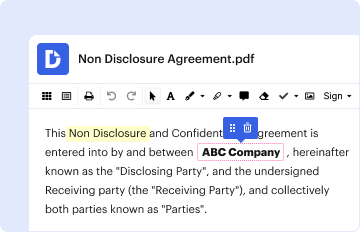
Type text, add images, blackout confidential details, add comments, highlights and more.
02. Sign it in a few clicks
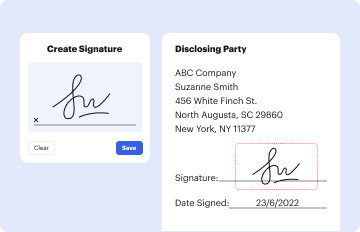
Draw your signature, type it, upload its image, or use your mobile device as a signature pad.
03. Share your form with others
Send it via email, link, or fax. You can also download it, export it or print it out.

How to use or fill out Publication 5420 (SP) (5-2020). Economic Impact Payments and Coronavirus Tax Relief with our platform

Form edit decoration
9.5
Ease of Setup
DocHub User Ratings on G2
9.0
Ease of Use
DocHub User Ratings on G2
  1. Click ‘Get Form’ to open it in the editor.
  2. Begin by reviewing the introduction section, which outlines the purpose of the publication and its relevance to economic impact payments.
  3. Navigate to the 'Economic Impact Payments' section. Here, you will find key elements that explain eligibility criteria and payment amounts.
  4. Fill in your personal information where required, ensuring accuracy for processing your payment.
  5. Refer to the FAQs section for any specific questions regarding your situation, such as eligibility or how to check your payment status.
  6. Utilize our platform's tools to save your progress and share the document with others who may need assistance with their payments.

Start using our platform today for free to streamline your form completion process!

See more Publication 5420 (SP) (5-2020). Economic Impact Payments and Coronavirus Tax Relief versions

We've got more versions of the Publication 5420 (SP) (5-2020). Economic Impact Payments and Coronavirus Tax Relief form. Select the right Publication 5420 (SP) (5-2020). Economic Impact Payments and Coronavirus Tax Relief version from the list and start editing it straight away!
Versions Form popularity Fillable & printable
2020 4.9 Satisfied (47 Votes)
be ready to get more

Complete this form in 5 minutes or less

Get form

Got questions?

We have answers to the most popular questions from our customers. If you can't find an answer to your question, please contact us.
Contact us
The credit amount on your tax return begins with the maximum that you are eligible for in 2020. This amount is then reduced by 5% of the amount that your AGI exceeds these levels: $75,000 for Single or Married Filing Separately. $112,500 for Head of Household.
If you have an adjusted gross income (AGI) of up to $75,000 ($150,000 Married Filing Jointly), you should be eligible for the full amount of the recovery rebate. For tax filers with income above these amounts, the stimulus payment decreases by $5 for each $100 above the thresholds.
Individuals with a Social Security number (SSN) who cannot be claimed as a dependent and have an adjusted gross income of less than $75,000 or less than $150,000 if married and filing a joint return qualify for the full EIP amount. ARE UNDOCUMENTED PEOPLE ELIGIBLE FOR THE THIRD ECONOMIC IMPACT PAYMENT?
Historical content the 2020 Recovery Rebate Credit The deadline to claim the Recovery Rebate Credit for the first and second stimulus checks was May 17, 2024. While you can no longer claim these payments, below describes who may have needed to file to get these stimulus checks.
Normally, a taxpayer will qualify for the full amount of Economic Impact Payment if they have AGI of up to $75,000 for singles and married persons filing a separate return, up to $112,500 for heads of household, and up to $150,000 for married couples filing joint returns and surviving spouses.

Security and compliance

At DocHub, your data security is our priority. We follow HIPAA, SOC2, GDPR, and other standards, so you can work on your documents with confidence.

Learn more
ccpa2
pci-dss
gdpr-compliance
hipaa
soc-compliance
be ready to get more

Complete this form in 5 minutes or less

Get form

People also ask

The credit is $600 per taxpayer ($1,200 for married filing jointly), in addition to $600 per qualifying child. The credit phases out starting at $75,000 of modified adjusted gross income ($112,500 for heads of household and $150,000 for married filing jointly) at a rate of $5 per $100 of additional income.

Related links