






Definition and Meaning of a Yearly Service Contract
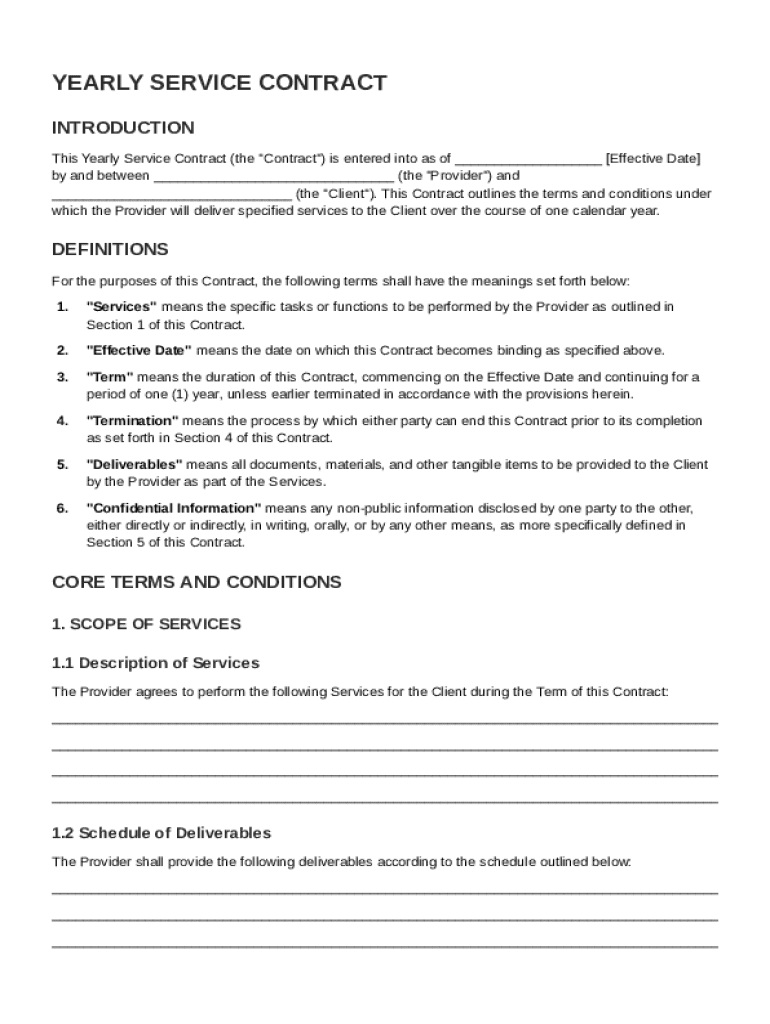
A Yearly Service Contract is a formal agreement between a service provider and a client, outlining the specific services to be delivered over the course of one year. This document serves as a mutual understanding of expectations, responsibilities, and protections for both parties involved. Key sections typically include:
- Scope of Services: Clearly defines the services to be provided, preventing misunderstandings.
- Payment Terms: Details the fee structure, payment schedule, and any penalties for late payments.
- Performance Expectations: Sets measurable indicators to ensure service quality is maintained.
Steps to Complete the Yearly Service Contract Template
Completing the Yearly Service Contract Template is a critical task that requires accuracy and attention to detail. Below is a step-by-step guide to ensure the document is completed correctly:
- Identify Parties: Clearly state the names and contact information of both the service provider and the client.
- Define Services: Outline the exact services provided, including specifics such as frequency and delivery method.
- Specify Payment Terms: Agree on the payment amount, due dates, and method of payment.
- Include Confidentiality Clauses: If applicable, ensure that both parties maintain the confidentiality of sensitive information.
- Establish Termination Conditions: Note the conditions under which either party may terminate the contract.
Key Elements of the Yearly Service Contract Template
To craft a comprehensive Yearly Service Contract, certain elements should be included to protect both parties and ensure clarity. Prominent elements involve:
- Indemnification Clauses: Protects both parties against unwanted liabilities or claims during the contract's duration.
- Governing Law: Specifies which state laws will preside over the agreement, providing a legal framework for dispute resolution.
- Dispute Resolution Procedures: Provides methods for resolving disagreements, including mediation or arbitration options.
Who Typically Uses the Yearly Service Contract Template
Yearly Service Contract Templates are utilized by a variety of entities to formalize service agreements. Common users include:
- Freelancers and Contractors: Ensure clear agreement terms and protect interests with clients.
- Businesses: Establish detailed service relationships with vendors or service providers.
- Non-Profits: Maintain clear-cut relationships with service providers to prevent operational disruptions.


Legal Use of the Yearly Service Contract Template
Adhering to legal standards is crucial when utilizing the Yearly Service Contract Template. Legal considerations encompass:
- Compliance with ESIGN Act: Utilizing electronic signatures ensures the document's legality under federal law.
- State Legislation Alignment: The contract should comply with local state laws to be enforceable, which may vary by region.
Important Terms Related to the Yearly Service Contract Template
Understanding specific terms included in a Yearly Service Contract can offer clarity and legal protection for all parties. Significant terms can involve:
- Force Majeure: Clauses that excuse performance obligations due to unforeseen events like natural disasters.
- Breach of Contract: Defines consequences if either party fails to fulfill their duties as outlined in the contract.
Examples of Using the Yearly Service Contract Template
Real-world scenarios illustrate the effective use of the Yearly Service Contract Template. Some situations may include:
- IT Support Services: An IT company providing annual tech support for a business, detailing service scope and maintenance schedules.
- Cleaning Services: A cleaning firm signs a yearly agreement with a corporate office to maintain consistent service standards.
Software Compatibility and Digital Use
The digital age offers convenience in using and managing the Yearly Service Contract Template. Key considerations include:
- Online Editing Platforms: Use platforms like DocHub to modify, fill, and electronically sign contracts online.
- Compatibility: The template should be compatible across various software tools such as Microsoft Word or PDF readers for easy editing and sharing.
By understanding and applying these aspects, both parties can ensure that their agreement is detailed, legally sound, and ready for execution.