




01. Edit your 2022 schedule c form online
Type text, add images, blackout confidential details, add comments, highlights and more.

Type text, add images, blackout confidential details, add comments, highlights and more.

Draw your signature, type it, upload its image, or use your mobile device as a signature pad.

Send 2022 schedule c via email, link, or fax. You can also download it, export it or print it out.
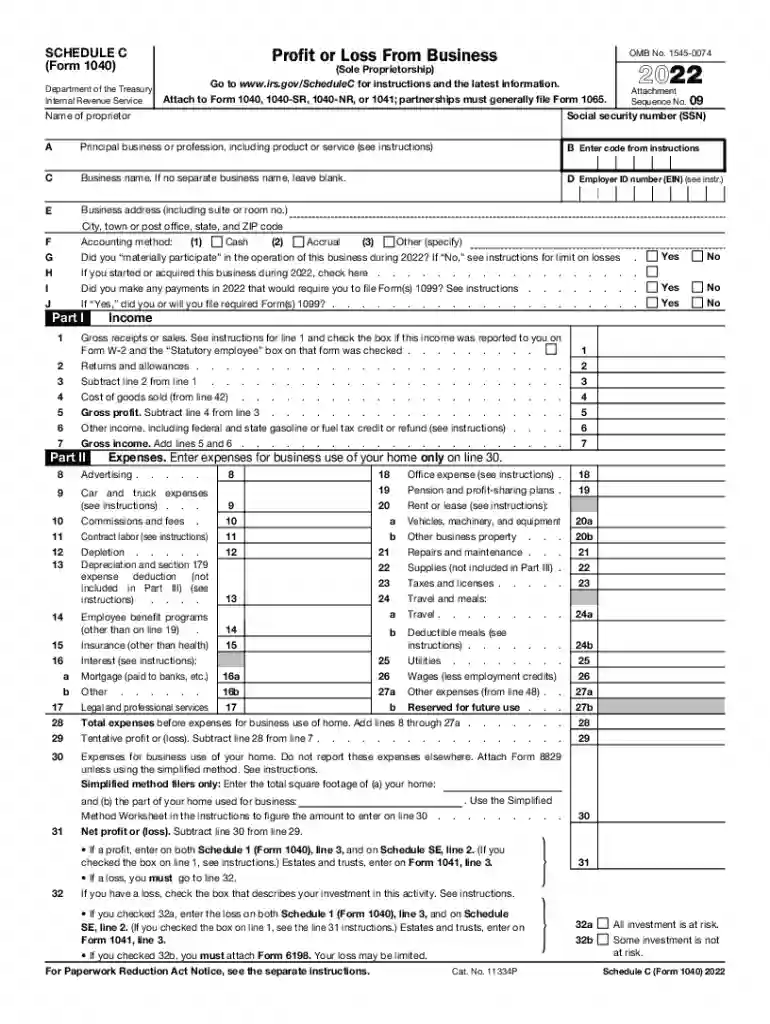
Schedule C (Form 1040) is utilized by sole proprietors to report income or losses from their business activities. This form plays a pivotal role in individual tax returns as it details essential business financial aspects such as income, expenses, and cost of goods sold. Critical for filing year 2022 taxes, it captures varied financial elements necessary for accurate tax reporting.
Completing a Schedule C form involves a series of detailed steps necessary to ensure accuracy and compliance. Each section requires attention:
Understanding the significant elements and related terms of Schedule C is vital for correct completion:
The timely filing of Schedule C is crucial:
Before filling out Schedule C, ensure you have the necessary documentation:
Several submission options are available for Schedule C:
Schedule C is predominantly used by sole proprietors:
Exploring real-world scenarios provides context:
Through this detailed exploration of Schedule C (Form 1040), users can comprehensively understand its purpose, requirements, and the process to efficiently and correctly manage their tax responsibilities. This knowledge equips sole proprietors to leverage their financial operations fully and comply with IRS expectations.
We've got more versions of the 2022 schedule c form form. Select the right 2022 schedule c form version from the list and start editing it straight away!
| Versions | Form popularity | Fillable & printable |
|---|---|---|
| 2024 | 4.6 Satisfied (31 Votes) | |
| 2023 | 4.4 Satisfied (54 Votes) | |
| 2022 | 4.3 Satisfied (38 Votes) | |
| 2021 | 4.8 Satisfied (140 Votes) | |
| 2020 | 4.4 Satisfied (93 Votes) | |
| 2019 | 4.1 Satisfied (38 Votes) | |
| 2018 | 4.3 Satisfied (239 Votes) | |
| 2017 | 4.3 Satisfied (233 Votes) | |
| 2016 | 4.1 Satisfied (110 Votes) | |
| 2015 | 3.5 Satisfied (95 Votes) | |
| 2014 | 4.1 Satisfied (54 Votes) | |
| 2013 | 4 Satisfied (44 Votes) | |
| 2012 | 4 Satisfied (27 Votes) | |
| 2011 | 4.2 Satisfied (66 Votes) | |
| 2010 | 4 Satisfied (34 Votes) |
At DocHub, your data security is our priority. We follow HIPAA, SOC2, GDPR, and other standards, so you can work on your documents with confidence.


