
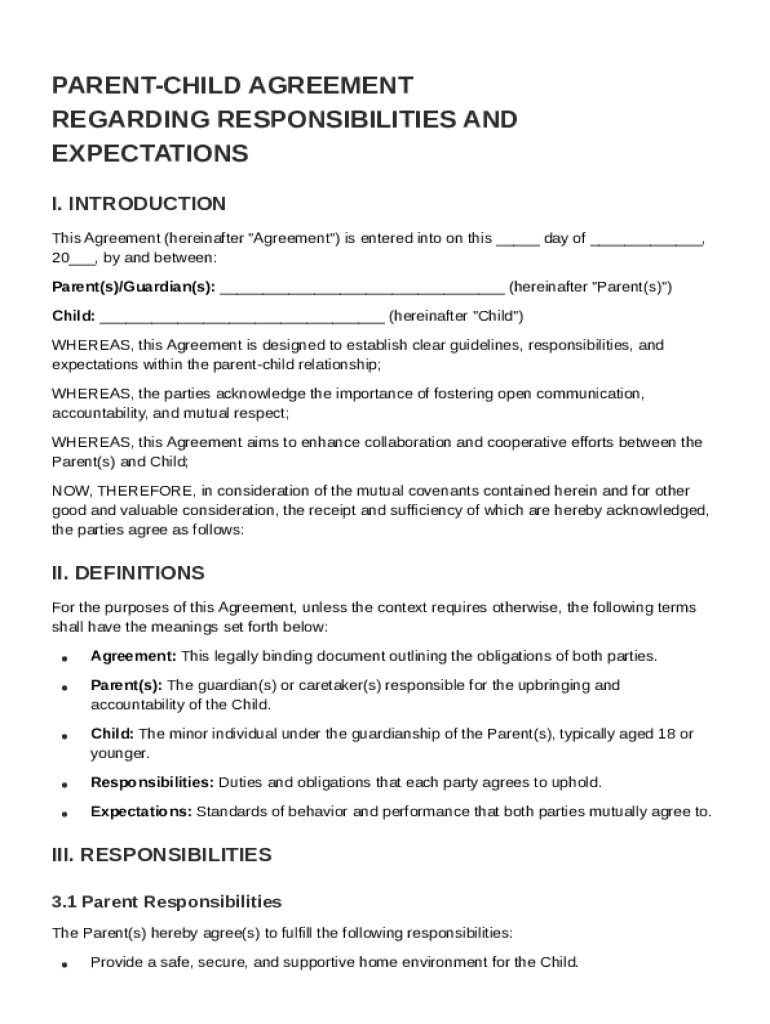







Definition and Meaning
A Parent-Child Contract Template is a structured agreement designed to establish clear expectations, responsibilities, and rules between parents and children. This document helps formalize the parent-child relationship by outlining mutual agreements on behavior, duties, and consequences for not meeting agreed-upon standards. It aims to foster an environment of open communication, accountability, and respect, allowing both parties to understand their roles and responsibilities clearly.
- Benefits: Establishing boundaries with clear expectations can reduce conflicts and improve understanding within the family unit.
- Components: It typically includes sections for communication guidelines, conduct rules, academic responsibilities, and methods for conflict resolution.
- Applications: Useful for setting rules regarding curfews, screen time, chores, and school performance.
Key Elements of the Parent-Child Contract Template
The Parent-Child Contract Template is composed of several crucial elements that together create a comprehensive agreement. These elements ensure all parties involved are clear about their obligations and the expectations for behavior and responsibilities.
- Introduction and Purpose: A brief overview of the contract's purpose and the importance of mutual respect and accountability.
- Parental Duties: Outlines the responsibilities of parents, such as providing a supportive home environment and necessary guidance.
- Children's Responsibilities: Specifies expected behaviors like adhering to household rules and maintaining academic performance.
- Communication Rules: Establishes guidelines for how parents and children will communicate with one another to resolve conflicts and misunderstandings.
- Consequence Management: Details the repercussions if terms of the contract are not met, providing a framework for discipline.
- Review and Amendment Procedures: Describes processes for periodic review and potential amendments to the contract to ensure ongoing relevance and agreement from all parties.
Steps to Complete the Parent-Child Contract Template
Completing the Parent-Child Contract Template involves a structured approach to ensure all components are thoroughly addressed and understood. The following steps can guide families through this process.
- Draft the Agreement: Begin by outlining the general goals and objectives of the agreement, focusing on open communication and clear expectations.
- Identify Responsibilities: Collaboratively determine both parental and children's responsibilities. This may include household chores, academic standards, and behavioral rules.
- Set Consequences: Agree on the consequences for non-compliance, ensuring they are fair and proportionate.
- Review and Revise: Both parties should review the draft to ensure clarity and agreement on all terms. Revisions should be made as necessary to address any concerns or misunderstandings.
- Formalize the Agreement: Once all parties agree on the terms, formalize the agreement with signatures. This reinforces commitment to the outlined terms.
- Implementation and Monitoring: Implement the contract and regularly monitor adherence to its terms. Schedule reviews to discuss and address any necessary changes.
Who Typically Uses the Parent-Child Contract Template
The Parent-Child Contract Template is utilized by a diverse group of individuals and families looking to improve their household dynamics through clearer communication and defined responsibilities.
- Families with Adolescents: Particularly useful in managing expectations during the teenage years when independence and boundaries often become significant issues.
- Blended Families: Helpful in merging households where different sets of rules and expectations may exist.
- Families with Special Needs: Assists in providing structure and reducing anxiety for children requiring additional support.
- Counselors and Therapists: Often used as a tool in family therapy to enhance communication and resolve conflicts.
- Homeschooling Families: Beneficial in establishing educational responsibilities and rules associated with home-based education.


Legal Use of the Parent-Child Contract Template
The Parent-Child Contract Template, while not legally enforceable in most jurisdictions, serves as an important document in fostering understanding and agreement within the family structure.
- Contractual Nature: Usually considered an informal agreement rather than a legally binding document, its primary value lies in setting expectations and terms agreed upon by both parties.
- Conflict Resolution: Can be referenced in family counseling or mediation to demonstrate pre-established agreements and intentions.
- State Regulations: Families should be aware that while the contract itself may not be enforceable by law, certain elements like curfews may be subject to local laws and regulations.
Examples of Using the Parent-Child Contract Template
Examples of practical applications highlight the versatility and utility of the Parent-Child Contract Template across different family scenarios.
- Technology Use: A family uses the contract to set screen time limits and establish rules regarding internet safety.
- Chore Assignments: The contract specifies household chores divided among the children, with detailed schedules and consequences for non-compliance.
- Academic Goals: It includes academic performance expectations, with defined study hours and tutoring sessions as needed.
- Behavior Management: Establishes conduct rules, particularly for teenagers, including curfews and rules around peer interactions.
State-Specific Rules for the Parent-Child Contract Template
While the Parent-Child Contract Template is generally universal, state-specific nuances can influence certain elements within the contract. Understanding these distinctions can enhance its effectiveness.
- Curfew Laws: Different states may have curfew laws applicable to minors, which should be reflected in the contract's contents.
- Educational Standards: State guidelines on homeschooling or child labor laws might necessitate adjustments to academic or work-related rules.
- Cultural Considerations: States with diverse populations may require sensitivity to cultural practices and family norms when drafting the agreement.
Digital vs. Paper Version
Considerations for using digital and paper versions of the Parent-Child Contract Template can influence the ease of use and accessibility of the agreement in daily life.
- Digital Version: Offers flexibility with easy updates and sharing capabilities. It can be stored in accessible cloud-based platforms to ensure it's available at any time.
- Paper Version: Provides a tangible and personal touch, ideal for families who prefer physically signing documents for commitment reinforcement.
- Hybrid Approach: Combining both versions can offer the benefits of digital convenience with the personal connection of a physical document.
By considering these comprehensive insights, families can maximize the effectiveness of the Parent-Child Contract Template, tailoring it to their specific needs for a harmonious household environment.




