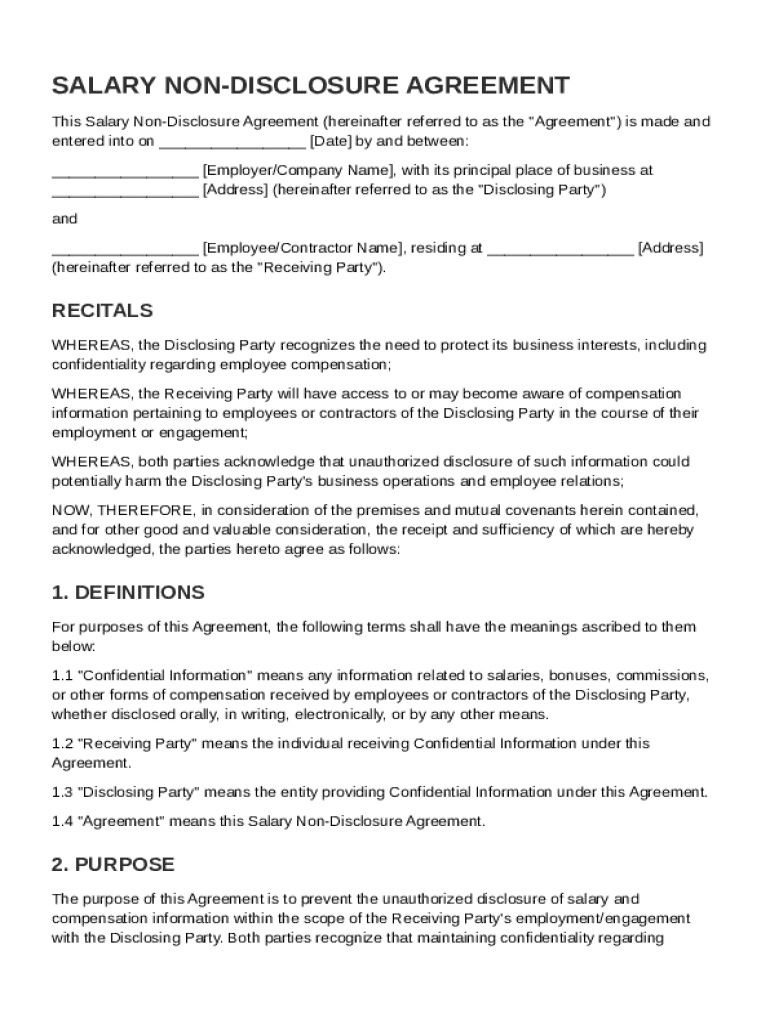







Definition & Meaning
A Salary Non-Disclosure Agreement (NDA) is a legal document that binds an employer and employee or contractor to confidentiality regarding salary and compensation details. The primary purpose is to protect sensitive financial information that, if disclosed, could potentially harm business interests or disrupt workplace harmony. This agreement outlines specific obligations for the party receiving confidential information and includes limitations on unauthorized disclosures.
How to Use the Salary Non-Disclosure Agreement Template
To use the Salary NDA template effectively, one must first understand its components and tailor them to fit the unique needs of their organization. Begin by inputting basic information such as the parties involved and the scope of information covered. Define what constitutes confidential information clearly, ensuring both parties are aware of their responsibilities. Assign any additional terms, such as the duration for which confidentiality must be maintained. Review the agreement thoroughly before both parties sign, indicating acceptance of the terms.
Key Elements of the Salary Non-Disclosure Agreement Template
The template includes crucial elements that ensure comprehensive coverage of confidentiality obligations. These elements include:
- Definition of Confidential Information: Clearly outlines what information must remain confidential, such as salary figures, bonuses, and incentive plans.
- Obligations of the Receiving Party: Details the responsibilities of the employee or contractor to protect the information from unauthorized disclosure.
- Duration of Confidentiality: Specifies how long the confidentiality obligations remain in effect, even after employment termination.
- Permitted Disclosures: Describes circumstances under which information may be disclosed legally, such as compliance with a court order.
- Consequences of Breach: Outlines potential remedies and penalties for unauthorized disclosures, including legal action or financial compensation.
Important Terms Related to Salary Non-Disclosure Agreement Template
Understanding specific terms related to Salary NDAs is crucial:
- Disclosing Party: The individual or entity providing the confidential information, typically the employer.
- Receiving Party: The individual or entity receiving the information, usually the employee or contractor.
- Third Party: Any outside entity that is not part of the agreement but could potentially gain access to the confidential information.
- Return of Information: The obligation for the receiving party to return or destroy any copies of confidential information upon termination of the agreement.
Legal Use of the Salary Non-Disclosure Agreement Template
Legally, Salary NDAs are enforceable as long as they conform to applicable laws and regulations. In the United States, these agreements must be reasonable in scope and duration to be upheld in court. It is essential that the NDA does not infringe upon employees' rights to discuss wages as protected under labor laws, such as the National Labor Relations Act. Legal counsel can provide guidance to ensure the NDA complies with all relevant legal standards.
Steps to Complete the Salary Non-Disclosure Agreement Template
Follow these steps to complete the Salary NDA template thoroughly:
- Identify the Parties: Clearly state the names and roles of both the disclosing and receiving parties.
- Define Confidential Information: Include specific details about what constitutes confidential salary information.
- State Duration of Agreement: Establish how long the confidentiality terms apply.
- Describe Permitted Disclosures: Clarify scenarios where disclosures are allowed or required by law.
- Include Remedies for Breach: List the potential consequences if the agreement is violated.
- Execute the Agreement: Ensure both parties sign and date the document, confirming their understanding and consent.
State-Specific Rules for the Salary Non-Disclosure Agreement Template
Different states may have unique rules or interpretations regarding NDAs, which can impact their enforceability. Some states, like California, have strict regulations about what can be included in NDAs, often prohibiting agreements that restrict discussing salaries. It is essential to review state-specific employment laws to ensure the NDA is compliant. Consulting with a legal professional knowledgeable about state employment law is advisable.
Who Typically Uses the Salary Non-Disclosure Agreement Template
Salary NDAs are typically used by employers who wish to maintain confidentiality around employee compensation packages. These agreements are common in competitive industries where salary data could impact position negotiations, recruitment, and retention. Additionally, organizations involved in sensitive or proprietary operations may use Salary NDAs to protect details that could affect competitive advantage. Employees or independent contractors who work with such confidential information are often required to sign these agreements.