Definition & Meaning
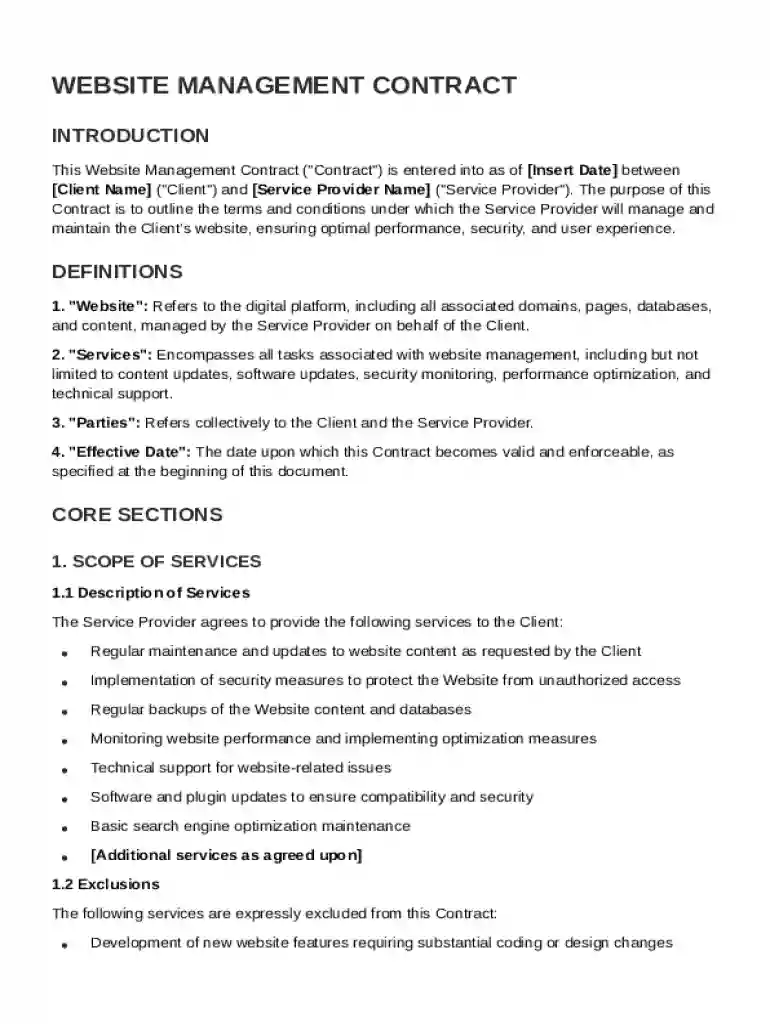
A Website Management Contract Template is a pre-drafted document used to formalize the agreement between a client and a service provider responsible for managing and maintaining a client’s website. The purpose of this template is to clearly delineate the roles, responsibilities, terms, and conditions under which the service provider will operate. This contract details the scope of work, duration of the agreement, payment terms, confidentiality clauses, and termination conditions. By utilizing this template, both parties can ensure they have a mutual understanding of expectations and obligations, thereby reducing potential for disputes and misunderstandings.
Key Elements of the Website Management Contract Template
The template includes several critical elements necessary for a comprehensive service agreement:
- Scope of Services: Clearly defines the specific services to be provided, such as regular updates, security audits, and content management.
- Payment Terms: Outlines the fee structure, invoicing frequency, and payment methods.
- Responsibilities of Each Party: Details the obligations of both the client and the service provider to ensure a smooth, collaborative relationship.
- Confidentiality Clause: Protects any sensitive information shared during the contract's duration.
- Intellectual Property Rights: Specifies the ownership of content and creative materials created during the service term.
- Liability and Indemnification: Provides protection against claims and outlines the limits of liability for each party.
- Termination Conditions: Explains how the agreement can be dissolved by either party, including any notice requirements.
How to Use the Website Management Contract Template
Using this contract template requires a careful review and customization to meet the specific needs of the client and service provider:
- Initial Review: Both parties should review the template to understand all its sections.
- Customization: Adjust the language and clauses to fit the specific project, including service details and timelines.
- Review Legal Rules: Consult with a legal expert to ensure compliance with applicable laws and regulations.
- Final Agreement: Once both parties agree on the terms, the contract is finalized and signed.
Practical Tips:
- Define measurable deliverables to avoid ambiguity.
- Include a dispute resolution process to handle potential disagreements amicably.
Steps to Complete the Website Management Contract Template
Completing the template effectively involves several steps:
- Gather Information: Collect all necessary details about the services, parties involved, and any specific terms agreed upon.
- Draft the Initial Agreement: Use the template to fill in the gathered information, ensuring clarity and completeness.
- Review and Revise: Both parties should independently review the draft to identify any required changes.
- Negotiate Terms: Engage in discussions to address any concerns or adjustments that may be needed.
- Finalize and Sign: Once the terms are mutually acceptable, each party signs the document to make it binding.
Who Typically Uses the Website Management Contract Template
This template is commonly used by various stakeholders:

- Small to Medium-Sized Businesses: These companies often outsource website management to focus on core activities.
- Freelancers and Consultants: Individuals offering specialized website services benefit from the structure and protection the contract provides.
- Digital Marketing Agencies: Such agencies use these templates to standardize agreements with multiple clients.
Legal Use of the Website Management Contract Template
To ensure legality, the contract must adhere to the following considerations:
- Compliance with Local Laws: The template should be reviewed for compliance with local and federal regulations relevant to service contracts.
- Electronic Signatures: Utilize platforms like DocHub to securely collect electronic signatures, ensuring the contract is enforceable.
- Confidentiality Assurance: Include comprehensive clauses to protect proprietary or sensitive information under legal regulations.
State-Specific Considerations:
- Tailor the contract to comply with specific legal requirements in different states, particularly regarding electronic transactions and digital signatures.
Examples of Using the Website Management Contract Template
The template can be utilized in various scenarios:
- A Local Retailer Hiring a Freelancer: A storeowner contracts a web developer to manage their e-commerce platform, facilitating service definition and payment clarity.
- Corporate Contracting with a Digital Agency: A company enters into a long-term agreement with an agency to handle ongoing site maintenance and content updates.
- Non-Profit Organizations: These organizations often need such contracts to ensure their websites align with their missions while remaining operational and secure.
Software Compatibility
Contracts generated using a Website Management Template can be managed using various software solutions:
- TurboTax and QuickBooks: These tools help businesses integrate contract information into financial software for better billing and tax reporting.
- Document Management Systems: Platforms like DocHub facilitate version control and electronic signing.
- Cloud Storage Solutions: Google Drive and Dropbox support seamless sharing and accessibility for contract management.
Benefits:
- Enhanced organizational efficiency through digital document management.
- Improved collaboration through integrated tools showcased in compatible software.