






Definition and Overview
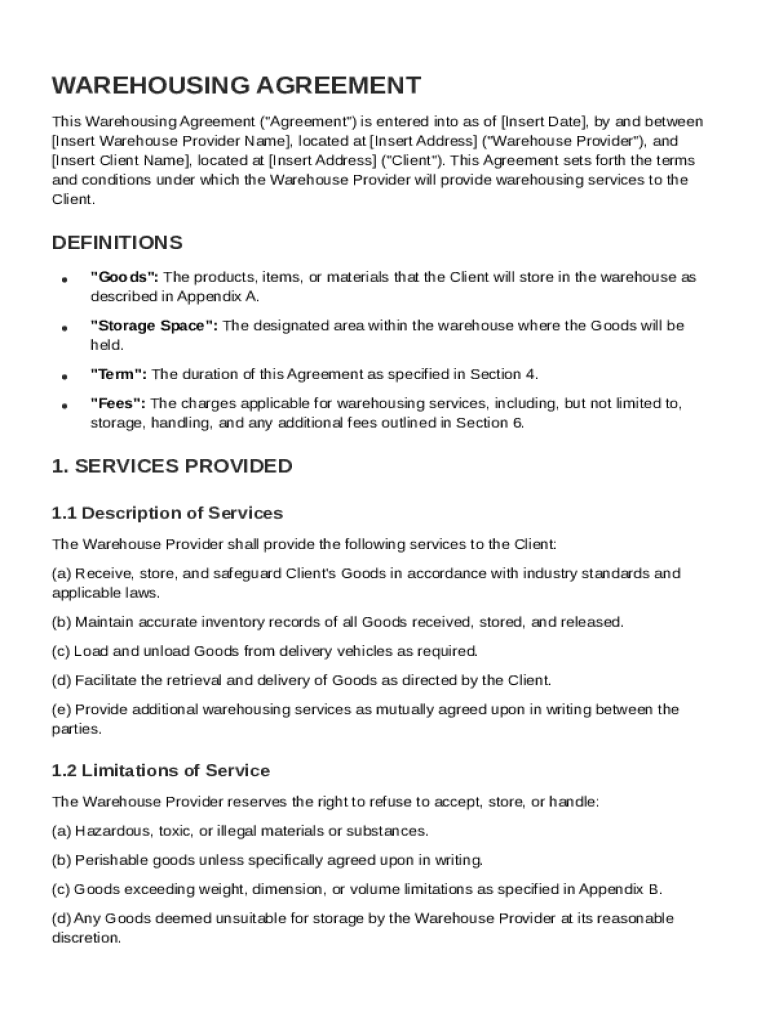
The Warehousing Contract Template is a formal agreement that defines the terms and conditions between a warehouse provider and a client for the storage and handling of goods. This comprehensive document outlines the rights and responsibilities of both parties, fee structures, liability limitations, insurance requirements, and confidentiality obligations. Such a template ensures both parties understand the expectations and provides a framework for protecting goods while detailing how these services will be rendered and paid for.
Key Elements
Key elements of the Warehousing Contract Template include:
- Parties Involved: Clearly identify the warehouse provider and client within the contract to ensure legal clarity and identify the specific entities responsible for compliance with the contract terms.
- Services Provided: Detail the specific warehousing services offered, such as storage conditions, transportation, and any additional handling or logistical support.
- Payment Terms: Specify how and when payments are expected, including potential penalties for late payments or incentives for early payments.
- Liability and Insurance: Outline the liability each party bears while goods are under care and control, and specify any insurance requirements to protect against loss or damage.
How to Use the Warehousing Contract Template
To successfully use the Warehousing Contract Template, one should follow these steps:
- Review the Template: Thoroughly read the template to understand all clauses and how each applies to both parties. Pay attention to sections that may need customization based on the specific agreement.
- Customize Details: Input specific data fields such as the names of the parties involved, warehouse location, and specific services required.
- Consult Legal Counsel: It is important to consult with legal professionals to ensure that the contract adheres to local laws and fully protects both parties involved.
- Negotiate Terms: Use the template as a starting point for negotiation. Discuss and agree upon the specifics regarding liability, fees, and services provided to tailor the contract.
- Finalize and Sign: Once both parties are satisfied with the terms, finalize the document and obtain signatures from all stakeholders to make it legally binding.
Who Typically Uses the Warehousing Contract Template
The Warehousing Contract Template is typically used by:
- Warehouses: Companies providing storage services who need a standard contract to outline terms of service, liabilities, and fees.
- Manufacturers: Businesses seeking third-party storage solutions to streamline distribution and inventory management.
- Retailers: Enterprises needing temporary or long-term storage solutions for products before they reach end customers.
- Logistics Providers: Companies offering end-to-end management of supply chains needing precise terms for storage and handling.


Legal Use of the Warehousing Contract Template
Ensuring the legal use of the Warehousing Contract Template involves:
- Compliance with State Laws: Each state may have specific regulations governing warehousing contracts. Ensure the template complies with local laws, liability standards, and procedural rules.
- Fulfilling Disclosure Requirements: Ensure all necessary disclosures regarding goods' protection, storage conditions, and any known risks are explicitly stated in the agreement.
- Document Retention: Maintain records in accordance with statutory requirements, providing evidence in case of disputes or audits.
Important Terms for the Warehousing Contract Template
Familiarity with key terms is essential for effective use of the contract:
- Bailment: The relationship in which one party (the bailor) entrusts goods to another (the bailee) for a specific purpose.
- Force Majeure: Clause specifying unforeseen events relieving parties from fulfilling contract obligations, such as natural disasters.
- Indemnity: Provision for one party to compensate the other for certain losses or damages.
Steps to Complete the Warehousing Contract Template
Completing the Warehousing Contract Template involves the following steps:
- Information Gathering: Collect all necessary information, such as company names, locations, and details of stored goods.
- Drafting and Customization: Input gathered information and customize clauses to match specifics of the agreement.
- Internal Review: Conduct a thorough internal review to ensure all stipulations reflect the agreed terms.
- Signatures and Execution: Once all conditions are reviewed and verified, proceed with obtaining signatures from authorized parties to validate the contract.
Examples of Using the Warehousing Contract Template
Practical applications of the Warehousing Contract Template include:
- Seasonal Retailer: A retailer uses the contract template to secure warehouse space for holiday inventory, defining lease terms and logistical support.
- Import/Export Company: An international trade firm adopts the template to ensure clarity regarding the storage and handling of products subject to tariffs or transport regulations.
- E-commerce Fulfillment: An online seller employs the template to formalize their relationship with a third-party fulfillment warehouse, detailing inventory turnover and fee structures.
State-Specific Rules for Warehousing Contracts
Different states may have variations in their statutory requirements for storage contracts:
- California: Contracts must include specific liability language under California Commercial Code provisions.
- New York: May require explicit terms regarding storage fees and lien claims for nonpayment.
- Texas: Informal contracts aren’t recognized unless they adhere to state-specific warehousing clauses.