







Definition & Meaning
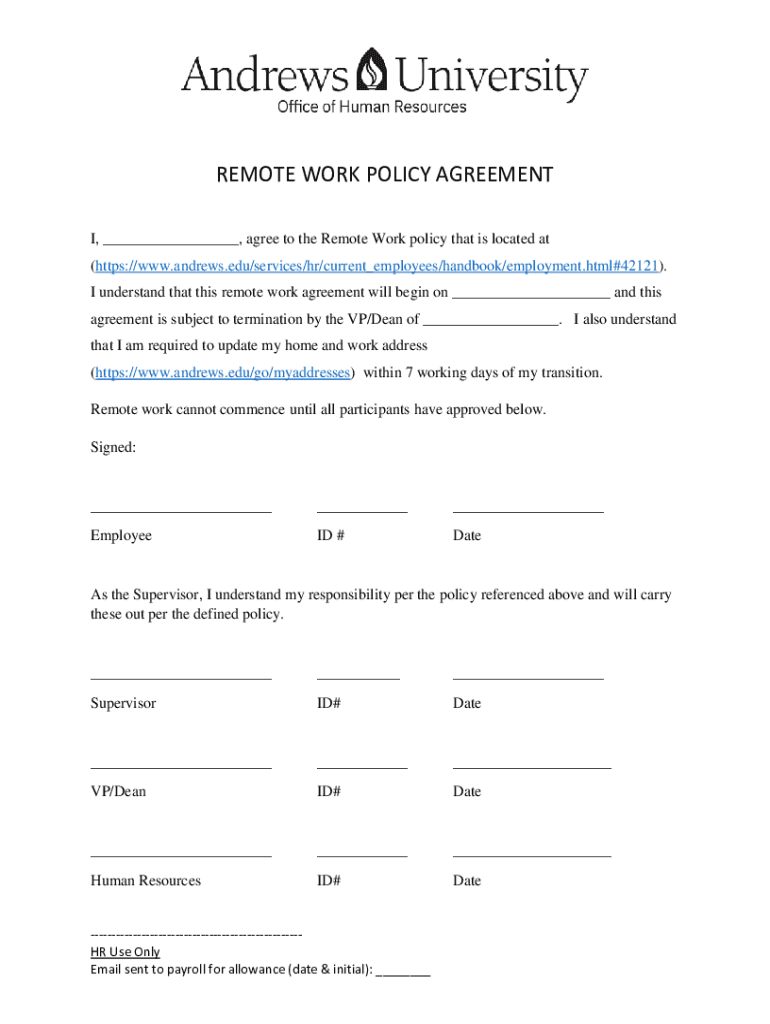
The "Remote Work U.S. Department of the Interior" form is an official document that outlines the conditions and expectations under which an employee of the Department of the Interior can engage in remote work. This agreement is used to set clear guidelines between employees and their supervisors, covering aspects such as work hours, communication expectations, and performance metrics. It establishes a mutual understanding to ensure that remote work does not impede the department's mission or employee productivity.
Key Elements of the Remote Work U.S. Department of the Interior
The form includes several crucial components to ensure comprehensive coverage of remote work arrangements. Key elements typically encompass:
- Employee Information: Details of the employee, including position and department.
- Work Schedule: Agreed-upon remote work hours and location.
- Performance Metrics: Criteria for evaluating employee productivity remotely.
- Communication Protocols: Expected methods and frequency of communication between employee and supervisor.
- Technological Requirements: Necessary equipment and software needed to perform remote duties.
How to Use the Remote Work U.S. Department of the Interior
Utilizing the form involves several essential steps to complete and validate the remote work agreement effectively:
- Complete Employee Section: Provide personal details, including name, job title, and contact information.
- Define Work Conditions: Specify the remote work schedule, including start and end times and the remote location.
- Establish Performance Objectives: Outline the goals and deliverables expected during the remote work period.
- Set Communication Standards: Agree on how and when communication will occur between the employee and management.
- Gather Approvals: The completed form requires validation and signatures from the employee, supervisor, and possibly higher management.
Steps to Complete the Remote Work U.S. Department of the Interior
To efficiently navigate the completion of the form, follow these steps:
- Download the Form: Obtain the latest version of the form from the Department of the Interior’s official website.
- Fill Personal Details: Enter your name, job title, department, and contact information.
- Specify Work Details: Clearly mention the remote working address, schedule, and any equipment needs.
- Agree on Deliverables: With your supervisor, define the deliverables and performance expectations.
- Sign and Submit: Ensure all necessary parties sign the form, then submit it as directed, often via internal HR systems or direct email to the HR department.
Who Typically Uses the Remote Work U.S. Department of the Interior
This form is predominantly used by:
- Federal Employees: Specifically, those within the U.S. Department of the Interior who desire flexibility in their work environment.
- Supervisors and Managers: Responsible for approving and overseeing the implementation of remote work arrangements.
- Human Resources Personnel: Ensure compliance with department guidelines and facilitate the necessary documentation.


Legal Use of the Remote Work U.S. Department of the Interior
The legal framework surrounding the form ensures:
- Compliance with Federal Policies: Abiding by regulations that govern remote work within federal agencies.
- Maintaining Confidentiality: Upholding standards for safeguarding sensitive government data.
- Equality in the Workplace: Ensuring remote work arrangements do not disadvantage any employee group.
Important Terms Related to the Remote Work U.S. Department of the Interior
Understanding specific terminology within the agreement is critical:
- Telecommuting: Regularly working from a location other than the central office, often from home.
- Performance Metrics: Benchmarks used to measure job performance and output remotely.
- Remote Work Schedule: The official working hours defined in the agreement.
State-Specific Rules for the Remote Work U.S. Department of the Interior
While the federal structure provides overarching guidelines, some nuances may exist depending on the state of operation:
- Tax Implications: Employees may need to comply with different state tax requirements depending on their remote work location.
- Health and Safety Regulations: Adhering to both federal and state health and safety standards for home office environments.
Examples of Using the Remote Work U.S. Department of the Interior
Consider scenarios such as:
- Field Researchers: Who might split their week between lab work onsite and data analysis at home.
- Administrative Staff: Who perform tasks that don’t require a physical presence, thereby enhancing work-life balance and reducing commute times.
By closely adhering to the guidelines set forth in the "Remote Work U.S. Department of the Interior" form, employees and supervisors can create efficient and mutually beneficial remote work arrangements that align with both individual and organizational goals.




