






Definition & Meaning
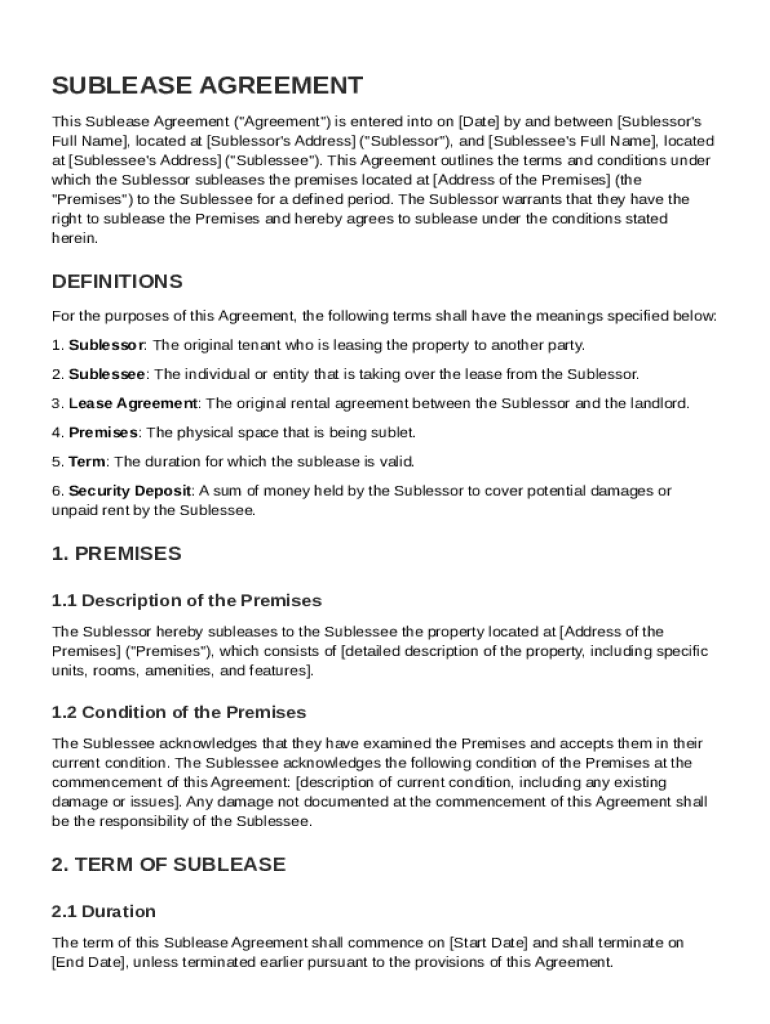
A Sublease Agreement Template is a legal document that outlines the terms under which a sublessor, who is the original tenant, rents out the leased property to a new tenant, known as the sublessee. This document retains the sublessor’s responsibility to the original lease terms while allowing another party to occupy and use the space. Key terms defined in the agreement typically include the identities of the involved parties, the premises being subleased, and the duration and financial terms of the sublease. By clearly defining responsibilities and expectations, this template serves as a protective measure for both the sublessor and the sublessee.
How to Use the Sublease Agreement Template
Using a Sublease Agreement Template involves tailoring the provided sections to fit the specific circumstances of the subleasing arrangement. This includes:
- Filling Out Party Information: Enter the full legal names of the sublessor and sublessee.
- Describing the Premises: Provide a detailed description of the property being subleased.
- Setting the Term Duration: Specify the start and end dates of the sublease period.
- Establishing Rent and Deposit Details: Outline the rent amount, due dates, and security deposit conditions.
- Defining Permissions and Prohibitions: Clearly state any rules regarding the use of premises, such as any restrictions on subletting.
- Securing Signatures: Ensure that both parties sign the agreement to make it legally binding.
Maintaining a clear understanding of these steps can facilitate smooth preparation and execution of the template.
Important Terms Related to Sublease Agreement Template
When completing a Sublease Agreement Template, certain important terms should be well understood:
- Sublessor: The original tenant leasing out the property to a sublessee.
- Sublessee: The new tenant who agrees to rent from the sublessor.
- Premises: The property being rented out under the sublease.
- Security Deposit: A refundable payment made to the sublessor to cover any damages incurred during the sublease.
- Rent: The financial payment that the sublessee agrees to pay the sublessor.
- Term: The duration of the sublease agreement.
- Maintenance Responsibilities: Specifies which party is responsible for maintaining certain areas of the premises.
Understanding these terms aids in drafting a precise and comprehensive sublease agreement.
Key Elements of the Sublease Agreement Template
A comprehensive Sublease Agreement Template includes several key elements:
- Party Information: Full names and contact information for the sublessor and sublessee.
- Property Description: A detailed description of the subleased area.
- Lease Term Details: Specific start and end dates for the sublease.
- Rent and Payment Information: Details about rent amount, frequency, payment methods, and late payment policies.
- Security Deposit Conditions: Information on deposit amounts, use, and return procedures.
- Usage Limitations: Conditions that specify permitted and prohibited uses of the property.
- Amendments and Assignments Clause: Conditions under which the agreement can be modified or reassigned.
These elements collectively ensure that all aspects of the subleasing arrangement are covered.
Legal Use of the Sublease Agreement Template
The legal use of a Sublease Agreement Template ensures that all parties have a clear understanding of their rights and responsibilities. It must align with the original lease’s terms and comply with state and local laws governing residential or commercial leases. The agreement should also identify applicable penalties for breach or non-compliance. For instance, a sublessor cannot sublease a property if the original lease explicitly prohibits subleasing. Legal validation often requires having signatures from all involved parties and, in some cases, notarization could enhance its enforceability.
State-Specific Rules for the Sublease Agreement Template
Subleasing rules can vary significantly between states due to differing landlord-tenant laws. Some states, for example, require explicit consent from the original landlord to sublease the property, while others might allow subleasing by default if not explicitly prohibited in the original lease. It is critical to check:
- State Leasing Laws: Confirm compliance with state-specific regulations.
- Consent Requirements: Determine if landlord or property manager approval is needed.
- Disclosure Obligations: Understand any mandatory disclosures, such as informing the sublessee of any known problems with the property.
Adhering to state-specific rules helps ensure the sublease agreement is legally valid.
Examples of Using the Sublease Agreement Template
Consider a university student who needs to leave campus for an internship but wishes to retain their housing lease. Using a sublease agreement, the student can rent their apartment to another student for the absence period. This not only helps recover rent costs but also adheres to the original lease terms. Additionally, a business could temporarily sublease office space during expansion into a new market, providing flexibility while limiting overhead costs.
Steps to Complete the Sublease Agreement Template
Completing the template involves several key steps:
- Review the Current Lease Agreement: Ensure no clauses within the original lease prohibit subleasing.
- Communicate With the Landlord: Acquire necessary permissions to sublease.
- Customize the Template: Enter specific details about the parties, rent, and asset usage.
- Signatures: Both parties should review and sign the finalized document.
- File Properly: Keep copies for both sublessor and sublessee as a reference.
These steps help safeguard all parties involved and streamline the subleasing process.