






Definition and Meaning
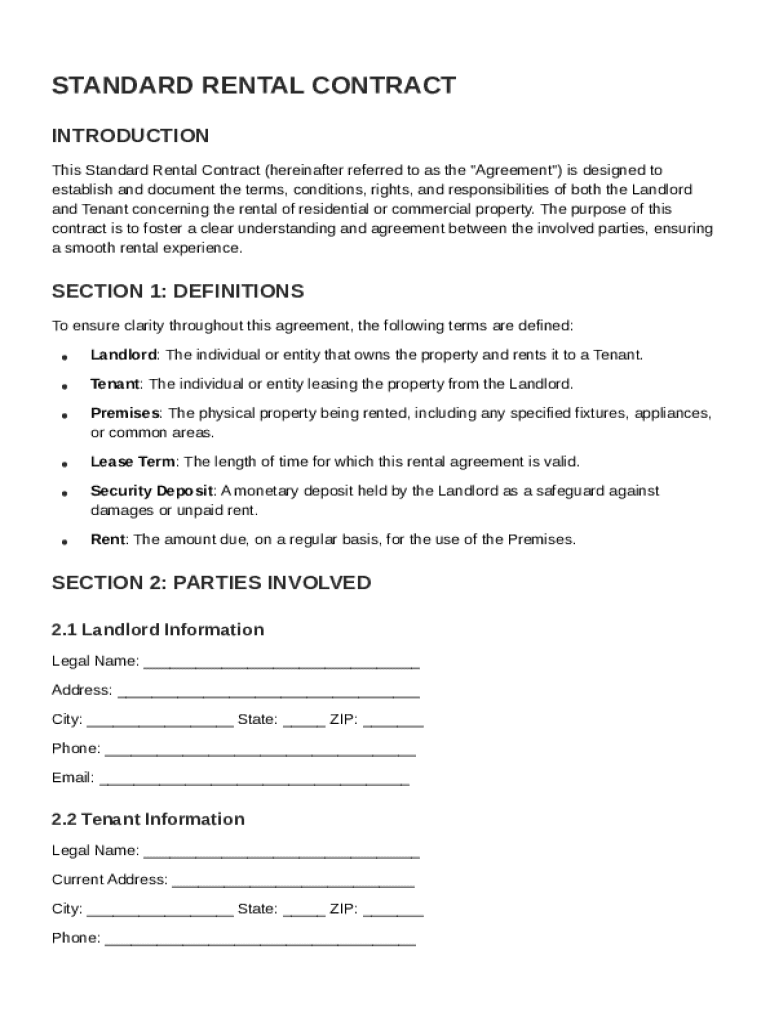
A Standard Rental Contract Template is a pre-designed document used to facilitate the agreement process between landlords and tenants for renting either residential or commercial properties. This template outlines critical terms, conditions, and responsibilities of both parties, providing a clear framework for the rental arrangement. It includes detailed sections on rent payment procedures, lease duration, maintenance responsibilities, and more, setting expectations and ensuring both parties have a mutual understanding. By using a standardized template, landlords and tenants can navigate the complexities of rental agreements with greater confidence and efficiency.
Key Elements of the Standard Rental Contract Template
The Standard Rental Contract Template typically includes several essential elements to ensure comprehensive coverage:
-
Identification of Parties: Clearly outlines the details of both the landlord and tenant, including names and contact information.
-
Property Description: Provides a detailed description of the rental property, including the address, type of property, and any included amenities or restrictions.
-
Lease Term: Specifies the duration of the lease agreement, including start and end dates, as well as terms for renewal or termination.
-
Rental Payments and Security Deposit: Details the amount of rent, due dates, and acceptable payment methods, along with information on the security deposit, its use, and refund conditions.
-
Maintenance Responsibilities: Clarifies which parties are responsible for property maintenance and repairs, specifying any limitations or specific obligations.
-
Rules and Regulations: Lists rules the tenant must adhere to during the lease term, covering aspects such as noise limits, pets, and alterations to the property.
-
Termination Conditions: Outlines the circumstances under which the lease can be terminated by either party and the required notice period.
Legal Use of the Standard Rental Contract Template
Utilizing a Standard Rental Contract Template ensures compliance with legal standards and provides a reference point for resolving potential disputes. It is crucial to make sure the contract adheres to local and state laws, including clauses relevant to tenant rights and landlord obligations. By doing so, landlords mitigate the risk of legal issues, while tenants gain assurance of their rights and protections under the law. This contract often reflects principles set by the Uniform Residential Landlord and Tenant Act (URLTA) or similar regulations depending on the jurisdiction.
Steps to Complete the Standard Rental Contract Template
-
Gather Required Information: Collect necessary details about the landlord, tenant, and property.
-
Customize the Template: Input relevant data into the template, adjusting any sections to align with specific terms or conditions agreed upon by both parties.
-
Review Legal Requirements: Ensure the completed template complies with local and state legal guidelines pertinent to rental agreements.
-
Final Review and Agreement: Both parties should review the contract thoroughly, clarifying any ambiguities or making adjustments as needed.
-
Signatures: Both landlord and tenant must sign and date the contract to validate its terms.
-
Distribution: Provide copies to all parties involved, ensuring each retains a signed version for their records.
Who Typically Uses the Standard Rental Contract Template
The Standard Rental Contract Template is primarily used by:
-
Landlords: Individuals or entities renting out property, seeking a consistent and legally compliant method to create rental agreements.
-
Property Management Companies: Organizations managing multiple rental properties, needing streamlined document processes for efficient tenant management.
-
Tenants: Prospective renters who wish to understand and formalize their rental terms with landlords.


State-Specific Rules for the Standard Rental Contract Template
Rental agreements must consider state-specific regulations that may influence contract terms, such as:
-
Rent Control Laws: Certain states have specific rules governing rent increases or stabilization, impacting the rental price terms.
-
Security Deposit Limits: Some jurisdictions place caps on the amount landlords can charge as a security deposit.
-
Termination Notice Requirements: States may have different mandates regarding the notice period required for lease termination or eviction.
Understanding these variations ensures compliance and avoids legal complications. Landlords are encouraged to consult local legal resources or professionals to align their rental contracts with applicable state regulations.
Examples of Using the Standard Rental Contract Template
Several scenarios illustrate the practical applications of a Standard Rental Contract Template:
-
Residential Rentals: A landlord leasing a single-family home to a family uses the template to specify rent, maintenance rules, and pet policies.
-
Commercial Property Leases: For business space rentals, the contract might include specific clauses regarding permitted usage, base rent adjustments, and terms for renewal.
-
Subletting Agreements: In cases where tenants sublet a property, the template helps establish terms between the original tenant and subtenant, maintaining compliance with the primary lease.
Important Terms Related to the Standard Rental Contract Template
Understanding key terms associated with rental contracts enhances comprehension:
-
Lessee and Lessor: Refers to the tenant (lessee) and the property owner or manager (lessor).
-
Tenant's Rights: Legal protections afforded to tenants under state and federal laws.
-
Property Maintenance Clause: Specific obligations regarding the upkeep and repair of the property, often detailing responsibilities of each party.
-
Governing Law: The jurisdiction whose laws will be applicable for resolving disputes and interpreting the contract.
Knowledge of these terms empowers both landlords and tenants to navigate rental agreements more effectively, ensuring mutual understanding and legal adherence.