






Definition & Meaning
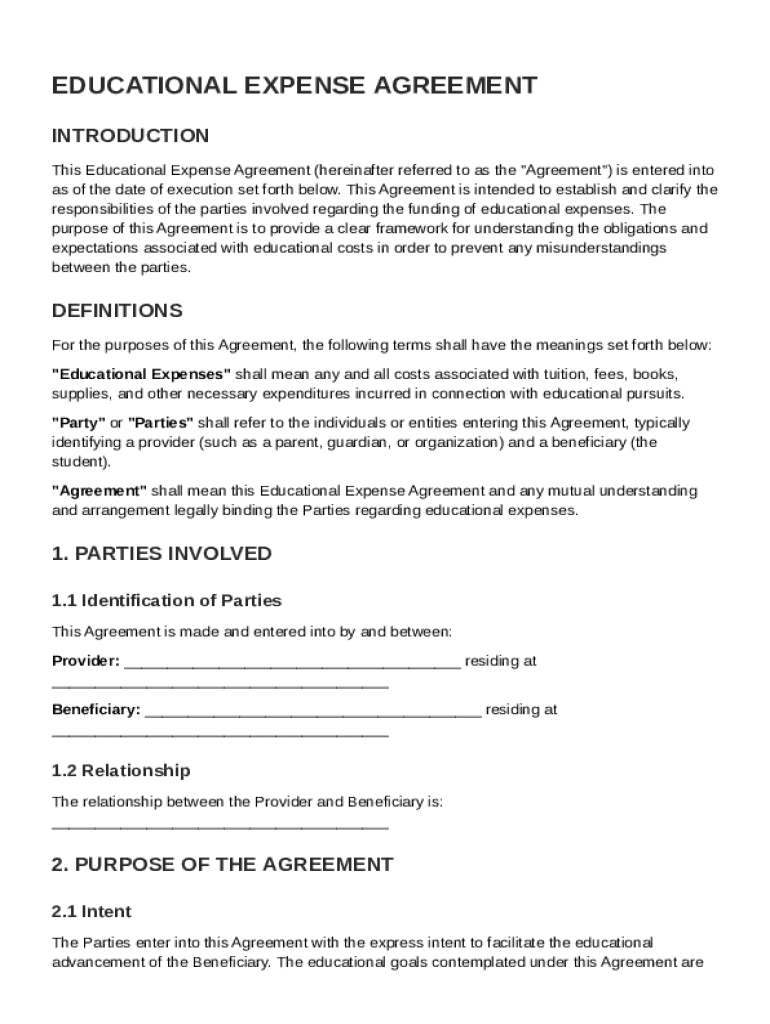
The Educational Expense Agreement Template is a formal document that outlines the responsibilities and expectations of the parties involved in funding educational expenses for a designated beneficiary. This agreement is crucial for clarifying the financial commitments of a provider, which could be an individual, organization, or scholarship fund, and the obligations of the beneficiary, such as maintaining academic performance and providing necessary documentation. The template ensures all parties are aware of and agree to the terms, minimizing the risk of disputes or misunderstandings regarding educational costs.
Key Elements of the Educational Expense Agreement Template
Financial Obligations
The template clearly details the financial commitments of the provider. This section includes specifics on the amount of funding, payment schedules, and any applicable conditions that must be met by the beneficiary to receive continued support. It ensures transparency and sets clear expectations, providing both parties with a structured framework for planning and managing educational expenses.
Beneficiary Responsibilities
Outlined within the agreement are the duties of the beneficiary. Responsibilities often include maintaining a certain level of academic performance, submitting regular progress reports, and adhering to any specified conditions tied to the funding. It is important for the beneficiary to be aware of these requirements to continue receiving financial support without interruption.
Payment Schedules
The payment schedule section specifies the frequency and timing of payments, which helps both the provider and beneficiary manage financial planning effectively. It may include specific dates for disbursements, conditions under which payments may be adjusted, and procedures for handling missed or delayed payments.
How to Use the Educational Expense Agreement Template
Step-by-Step Completion
- Identify Parties Involved: Clearly designate the provider and beneficiary, including contact information and any additional stakeholders.
- Outline Financial Details: Specify the amount, payment schedule, and conditions for funding. Detail any adjustments related to academic performance.
- List Beneficiary Obligations: Include all academic and reporting requirements.
- Review and Amendments: Facilitate discussions if there are amendments or additional terms needed.
- Finalize and Sign: Secure signatures from all involved parties after final agreement updates.
Template Adaptation
The template can be adjusted to reflect specific requirements of the program or agreement. Users can customize sections based on additional terms or conditions unique to their arrangement, ensuring all aspects of the agreement are personalized and relevant.
Who Typically Uses the Educational Expense Agreement Template
This agreement is commonly used by scholarship providers, educational institutions, non-profit organizations, and family benefactors who contribute to a beneficiary’s educational expenses. The template serves as a vital tool in both individual and organizational settings where financial assistance for education is provided, structured, and regulated.


Legal Use of the Educational Expense Agreement Template
Compliance and Law
The agreement incorporates legal provisions to ensure compliance with applicable laws such as educational funding regulations and privacy standards. Legal clauses may cover topics like governing law, dispute resolution methods, confidentiality agreements, and termination conditions, providing a secure and lawful framework for both parties involved.
Protecting Parties
Incorporating legal parameters ensures the protection of both provider and beneficiary. This includes clearly defined clauses about what constitutes a breach of agreement and the consequent actions. By establishing legal boundaries, both parties can prevent and address potential legal challenges effectively.
Examples of Using the Educational Expense Agreement Template
Case Study: Scholarship Program
In a scholarship program, an organization funds a student’s tuition and other educational expenses in exchange for the student maintaining a minimum GPA and providing semester reports. The agreement secures the organization’s funds while ensuring the student meets the expected academic standards.
Family Benefactor Agreement
A family member agrees to pay for another relative's college tuition, stipulating conditions such as maintaining full-time enrollment and quarterly check-ins. This agreement allows the family benefactor to track progress and manage disbursements effectively.
Important Terms Related to Educational Expense Agreement Template
Common Term Definitions
- Provider: The party offering financial assistance.
- Beneficiary: The student or individual receiving educational funding.
- Governing Law: The legal jurisdiction applicable to the agreement.
- Dispute Resolution: Processes established for resolving disagreements.
Terminology Clarity
Each term plays a significant role in clarifying the responsibilities and rights of each party. Understanding these terms ensures that all involved have a comprehensive understanding of the document’s expectations and requirements.
Required Documents for the Educational Expense Agreement Template
Essential Document List
- Proof of Enrollment: Verification of the beneficiary’s current academic status.
- Personal Identification: Documents for both parties, ensuring accurately recorded information.
- Previous Report Cards: Academic performance records, if applicable.
Supplementary Documentation
In some cases, additional documents like financial statements or recommendation letters may be required to supplement and validate the agreement's terms.
State-Specific Rules for the Educational Expense Agreement Template
State Regulations
Different states within the U.S. may have unique rules affecting educational agreements, such as maximum allowable funding or specific privacy laws. Understanding these variations ensures compliance with all applicable state guidelines.
Adjustment and Compliance
The template must be adaptable to meet these state-specific requirements, giving users the flexibility to include or modify clauses to ensure legal conformity across different jurisdictions.