






Definition and Purpose of a House Lease Agreement Template
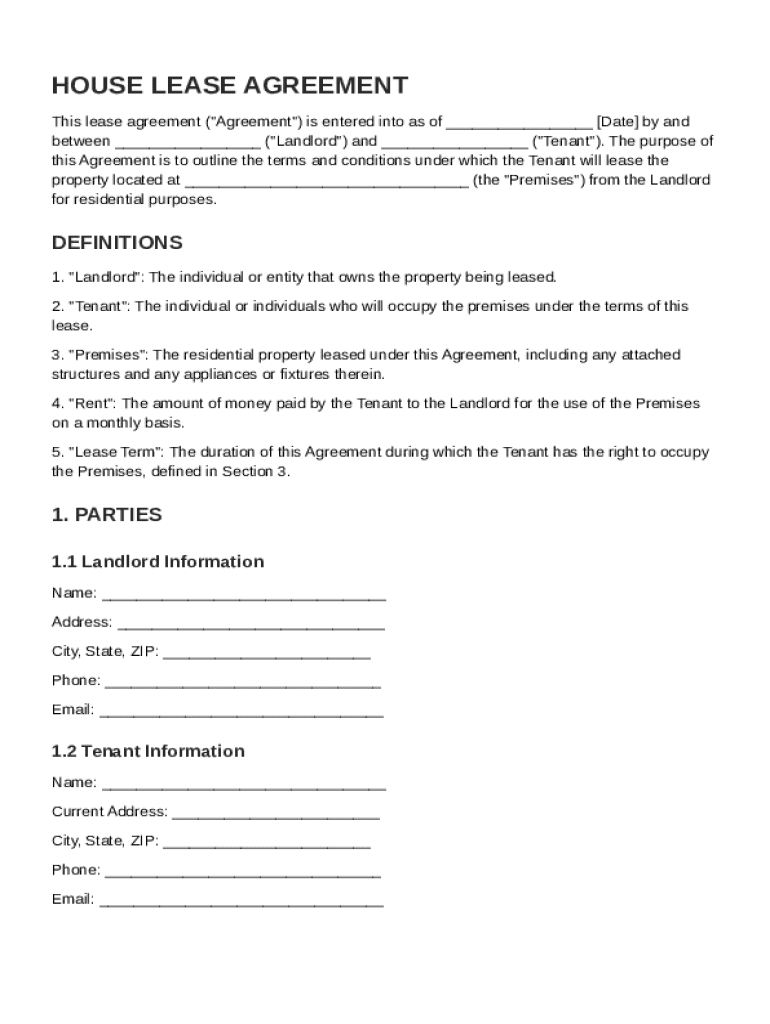
The House Lease Agreement Template serves as a formal contract between a landlord and tenant, outlining the terms and conditions under which a residential property is leased. This document provides a structured framework to ensure that both parties clearly understand their rights and responsibilities. Common components include the identification of parties, description of the premises, lease duration, and rent payment terms. By using a standardized template, landlords and tenants can protect their interests while minimizing misunderstandings and disputes.
How to Use the House Lease Agreement Template
To effectively use the House Lease Agreement Template, follow these steps:
-
Download the Template: Obtain a copy of the template from a reliable source or document management platform like DocHub, ensuring it complies with local statutes.
-
Enter Party Details: Fill in the names, contact information, and legal details of both the landlord and the tenant. Verify accuracy to avoid future legal complications.
-
Complete Property Description: Provide a detailed description of the property, including address, type, and any notable features.
-
Specify Lease Terms: Clearly define the lease term, including the start and end dates.
-
Outline Rent Details: State the rent amount, payment frequency, and preferred payment methods. This section should also cover any late fees or penalties.
-
Set Conditions for Security Deposit: Detail the amount of the security deposit, conditions for its return, and any deductions permissible by law.
-
Review and Adjust: Examine the entire agreement to ensure all necessary elements are included and modify sections to fit specific needs while maintaining compliance with state laws.
After completing the template, landlords and tenants should review it together and ensure mutual understanding and agreement before signing.
Key Elements of the House Lease Agreement Template
A comprehensive house lease agreement should incorporate several critical elements:
- Identification of Parties: Full legal names and roles of the landlord and tenant.
- Property Description: Detailed information about the leased premises.
- Lease Term: Duration of the lease, including specific start and end dates.
- Rent and Payment Schedule: Amount of rent, due dates, and acceptable forms of payment.
- Security Deposit: Amount, conditions for return, and potential deductions.
- Maintenance and Repairs: Responsibilities of each party regarding upkeep and major repairs.
- Use and Occupancy: Permitted use of the property and restrictions on occupancy.
- Termination Conditions: Circumstances under which the lease may be terminated by either party.
- Governing Law: Reference to the state laws that govern the agreement, ensuring legal compliance.
Legal Use and Compliance
Compliance with local and state laws is paramount when using a house lease agreement template. Each state has specific regulations governing residential leases, covering aspects such as allowable security deposit amounts, required disclosures, and eviction procedures. To ensure legal validity:
-
Review State Laws: Familiarize yourself with the relevant statutes and regulations in your jurisdiction.
-
Consult Legal Counsel: If there are uncertainties, seek guidance from a real estate attorney to ensure the agreement meets all legal requirements and protects both parties' rights.
-
Include Mandatory Disclosures: Certain disclosures, like the presence of lead-based paint or known environmental hazards, may be required by law.
Fulfilling these legal obligations safeguards against disputes and potential legal actions.
Examples of Using the House Lease Agreement Template
Practical applications of the House Lease Agreement Template include:
- Long-term Residential Leases: Securing a 12-month lease for a single-family home.
- Short-term Rentals: Establishing a six-month lease agreement for an apartment.
- Subleasing Arrangements: Outlining terms for subleasing part of a property while continuing a master lease.
- Month-to-Month Tenancies: Creating flexible agreements for tenants who prefer short-term commitments.
Each example reflects variations in lease agreements, highlighting the template's adaptability to different lease situations.
Important Terms and Conditions
Clarity in terminology is vital. Some critical terms include:
- Tenant and Landlord: Define roles and responsibilities clearly.
- Premises: The specific property being leased, including all access and usage rights.
- Rent: Payment frequency, methods, and consequences of non-payment.
- Security Deposit: Conditions for refund and potential charges.
- Repairs and Maintenance: Specific duties assigned to each party.
Understanding these terms helps prevent confusion and ensures both parties adhere to the agreement.
State-by-State Differences
Lease agreements must comply with state-specific laws and regulations. Key differences may include:
- Security Deposit Limits: Varying caps on the amount a landlord may charge.
- Eviction Procedures: Distinct protocols for notice periods and legal proceedings.
- Tenant Rights: Differences in how landlords must notify tenants of changes.
Keeping informed of these variations ensures that lease agreements are both effective and legally compliant.
Enhancements with DocHub for Lease Agreements
Leveraging DocHub's capabilities can enhance the process of creating and managing lease agreements:
- Document Editing and Annotation: Modify and annotate templates directly within the platform.
- Secure Sharing and Access: Utilize encryption and password protection for sensitive documents.
- Legally-Binding Electronic Signatures: Facilitate remote signing while maintaining compliance with the ESIGN Act.
This integration simplifies documentation, making lease management more efficient and secure.