






Definition of the Between Two Parties Agreement Template
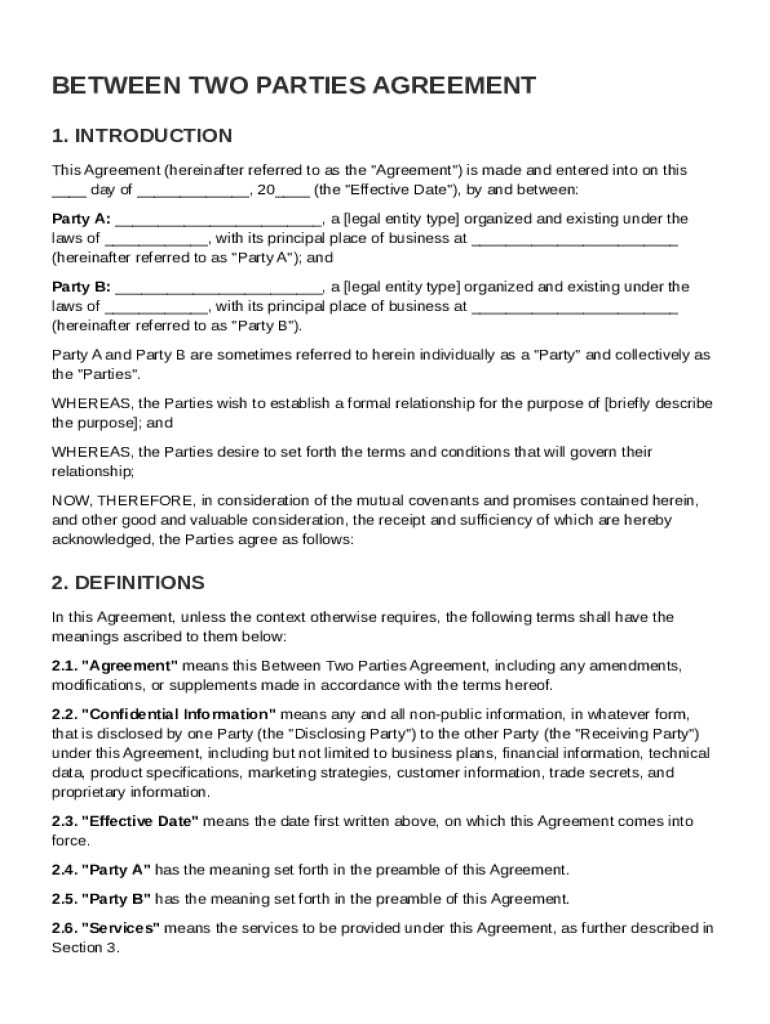
The Between Two Parties Agreement Template is a legally binding document that sets out the rights and responsibilities of two involved parties, often referred to as Party A and Party B. This template is designed to provide a clear framework for collaboration between the parties, ensuring both understand and agree to the terms governing their relationship. Within the agreement, several components are typically included, such as definitions of key terms, specific obligations each party must fulfill, and provisions for confidentiality and dispute resolution. This template's format allows users to adapt it for various scenarios by offering a structured yet flexible approach to creating clear and enforceable agreements.
Key Elements of the Between Two Parties Agreement
A comprehensive Between Two Parties Agreement contains several essential sections that define and clarify the terms of the partnership:
- Definitions: Establishes precise meanings for terms used within the agreement, eliminating ambiguity and ensuring mutual understanding.
- Obligations and Responsibilities: Details the specific duties each party has agreed to undertake, outlining expectations clearly to prevent disputes.
- Financial Arrangements: Specifies the financial terms, including payment schedules, expense responsibilities, and any associated penalties for non-compliance.
- Confidentiality Provisions: Sets forth how confidential information exchanged between the parties during the agreement will be protected.
- Term and Termination: Identifies the duration of the agreement and the conditions under which it can be terminated by either party.
- Dispute Resolution: Describes the processes for resolving conflicts, including mediation and arbitration options before legal action is considered.
- Miscellaneous Provisions: Covers various other terms such as amendments, notices, and governing law.
How to Use the Between Two Parties Agreement Template
Using the Between Two Parties Agreement Template involves several steps to ensure it properly reflects the specific partnership objectives:
- Download and Review the Template: Obtain the standard template and thoroughly review each section to understand the provisions it includes.
- Customize for Specific Needs: Modify any sections to tailor the language and provisions to suit the particular needs of the parties involved in the agreement.
- Include Additional Clauses: If necessary, add clauses that address any unique aspects of the agreement not already covered by the template.
- Legal Review: Consult with a legal professional to review the finalized draft to confirm compliance with applicable laws and regulations.
This meticulous process ensures that all parties have a clear and detailed understanding of their roles and responsibilities.
Steps to Complete the Between Two Parties Agreement
Completing the Between Two Parties Agreement requires following a methodical process to ensure that every detail is accurately captured:
- Gather Preliminary Information: Collect all relevant data needed to fill out the agreement, such as the full names of the parties and a clear description of the agreement's purpose.
- Fill Out the Template: Enter the gathered information into the template, ensuring accuracy and consistency throughout.
- Review and Revise: Go through the completed document, checking for any errors or omissions, and make any necessary revisions.
- Obtain Approvals: Have both parties review the agreement and provide their approval, making further adjustments if required.
- Sign the Agreement: Once the document is agreed upon, both parties should sign it, providing a legally enforceable seal to the terms.
Legal Use of the Between Two Parties Agreement Template
The Between Two Parties Agreement Template serves as a formal tool ensuring that relationships between parties are aligned with legal standards. This template aids in creating compliance-focused agreements by:
- Providing a clear and legally sound structure that adheres to applicable state and federal laws.
- Offering clear guidance on how to include legally required terms that protect both parties' interests.
- Allowing parties to address potential legal liabilities by including specific terms on issues like indemnity and liability limitations.
Important Terms Related to the Agreement
Several key legal terms and concepts are essential for understanding and utilizing the Between Two Parties Agreement effectively:
- Indemnification: A contractual agreement to compensate for any harm, loss, or damage incurred in the course of the partnership.
- Force Majeure: A clause that releases parties from liability or obligation when extraordinary events prevent fulfilling contract provisions.
- Jurisdiction: Specifies the legal authority under which any disputes related to the agreement will be subject to resolution.
These terms play a critical role in defining the nature and scope of the agreement’s legal binding.
Who Typically Uses the Between Two Parties Agreement Template
This agreement template is versatile and used by various parties who seek to formalize their cooperative arrangements, including:
- Businesses: Companies looking to establish contractual relationships with vendors, clients, or partners.
- Non-Profit Organizations: Groups that collaborate with other entities for charity projects or initiatives.
- Freelancers and Service Providers: Independent professionals entering into service agreements with clients.
These user groups benefit significantly from a clear, structured agreement template for formalizing and guiding collaborations.


Examples of Using the Between Two Parties Agreement Template
Real-world applications of the Between Two Parties Agreement Template include:
- Business Partnerships: Two companies enter a joint venture, using the agreement to outline financial contributions and shared responsibilities.
- Creative Collaborations: An artist and a gallery sign an agreement stipulating payment terms, exhibition rights, and promotional duties.
- Consulting Services: A consultant drafts an agreement with a client detailing scope of work, deliverables, and compensation.
These examples emphasize the template's flexibility in serving diverse arrangements while maintaining clarity and mutual commitment.