






Definition & Meaning
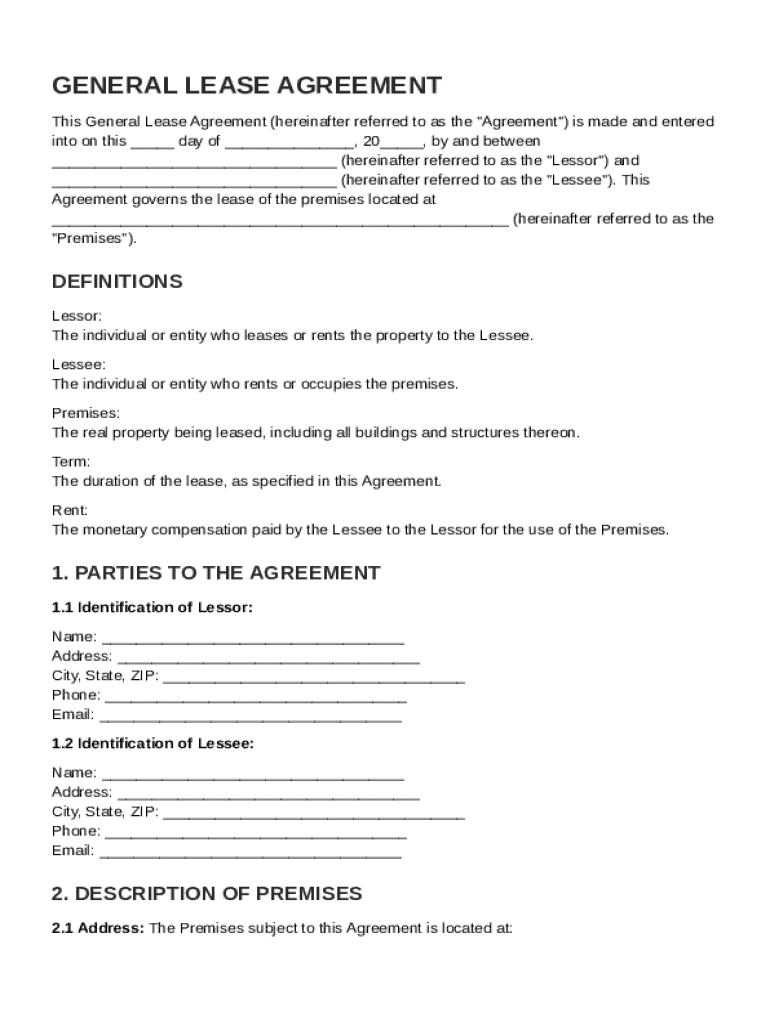
A General Lease Agreement Template is a legally binding document used to formalize the rental relationship between a lessor, typically a property owner, and a lessee, the tenant. It defines the terms and conditions for leasing a property, establishing essential components like the identification of the parties involved, a description of the premises, and the lease duration. This template serves as a framework that ensures both parties are aware of their rights and responsibilities, helping to prevent future disputes.
The agreement typically outlines key terminologies used throughout, such as "rent" (the payment for use of the property), "premises" (the leased property), and "security deposit" (money held by the lessor to cover potential damages). These definitions ensure clarity, enabling both parties to have a clear understanding of document elements and stipulations.
Key Elements of the General Lease Agreement Template
The General Lease Agreement Template comprises various crucial components, each serving its purpose to uphold the legal relationship between the lessor and the lessee.
- Lease Duration: This section specifies the length of the lease term, including the start and end dates. Clarity in this section helps avoid misunderstandings related to tenancy duration.
- Rent Payment Details: It includes the amount of rent, payment method, due dates, and any late fee penalties. Transparency in this section is essential to ensure timely payments.
- Security Deposit Requirements: This clause explains the amount required for the security deposit, its purpose, and conditions for its return at the end of the lease. This protects the lessor from potential damages or unpaid rent.
- Permitted Uses of the Premises: This section outlines what activities are allowed on the premises, ensuring that the property is used according to the lessor's standards.
- Termination Conditions: Conditions under which the lease can be terminated by either party are detailed, providing guidelines for voluntary or necessary lease termination.
- Maintenance Responsibilities: Specifies which party is responsible for maintaining different aspects of the property, which can include regular upkeep or repairs.
Steps to Complete the General Lease Agreement Template
Completing a General Lease Agreement Template requires careful attention to each component to ensure accuracy and protection for both parties.
- Fill in Identification Details: Start by accurately identifying the lessor and lessee, including full names and contact information.
- Describe the Premises: Provide a detailed description, including the address and any specific terms related to the property's condition or amenities.
- Specify the Lease Duration: Clearly outline the lease start and end date to avoid confusion about the leasing period.
- Outline Payment Details: Enter the rent amount, due date, payment method, and any late fees to ensure transparency in financial obligations.
- Include Security Deposit Information: State the deposit amount, its purpose, and conditions for its return or forfeiture.
- Define Permitted Uses: Clearly specify what activities are allowed on the premises to prevent breaches of contract.
- Agree on Maintenance Roles: Detail responsibilities for property maintenance and repairs to clarify expectations and reduce disputes.
State-Specific Rules for the General Lease Agreement Template
Real estate laws can vary significantly from state to state, influencing how lease agreements are structured and enforced.
- Security Deposit Limits and Return: Certain states have laws that cap the maximum security deposit amount and stipulate the timeframe in which it must be returned after the lease ends.
- Disclosure Requirements: Lessees in some states have the right to specific disclosures, such as the presence of lead-based paint or known safety hazards, which must be included in the agreement.
- Eviction Policies: States have different rules about eviction processes, including notice periods and reasons that are legally acceptable for eviction.
Incorporating state-specific regulations ensures legal compliance and protects both parties from potential legal issues.
Legal Use of the General Lease Agreement Template
The General Lease Agreement Template is crafted to comply with legal standards and provides a safeguard against misunderstandings or disputes.
- Binding Contract: Once signed, the lease agreement is legally binding, obligating both parties to adhere to its terms.
- Proof of Transaction: It serves as formal evidence of the rental arrangement, which is beneficial during disputes.
- Legal Protection: The document protects the lessee's rights to occupy the premises and the lessor's rights to receive rent, addressing potential breaches and remedies legally.
Using a properly structured lease agreement minimizes risks and solidifies the tenancy's legal standing.
Important Terms Related to General Lease Agreement Template
Understanding specific terms in a lease agreement is crucial for both parties to feel confident in their engagement.
- Lessor and Lessee: Identifies the property owner and the tenant, respectively.
- Premises: The specific location being rented out, often defined with a precise description.
- Subleasing: This term specifies conditions under which the tenant may lease the premises to another individual.
- Rent Abatement: Clauses detailing conditions under which rent might be temporarily reduced or suspended, such as during major repairs.
Clarity in these terms helps prevent legal ambiguities and streamlines the enforcement of the agreement.
Who Typically Uses the General Lease Agreement Template
The General Lease Agreement Template is versatile, suitable for various parties involved in property leasing.
- Individual Landlords and Tenants: Private property owners and renters are the primary users, employing the agreement to formalize residential leasing arrangements.
- Property Management Companies: They use standardized lease agreements to maintain consistency and legal compliance across properties they manage.
- Legal Advisors and Real Estate Agents: Professionals guiding clients through real estate transactions often prepare such templates for legal standardization and efficacy.
These users trust the lease agreement to guide clear and legal rental relationships, minimizing the chances of conflict.


Examples of Using the General Lease Agreement Template
Practical examples illustrate the utility and flexibility of the General Lease Agreement Template.
- Residential Lease: A family moves into a rental home, using the agreement to outline rent, duration, and responsibilities for garden maintenance.
- Commercial Lease: A small business leases a storefront, utilizing the lease to specify terms for permitted commercial activities and leasehold improvements.
- Subleasing Arrangement: A college student subleases their apartment during a summer internship, formalizing terms with a fellow student to ensure continued rent payments.
These examples highlight the template's adaptability across various real-world leasing scenarios.