
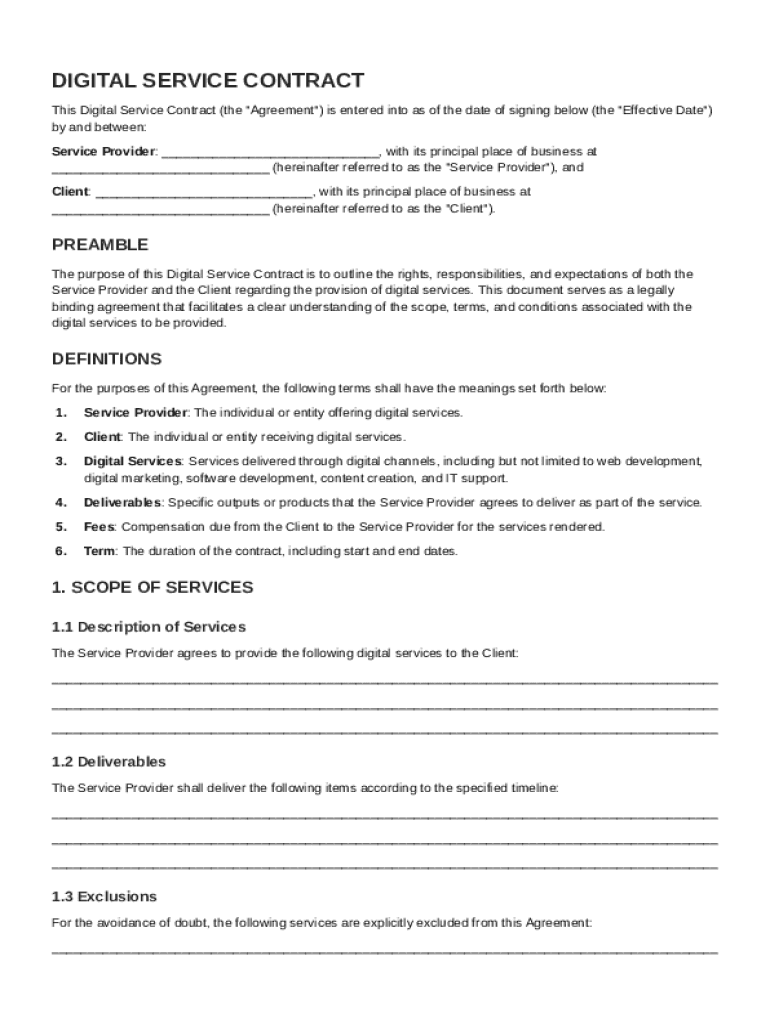







Definition and Meaning of the Digital Service Contract Template
A Digital Service Contract Template is a pre-configured document designed to outline the legal terms and conditions between service providers and clients regarding the provision of digital services. This template serves as a legal framework that governs the professional relationship, specifying the rights, responsibilities, and expectations of both parties. The contract typically includes sections on scope of services, compensation, intellectual property rights, confidentiality, warranties, liabilities, governing law, and dispute resolution. It aims to ensure both parties have a clear understanding of their duties and obligations, reducing the potential for misunderstandings and disputes.
The template is especially beneficial for businesses and freelancers in the digital services sector, providing a standardized starting point that can be customized to fit specific agreements. By using this template, parties can ensure all critical elements of a service agreement are covered, streamlining the contract creation process.
How to Use the Digital Service Contract Template
Users can leverage the Digital Service Contract Template to efficiently draft comprehensive service agreements that protect both the service provider and client. Here's a step-by-step guide to using the template:
-
Download the Template: Start by downloading the Digital Service Contract Template from a reputable source like DocHub. Ensure it aligns with the specific requirements of your service industry.
-
Customize for Specific Agreements: Tailor the template to meet the particular needs of the contract. This involves filling in details such as the names of the parties involved, specific services to be provided, payment terms, and deadlines.
-
Review Legal Provisions: Thoroughly review all legal sections, such as confidentiality and liability clauses, to ensure they reflect the agreed-upon terms. Consider consulting a legal professional if necessary to validate these sections.
-
Include Signatures: Facilitate electronic signatures through platforms like DocHub to ensure the contract is legally binding. Make sure all parties involved sign the agreement before any work commences.
-
Distribute Copies: Once finalized, distribute signed copies to all parties involved, ensuring everyone has access to the contract terms.
Using the template effectively minimizes legal risks and solidifies the agreement, fostering a professional and trusting relationship between service providers and clients.
Key Elements of the Digital Service Contract Template
The Digital Service Contract Template is composed of several key elements that delineate the terms and conditions governing the service agreement. These elements include:
-
Scope of Services: Clearly defines the services to be provided, including deliverables and timelines.
-
Compensation and Payment Terms: Details the financial arrangements, such as payment amounts, schedules, and methods. It is essential to specify any upfront fees or milestones linked to payment.
-
Intellectual Property Rights: Outlines the ownership and use rights of intellectual property created under the agreement. This section is crucial for digital services involving content creation or software development.
-
Confidentiality Obligations: Establishes provisions for protecting sensitive information exchanged during the partnership. This may include non-disclosure obligations and data protection measures.
-
Warranties and Liabilities: Specifies warranties for the services and limits to liability, protecting both parties from excessive claims.
-
Governing Law and Dispute Resolution: Determines which jurisdiction’s laws will govern the contract and outlines procedures for resolving disputes, such as mediation or arbitration.
Each element is integral to forming a robust contract that safeguards the interests of both the service provider and client.
Steps to Complete the Digital Service Contract Template
Completing a Digital Service Contract Template involves a systematic approach to ensure all necessary details are captured accurately. Here is a detailed breakdown of the steps required:
-
Gather Information: Collect essential details from both parties, including names, addresses, and contact information.
-
Define Services: Specify the nature of the services to be provided, including detailed descriptions of each task or deliverable. Include timelines for each service.
-
Outline Financial Terms: Clearly state the payment terms, including rates, due dates, and accepted payment methods.
-
Address Legal Terms: Customize clauses related to confidentiality, intellectual property, and liability according to the specific agreement. Ensure compliance with any industry-specific regulations.
-
Review and Revise: Carefully review the entire document for accuracy and completeness. Make any necessary revisions to align with both parties’ expectations.
-
Sign the Contract: Use platforms like DocHub to facilitate electronic signatures. Confirm that all parties have signed the document to render it enforceable.
-
Store and Share: Securely store the signed contract and share copies with all involved parties for their records.
Following these steps ensures the contract is thorough and enforceable, helping prevent disputes and misunderstandings.
Legal Use of the Digital Service Contract Template
Utilizing the Digital Service Contract Template in a legally compliant manner is vital for ensuring its enforceability. Here are some guidelines and considerations:
-
Customization: While the template provides a solid foundation, modifications are often needed to suit specific agreements. Legal advice can be invaluable when making substantial changes.
-
Compliance with Laws: Ensure the contract complies with relevant U.S. laws and regulations, including areas like consumer protection, privacy, and intellectual property.
-
Signatories’ Authority: Confirm that individuals signing the contract have the legal authority to bind their respective parties.
-
Electronic Signatures: Electronic signatures obtained through platforms like DocHub are legally binding under U.S. law, provided they adhere to the ESIGN Act requirements.
-
Retention of Contracts: Store contracts securely to maintain a reliable record that can be referenced in case of disputes.
These legal considerations reinforce the importance of diligence and attention to detail when employing the Digital Service Contract Template.
Important Terms Related to the Digital Service Contract Template
Familiarity with the important terms associated with the Digital Service Contract Template enhances clarity and communication. Key terms include:
-
Service Provider: The individual or company that offers digital services as detailed in the contract.
-
Client: The individual or organization that receives and compensates for the services.
-
Deliverables: Specific outputs or results to be provided by the service provider.
-
Milestones: Key stages or checkpoints within the project timeline that often trigger partial payments.
-
Confidential Information: Any data or information identified as confidential that must be protected from unauthorized disclosure.
-
Termination Clause: Conditions under which the contract may be prematurely ended by either party.
Understanding these terms is crucial for interpreting contractual responsibilities and executing the agreement effectively.
Examples of Using the Digital Service Contract Template
Practical examples of using the Digital Service Contract Template can illustrate its versatility and application. Some scenarios include:
-
Freelance Web Development: A freelance web developer and a small business client use the template to outline the creation of a new e-commerce website. They specify the design process, delivery schedule, payment installments, and maintenance responsibilities after the site launch.
-
Digital Marketing Services: A digital marketing agency employs the template to structure an agreement with an online retailer. The contract covers services such as SEO optimization, social media management, and content creation, along with performance metrics and reporting requirements.
-
Software Development: A software firm uses the template to formalize a contract with a corporation seeking customized software solutions. It includes provisions for development cycles, testing phases, intellectual property, and support services.
These examples demonstrate the template’s adaptability across various digital service sectors, emphasizing the need for tailored, detailed agreements.
Business Types That Benefit Most from Digital Service Contract Template
Different types of businesses stand to gain significant advantages from using the Digital Service Contract Template. These include:
-
Freelancers and Small Agencies: Individuals or small teams providing services such as graphic design, content creation, and consulting can utilize the template to streamline contract negotiations and protect their interests.
-
Tech Startups: Startups involved in app development, software solutions, or tech consulting will find the template useful for formalizing relationships with clients while safeguarding intellectual property.
-
Digital Marketing Firms: Agencies offering search engine optimization, pay-per-click management, or social media marketing services can use the template to define scope and deliverables, setting clear expectations for clients.
-
Creative Studios: Creative entities focusing on video production, animation, or photography can leverage the template to secure terms on project timelines, rights management, and payment structures.
By tailoring the template to their specific operations, these businesses can enhance workflow efficiency and ensure legally sound agreements.




