






Definition & Meaning
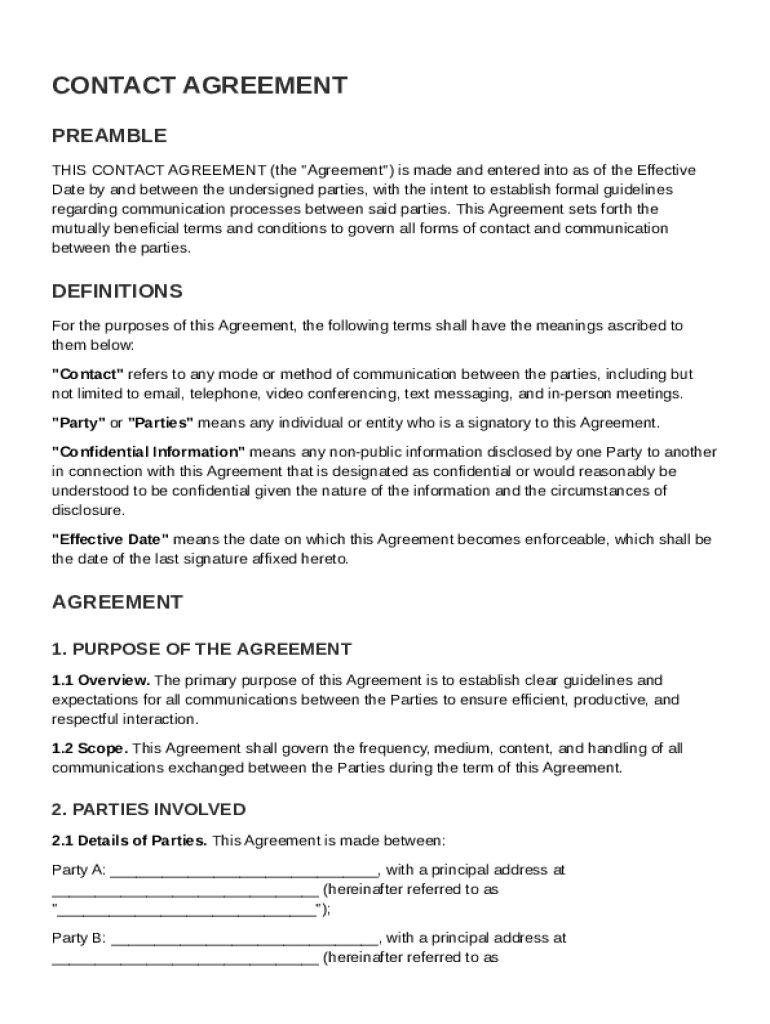
A Contact Agreement Template is a structured document that formalizes communication protocols between involved parties. It establishes guidelines such as definitions, preferred communication methods, expected response times, and confidentiality obligations. By delineating these aspects, the template helps ensure that interactions are efficient and information is protected. It also includes terms for duration, termination conditions, and amendment procedures, making it a comprehensive tool for managing communication within various business contexts.
Examples of Use Cases
- Client and Vendor Relations: Businesses can utilize contact agreements to define how frequently updates should be provided and who the points of contact are.
- Partnerships: In collaborative environments, the template ensures all parties have clear expectations regarding communication.
- Project Management: Establishes effective communication pathways in project teams to ensure timely completion of tasks.
How to Use the Contact Agreement Template
The Contact Agreement Template is designed to be flexible, making it suitable for various industries and scenarios. To effectively use it:
- Customize the Structure: Begin by adapting the existing sections to fit your specific needs. For example, if confidentiality is crucial, emphasize those aspects.
- Input Relevant Information: Include contact details, specific communication schedules, and the mediums to be used.
- Review with All Parties: Ensure that all stakeholders understand and agree to the terms. This prevents disputes and ensures everyone is on the same page.
- Secure Signatures: Once the details are final, secure electronic or handwritten signatures to validate the agreement.
Practical Examples
- Sales Departments: Details the frequency and method of client check-ins via emails or calls.
- Remote Teams: Defines the use of tools like Slack or Zoom for meetings and updates.
Key Elements of the Contact Agreement Template
The Contact Agreement Template comprises several key elements that ensure thorough coverage of communication protocols:
- Contact Information: Names, titles, and roles of individuals involved in the communication chain.
- Communication Tools: List of approved methods, such as emails, phones, or instant messaging apps.
- Response Timeframes: Agreed deadlines for replies to ensure timely exchanges.
- Confidentiality Clauses: Terms protecting sensitive information exchanged during communications.
- Dispute Resolution: Procedures for handling disagreements related to communication breakdowns.
Tailoring for Specific Needs
- Urgent Communications: May require additional clauses for priority messages.
- Global Teams: Incorporating considerations for different time zones.
Steps to Complete the Contact Agreement Template
Completing the Contact Agreement Template involves several important steps:
- Initial Draft: Establish a baseline with standard language covering essential communication aspects.
- Customization: Modify sections to specifically address your organization's unique requirements. Add or remove clauses as needed.
- Internal Review: Share the draft with internal stakeholders to gather feedback and make adjustments.
- External Negotiation: Present the draft to the other party for discussion and refinement.
- Finalization: Make final revisions as agreed upon by all involved parties.
- Signing: Collect electronic signatures using platforms like DocHub for a legally binding agreement.
Considerations
- Scalability: Ensure that terms are adaptable as the scope of communication changes.
- Record Keeping: Clearly outline the process for maintaining communication records.
Legal Use of the Contact Agreement Template
The legal framework surrounding the Contact Agreement Template ensures that it supports enforceable communication arrangements:
- Compliance: Adheres to U.S. communication and business laws.
- Confidentiality: Offers protection under agreements like NDAs, vital for businesses handling sensitive information.
- Dispute Clause: Legally-binding dispute-resolution methods protect the interests of all parties involved.
Examples:
- Cross-State Business: Ensures laws in different jurisdictions are respected.
- Confidential Projects: Legally enforces data protection and privacy regulations.
Important Terms Related to Contact Agreement Template
Understanding the terminology used in a Contact Agreement Template is crucial:
- Response Time: Time allotted for a party to respond to communication.
- Method of Communication: Approved channels such as email, phone, or video conferencing.
- Amendment Procedures: Steps to change parts of the agreement if necessary.
- Effective Date: When the agreement starts being enforceable.
Application
- Standardization: Ensures all parties share an understanding of operational terms to reduce confusion.
State-Specific Rules for the Contact Agreement Template
While the general structure remains consistent, state-specific nuances need consideration:
- Confidentiality Laws: Vary across states, impacting how clauses should be formulated.
- Electronic Signature Validity: Some states have specific regulations for e-signature use.
- Corporate Communication Requirements: Certain states mandate additional transparency measures in organizational communication.
Examples
- California: Known for stringent privacy laws, influencing confidentiality terms.
- New York: May require dual consent for recorded communications.
Business Types that Benefit Most from Contact Agreement Template
The nature of the Contact Agreement Template makes it suitable for various business types:
- Startups: Establishing clear communication can be crucial in fast-growing environments.
- Consultancies: Regular communication with clients ensures project alignment and satisfaction.
- Legal Firms: Ensures protocol compliance in sensitive client communications.
Benefits
- Efficiency: Streamlined communication fosters better productivity.
- Professionalism: Establishes a professional tone in business dealings.
By applying these structured insights into understanding and utilizing a Contact Agreement Template, businesses can maintain clear, efficient, and legally sound communications.