







Definition and Meaning
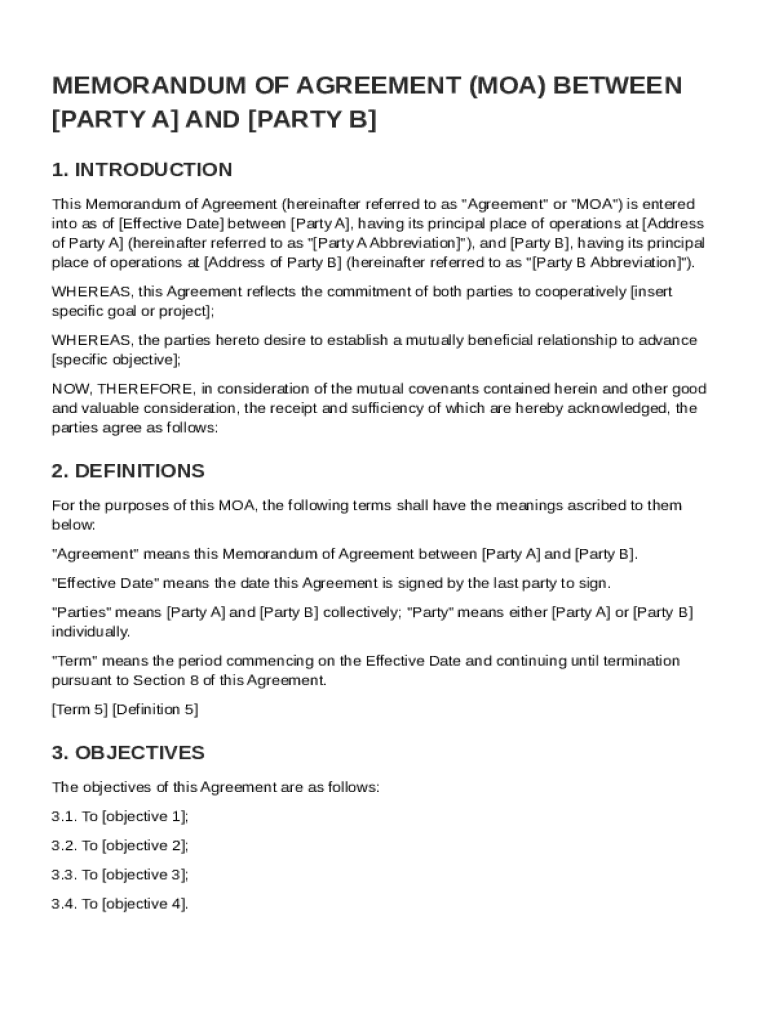
The Air Force Memorandum of Agreement (MOA) Template serves as a formal document that outlines the terms and conditions of collaboration between two or more parties. In the context of the U.S. Air Force, this template is pivotal for detailing mutual agreements and responsibilities, ensuring that each party is clear on their role and commitment. The MOA typically includes specifics on objectives, funding, performance metrics, and conflict resolution measures. By using a standardized MOA, parties can focus on achieving their goals without miscommunications or legal conflicts.
How to Use the Air Force Memorandum of Agreement Template
To effectively utilize the Air Force MOA Template, the first step is understanding the specific needs and objectives of the agreement. Begin by identifying the parties involved and their roles. The template provides a structured format that includes:
- Introduction Section: Clearly state the purpose of the agreement.
- Responsibilities: Define the duties and obligations of each party.
- Terms and Conditions: Outline the terms, including the duration of the agreement.
Each section should be completed with precise and detailed information to avoid any ambiguity.
Key Elements of the Air Force Memorandum of Agreement Template
The MOA Template contains crucial elements that ensure comprehensive and clear agreements:
- Purpose Statement: Outlines the goals and objectives of the agreement.
- Scope of Work: Details the tasks and responsibilities of each party.
- Funding and Resources: Specifies financial arrangements and resource allocations.
- Performance Metrics: Establishes criteria for evaluating success and adherence to the agreement.
- Dispute Resolution: Provides mechanisms for addressing disagreements.
These key elements ensure that all parties have a common understanding and clear expectations.
Steps to Complete the Air Force Memorandum of Agreement Template
Completing the Air Force MOA Template requires careful attention to detail:
- Gather Information: Collect necessary details about the parties and objectives.
- Fill in the Template: Using the template, enter data into each section, ensuring all fields are completed accurately.
- Review and Edit: Carefully review the entire document for accuracy and completeness.
- Obtain Signatures: Ensure all parties sign the document to validate the agreement.
- Distribute Copies: Provide a copy to all involved parties.
A thorough and methodical approach is essential to finalize the MOA without errors.
Legal Use of the Air Force Memorandum of Agreement Template
Legally, the Air Force MOA Template serves as a binding contract, recognized under U.S. law, granting it enforceability. The legal facets include:
- Confidentiality Clauses: Protects sensitive information from being disclosed.
- Governing Law: Specifies the jurisdiction under which the agreement will be interpreted.
- Termination Provisions: Details the conditions under which the agreement can be dissolved.
These elements contribute to the legal robustness of the MOA, safeguarding the interests of all parties involved.
Important Terms Related to the Air Force Memorandum of Agreement Template
Familiarity with relevant terms ensures effective use of the MOA:
- Party A and Party B: The entities entering into the agreement.
- Obligation: Duties each party is required to uphold.
- Deliberation: The process of discussing and amending the MOA before finalizing.
- Amendments: Official changes made to the MOA after its execution.
Understanding these terms is critical for accurately interpreting the MOA's contents.
Examples of Using the Air Force Memorandum of Agreement Template
Practical examples demonstrate the MOA's applicability:
- Joint Training Initiatives: When different branches of the military collaborate on training exercises.
- Resource Sharing: Agreements to share technological resources between Air Force bases.
- Research and Development: Partnerships between the Air Force and private research entities to develop new technologies.
Each example highlights the flexibility and utility of MOAs in various contexts.
software compatibility and digital vs. paper versions
DocHub enhances the MOA experience with broad software compatibility, enabling seamless integration with platforms like Google Workspace, ensuring MOAs can be easily edited, signed, and stored digitally. This negates the need for paper copies, reducing physical storage requirements. The platform accommodates both digital and traditional paper versions, offering versatility in how the MOA can be handled depending on institutional preferences or regulatory requirements.




