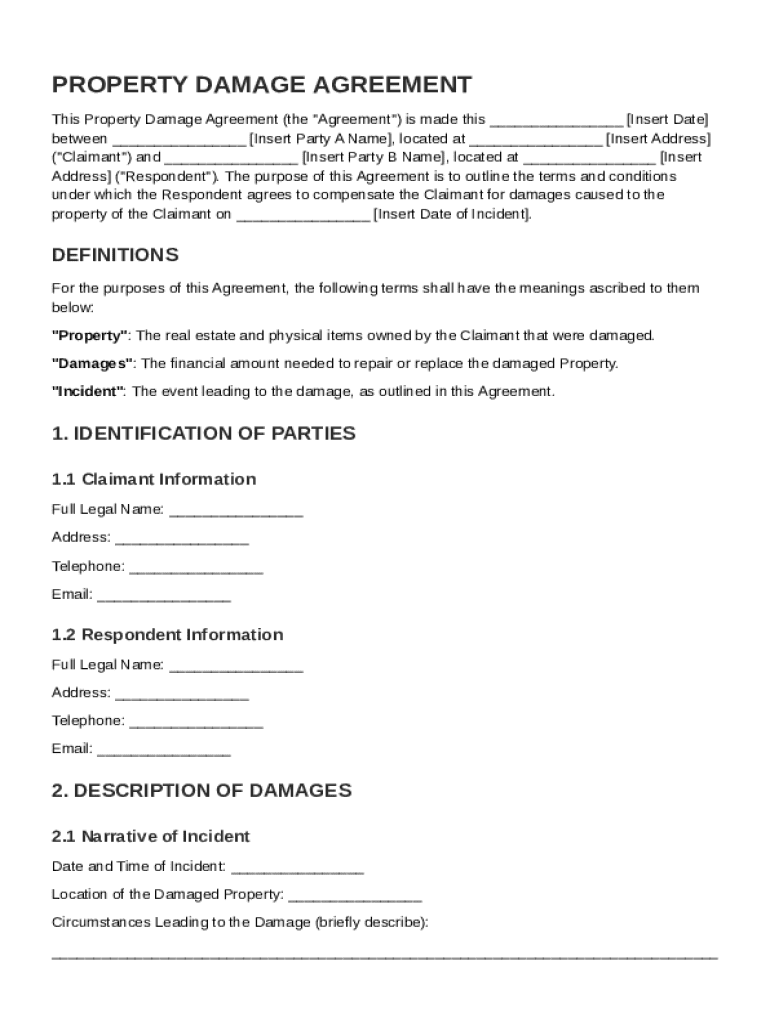







Definition & Meaning
The Property Damage Agreement Template serves as a formal document outlining the terms and conditions between a claimant and a respondent regarding compensation for damages to property. This agreement provides a structured framework to identify the parties involved, detail the nature of the damages, and specify the compensatory measures to be taken. It is crucial for ensuring that all parties involved have a clear understanding of their rights and obligations, minimizing the potential for disputes or misunderstandings. In a legal context, this template acts as a binding contract that offers protection and clarity for those affected by property damage incidents.
How to Use the Property Damage Agreement Template
Using the Property Damage Agreement Template involves several key steps to ensure the document is completed accurately and effectively. The claimant should first gather all necessary details related to the incident, including a comprehensive description of the damages incurred and any supporting evidence such as photographs or repair estimates. The template should then be filled out carefully, starting with the identification of both parties involved. Next, the claimant needs to outline the terms of compensation, ensuring they align with the agreed-upon resolution. Finally, once all parties have reviewed and agreed to the document, signatures should be collected to formalize the agreement. Careful adherence to these steps can help streamline the resolution process.
Key Elements of the Property Damage Agreement Template
The Property Damage Agreement Template includes several critical components that facilitate a comprehensive understanding between the parties. These elements typically encompass:
- Identification of Parties: Clearly establishes who the claimant and respondent are.
- Description of Damages: Provides a detailed account of the damages to the property, including date, type, and extent.
- Compensation Terms: Specifies the compensation amounts and the payment method.
- Acceptance of Liability: Confirms acknowledgment of responsibility by the respondent.
- Release of Liability: Ensures that, once compensation is made, no further claims will be pursued regarding the incident.
- Governing Law and Jurisdiction: Outlines which state laws apply and where any disputes would be resolved.
- Modification Provisions: Details conditions under which the agreement can be altered.
These fundamental components are designed to offer a balanced and fair resolution process for property damage claims.
Steps to Complete the Property Damage Agreement Template
Completing the Property Damage Agreement Template involves following a series of steps to ensure accuracy and completeness:
- Gather Information: Collect all relevant details and documents, such as photographs, estimates, and incident reports.
- Fill In Party Details: Accurately input the names and contact information of the claimant and respondent.
- Describe the Damages: Provide a comprehensive description of the damage, including details such as location, cause, and extent.
- Detail Compensation Terms: Clearly state the agreed-upon compensation, payment schedule, and method.
- Review Acceptance & Liability Clauses: Ensure alignment with the terms negotiated by both parties.
- Legal Review: It is recommended to have the document reviewed by a legal professional to ensure it meets legal standards and protects interests adequately.
- Finalize & Sign: Obtain signatures from both parties to make the agreement legally binding.
Each step is essential in ensuring the agreement serves its intended legal and protective functions.
Legal Use of the Property Damage Agreement Template
The Property Damage Agreement Template holds legal significance as it establishes a binding contract between the involved parties. This agreement is only enforceable if all elements are legally compliant. Essential legal features include:
- Offer and Acceptance: Clear evidence that both parties consent to the terms described.
- Consideration: The compensation or agreement exchanged must be of legal value.
- Legal Capacity: Both parties must have the capacity to enter into a legal contract, meaning they are of legal age and sound mind.
- Governing Law: The agreement should specify which state’s law governs its terms and execution.
For individuals or businesses dealing with property damage, using this template effectively can provide legal safeguards and a structured approach to resolving claims.
Important Terms Related to Property Damage Agreement Template
Several terms are frequently associated with the Property Damage Agreement Template, each playing a critical role in the context of the agreement:
- Claimant: The party seeking recompense for property damages.
- Respondent: The party responsible for providing compensation.
- Liability: The legal responsibility for the damages caused.
- Indemnification: A clause that protects a party from certain legal responsibilities once the agreement is finalized.
- Arbitration: An alternative dispute resolution mechanism that can replace litigation.
- Waiver: Voluntary relinquishment of certain rights, often included in the agreement to prevent further claims.
Understanding these terms ensures clarity and facilitates smoother negotiations between the parties involved.
Who Typically Uses the Property Damage Agreement Template
The Property Damage Agreement Template is widely used by a variety of individuals and organizations that encounter property-related disputes. Typical users include:
- Homeowners: Who might need the template when damage occurs due to a neighbor’s actions or natural events.
- Landlords: To settle disputes with tenants over property wear and tear or accidental damage.
- Business Owners: For resolving claims related to damage within commercial premises.
- Insurance Companies: To formalize settlements with policyholders.
The adaptability of the template makes it a versatile tool for resolving a wide range of property damage scenarios.


State-Specific Rules for the Property Damage Agreement Template
The enforceability of a Property Damage Agreement Template can involve state-specific rules and regulations that dictate how these agreements should be structured and executed. Key considerations include:
- Differing Statutes of Limitations: Each state may have its own timeframe for when claims can be filed.
- Variations in Liability Laws: Some states have unique doctrines that affect the neglect determination.
- Special Provisions: Certain jurisdictions may require additional disclosures or stipulations within agreements.
Consulting with a legal professional knowledgeable in the state-specific legislation is vital for ensuring compliance and effective enforcement of the agreement terms.
Examples of Using the Property Damage Agreement Template
Real-world scenarios illustrate the practical application of the Property Damage Agreement Template:
- Vehicle Collision: A driver might use the template to settle repair costs with another motorist outside of insurance claims.
- Tenant Damage: A landlord and tenant might agree on compensation for repairs to the rental property following tenant-caused damage.
- Environmental Accidents: Companies might use these agreements after environmental damage incidents to rectify affected locations.
These examples highlight the versatility and utility of the agreement in achieving fair, efficient resolutions to property damage situations.