






Definition and Meaning of the Suppliers Agreement Template
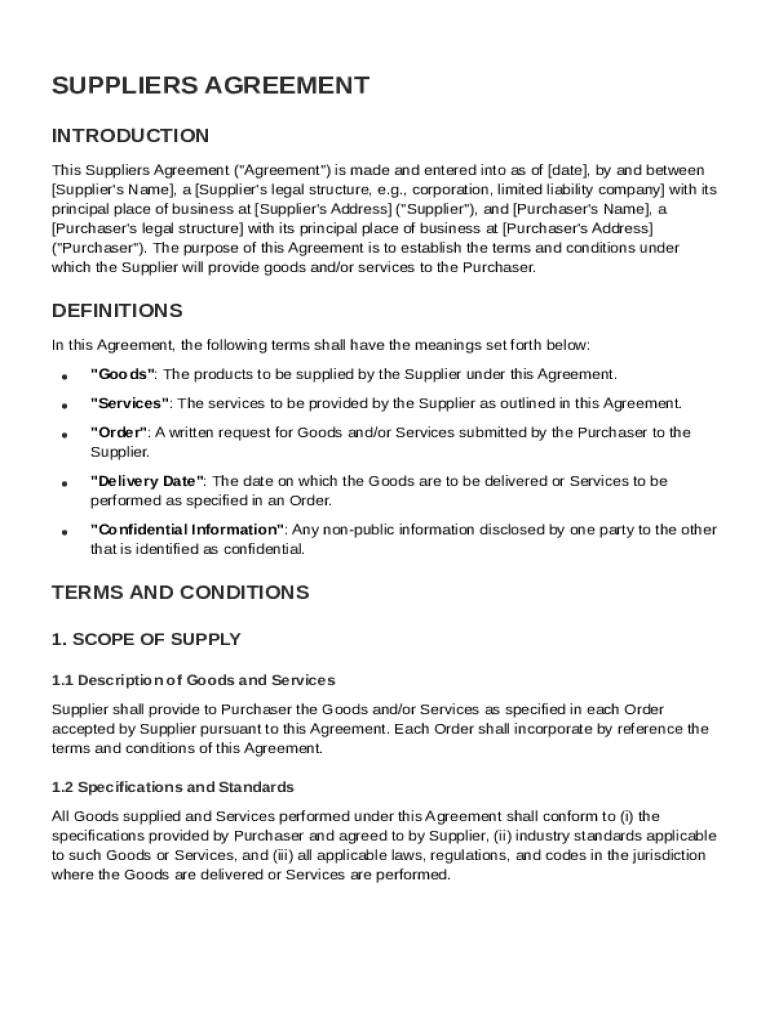
The Suppliers Agreement Template is a contractual document outlining the terms and conditions under which a supplier provides goods or services to a purchaser. This template acts as a preformatted structure that helps formalize the relationship between the supplier and the buyer, ensuring both parties have a clear understanding of their obligations. It covers essential details such as pricing, delivery schedules, payment terms, and warranty provisions, creating a mutual understanding that minimizes the potential for disputes. The template’s standardization simplifies the drafting process, allowing businesses to efficiently establish agreements customized to their specific business transactions.
How to Use the Suppliers Agreement Template
Utilizing the Suppliers Agreement Template involves several key steps designed to ensure accuracy and comprehensiveness. Begin by customizing the template with relevant details specific to the business transaction, such as the names of the supplier and purchaser, the scope of goods or services, and specific delivery and pricing terms. It's important to review each clause to verify it aligns with the negotiation outcomes and legal requirements. You may also incorporate additional clauses to address unique circumstances or risks associated with the agreement. Once the document is thoroughly tailored, it is reviewed by both parties — and legal counsel if necessary — followed by official signing, either electronically through platforms like DocHub or physically on paper.
Key Elements of the Suppliers Agreement Template
The Suppliers Agreement Template is structured to cover several critical sections that facilitate a comprehensive and enforceable contract. These sections include:
-
Definitions: Clarifies specific terms used throughout the agreement to avoid ambiguity.
-
Order and Acceptance: Details the process for placing and accepting orders, including conditions under which orders can be modified or canceled.
-
Pricing and Payment Terms: Specifies pricing details, payment schedules, and methods of payment, including any penalties for late payments.
-
Delivery Obligations: Outlines responsibilities regarding the timely and accurate delivery of goods or services, including consequences of delays.
-
Warranties and Liability: Establishes the warranties provided by the supplier and limits liability in case of defects or non-performance.
Steps to Complete the Suppliers Agreement Template
-
Information Entry: Begin by entering the names and contact details of both the supplier and the purchaser, along with a detailed description of goods or services involved.
-
Negotiation Reflection: Tailor the template to reflect negotiated terms related to pricing, payment terms, delivery schedules, and specific warranties offered.
-
Legal Review: Ensure a legal review to verify compliance with applicable laws and fill any gaps in standard clauses that may affect rights or obligations.
-
Adjustment of Clauses: Modify or add specific clauses concerning confidentiality, intellectual property rights, and dispute resolution to better protect businesses.
-
Signing Process: Facilitate the signing process, using electronic signature solutions for efficiency and verification, maintaining a record of authorized signatures.
Who Typically Uses the Suppliers Agreement Template
The Suppliers Agreement Template is widely used by businesses across various industries that engage in the repeated procurement of goods or services. It is particularly beneficial for:
-
Manufacturing Companies: Establishing agreements with raw material suppliers.
-
Retail Chains: Formalizing terms with product wholesalers and distributors.
-
Service Providers: Structured arrangements with subcontractors or third parties delivering complementary services.
-
Hospitality Businesses: Standardizing provisions with suppliers of food, beverages, or amenities.


Legal Use of the Suppliers Agreement Template
The Suppliers Agreement Template must conform to legal standards to be considered enforceable. It should comply with federal and state laws governing contracts, including the Uniform Commercial Code (UCC) for sales of goods. Elements like warranty disclaimers, limitation of liability, and indemnity clauses must be carefully drafted to protect legal rights without overreaching or contravening public policy. Additionally, the agreement should specify governing law and jurisdiction to streamline potential dispute resolutions. Legal counsel often aids in personalizing and vetting the agreement to ensure all operational and statutory requirements are met, reducing the risk of future litigation.
Digital vs. Paper Version of the Suppliers Agreement Template
Aside from the traditional paper format, the Suppliers Agreement Template is accessible in a digital version that offers several advantages:
-
Efficiency: Digital versions expedite the drafting, modification, and approval processes through automated tools and collaboration features.
-
Security: Enhanced encryption secures sensitive details in digital documents more effectively than paper-based counterparts.
-
Accessibility: Digital templates allow access anytime from any device, enabling swift review and execution without geographical limitations.
-
Eco-Friendly: Reduces paper consumption, aligning with sustainability goals while maintaining document integrity with digital audit trails.
Compatibility with Software Platforms
The Suppliers Agreement Template can be seamlessly integrated with various software solutions such as DocHub, which supports a range of file formats for broader compatibility. This integration simplifies the process of importing, editing, and managing the document, with functionalities like:
-
Editing Tools: Features for adding text, annotations, or images directly within the document.
-
Form Fillability: Conversion to fillable forms for efficient data collection from both parties involved.
-
Signature Integration: Electronic signature capabilities ensure legally binding agreements with transparent audit trails and easy recipient tracking.
By leveraging these platforms, businesses can streamline their document workflows in line with modern operational practices.