






Definition and Meaning
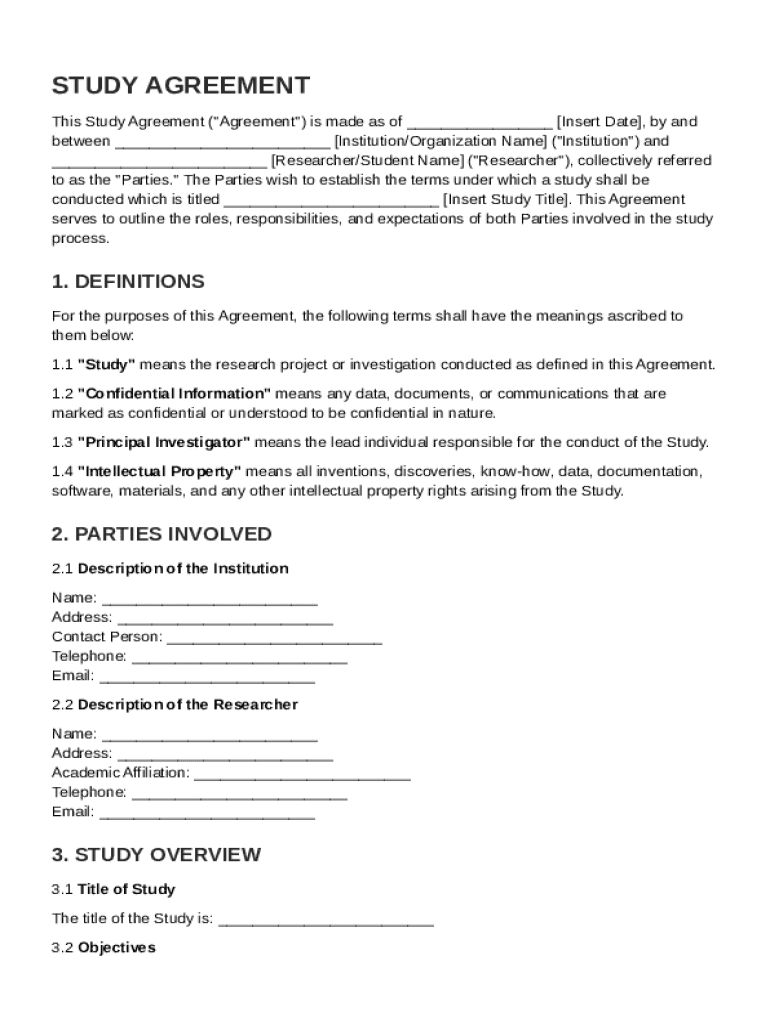
A Study Agreement Template is a foundational document that outlines the terms and conditions governing the collaboration between an institution and a researcher for conducting a research study. This document clarifies the roles, responsibilities, confidentiality obligations, data management, compliance with pertinent laws, and procedures for dispute resolution. By laying the groundwork for clear collaborative expectations, this template not only protects the interests of both parties but also ensures the smooth progression of the research project.
The Study Agreement serves as more than just legal protection. It facilitates the mutual understanding necessary for effective partnership and successful study outcomes. This agreement clearly delineates the resources each party will provide, the scope of research to be conducted, and the methodologies to be employed. A well-defined Study Agreement Template is critical for maintaining a strong working relationship and achieving productive research results.
Key Elements of the Study Agreement Template
A comprehensive Study Agreement Template encompasses several critical components designed to clarify expectations and secure the research framework legally. These key elements include:
-
Roles and Responsibilities: Outlines the specific duties and obligations of each party involved, ensuring there is no confusion about who is responsible for what during the research study.
-
Confidentiality Obligations: Describes how confidential information will be protected and shared only with authorized individuals, safeguarding sensitive data critical to the study.
-
Data Management: Specifies procedures for data collection, storage, access, and disposal to ensure data integrity and compliance with legal standards.
-
Compliance with Laws: Details adherence to all relevant federal, state, and local laws, ethical guidelines, and institutional policies regulating the research.
-
Dispute Resolution Processes: Provides a framework for effectively resolving disputes or disagreements that might arise, minimizing disruptions to the research.
These elements are essential for crafting a legally sound and operationally effective Study Agreement Template that both parties can rely on.
How to Use the Study Agreement Template
Utilizing a Study Agreement Template requires careful consideration and clear communication between all parties involved. Here are steps to effectively use the template:
-
Identify Parties Involved: Clearly list the institution and researcher(s) participating in the study, including contact information for each party.
-
Define Study Scope and Objectives: Articulate the study's aims, projected timeline, and specific measures of success to align all parties' expectations.
-
Establish Terms and Conditions: Use the template to outline precise terms regarding roles, data management, and confidentiality obligations.
-
Customize for Specific Needs: Modify sections of the template to address unique circumstances or requirements relevant to the research project.
-
Review and Revise: Both parties should review the document, propose amendments if necessary, and agree to the final terms to ensure mutual understanding.
-
Sign and Execute: Finalize the document with signatures from all involved parties, formalizing the agreement and commitment to abide by its stipulations.
Effective use of the Study Agreement Template results in a solid contractual foundation for the research study, ultimately enhancing collaboration and research outcomes.
Steps to Complete the Study Agreement Template
To ensure that your Study Agreement Template is thoroughly completed and effective, follow these step-by-step instructions:
-
Preliminary Meeting: Conduct an initial meeting with all stakeholders to discuss the primary elements of the agreement such as goals, timeline, and resource allocation.
-
Draft the Agreement: Use the template to draft an initial version of the agreement, incorporating details specific to your study's needs.
-
Specify Roles and Resources: Clearly state the resources each party will contribute and their roles in the study.
-
Outline Data Handling Procedures: Carefully describe how data will be collected, handled, and stored, emphasizing obligations to protect participant privacy.
-
Include Legal and Compliance Information: Incorporate all relevant legal and ethical compliance areas to be met throughout the study.
-
Review and Finalize the Draft: Circulate the draft among stakeholders for feedback and necessary adjustments before final approval.
-
Obtain Signatures: Secure the signatures of all parties involved, confirming acceptance of the document's terms.
Completing these steps ensures a well-prepared and legally sound Study Agreement that supports the seamless execution of the research study.
Who Typically Uses the Study Agreement Template
Study Agreement Templates are particularly beneficial to a variety of entities and individuals engaged in research activities, most notably:
-
Academic Institutions: Universities and colleges often use these templates to manage collaborative research with students and external researchers.
-
Research Organizations: Non-profit and governmental research bodies employ these agreements to formalize partnerships with details about study objectives and data sharing.
-
Commercial Research Firms: Companies conducting research for product development or market studies utilize these agreements to outline terms of engagement with partners or consultants.
-
Independent Researchers: Freelance or self-employed researchers also rely on these agreements when collaborating with institutions or other individuals.
The template provides a universal framework applicable across multiple research settings, ensuring all parties involved maintain a clear understanding of their commitments.


Legal Use of the Study Agreement Template
Understanding the legal context of the Study Agreement Template is paramount. The legal stipulations embedded within the template ensure:
-
Binding Commitments: The document legally binds both parties to the agreed-upon obligations, providing a structure to enforce compliance.
-
Compliance with Regulations: It ensures that research activities comply with federal and state laws, ethical standards, and institutional policies like IRB (Institutional Review Board) regulations.
-
Intellectual Property Rights: Protects the rights of each party regarding data ownership, scholarly publications, and other outputs from the study.
-
Liability Management: Includes clauses addressing potential liabilities and indemnification, safeguarding parties against unforeseen contingencies.
These legal components are pivotal for minimizing risks and facilitating a lawful and efficient research process.
Important Terms Related to the Study Agreement Template
To optimize understanding and clarity within the Study Agreement Template, stakeholders should be familiar with these essential terms:
-
Principal Investigator (PI): The lead researcher responsible for participant safety and the scientific conduct of the study.
-
Informed Consent: The process by which study participants are educated about, and agree to, their involvement in the study.
-
Data Confidentiality: Measures to ensure that sensitive research data is only accessible to authorized persons.
-
Intellectual Property (IP): Refers to creations of the mind like inventions or designs, protected by patents or copyrights.
-
Amendment Clause: A provision allowing changes to the agreement terms, accommodating evolving study needs.
Grasping these terms enhances communication and ensures a more productive execution of the study agreement.
State-Specific Rules for the Study Agreement Template
In the United States, state-specific regulations may influence the formulation and execution of Study Agreements. Considerations include:
-
Data Privacy Laws: California's CCPA (California Consumer Privacy Act), for instance, has stringent guidelines on how personal data must be handled.
-
Employment and Labor Laws: State laws that dictate the working conditions for participants who are employees may vary and should be accounted for in the agreement.
-
Research Tax Credits: Some states offer tax incentives for specific research activities, which might be integrated into contract terms.
Understanding these state-specific nuances is critical for ensuring that the agreement aligns with local laws and maximizes its enforceability and efficiency.