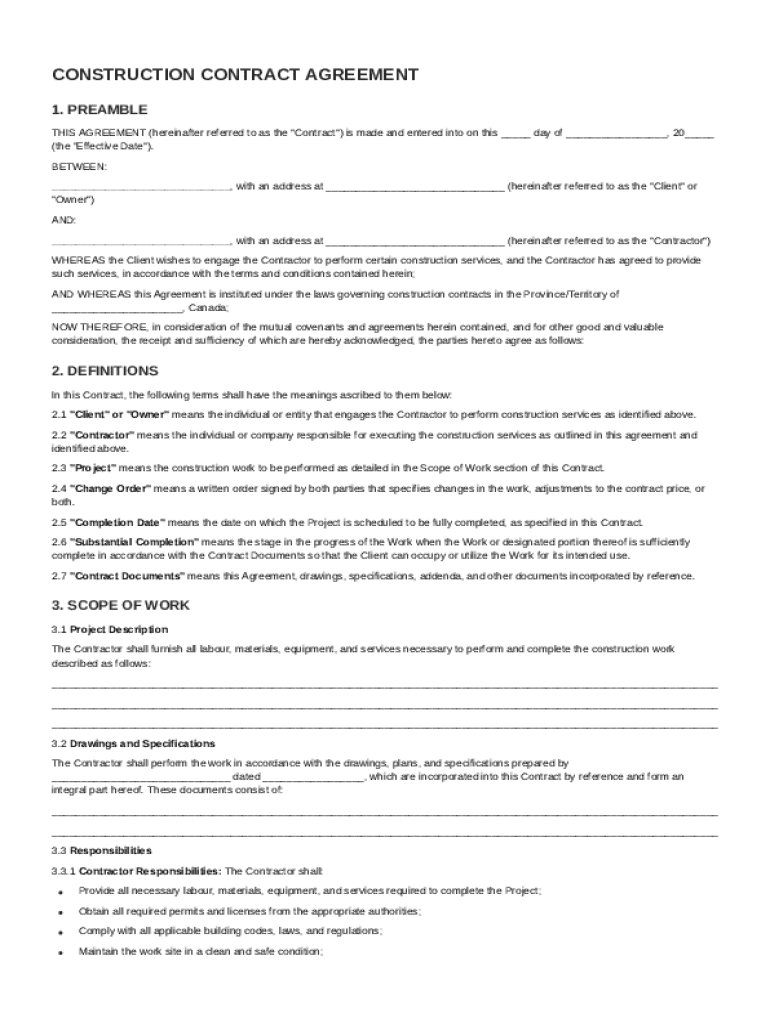







Definition and Scope of the Canadian Construction Contract Template
The Canadian Construction Contract Template is a legally-binding agreement used to establish the terms and conditions between a client and a contractor for construction projects. This document is designed to outline the responsibilities, rights, and obligations of both parties to ensure clarity and minimize disputes. The contract typically includes detailed sections covering project scope, timelines, payment terms, and legal considerations. By using this template, both parties can have a mutual understanding of the project's requirements and expectations.
Key Sections of the Contract
- Scope of Work: This section delineates the specific tasks and responsibilities assigned to the contractor, ensuring that there is no ambiguity regarding what is expected.
- Payment Terms: Outlines the agreed-upon compensation structure, including how and when payments will be made, and what constitutes acceptable completion of work milestones.
- Completion Timelines: Specifies deadlines and schedules, which are crucial for managing project timelines and ensuring timely completion.
- Warranties: Addresses any guarantees provided by the contractor regarding the quality and durability of the work performed.
Utilizing the Canadian Construction Contract Template
The Canadian Construction Contract Template can be utilized by both individuals and businesses engaged in construction projects. Users can populate the template with specific project details, ensuring that each agreement is tailored to their unique needs. It's often recommended to consult with a legal professional to confirm that all relevant legal elements are appropriately included in the document.
Steps to Use the Template
- Download the Template: Access and download the template in a compatible format such as PDF or DOC from a reputable source like DocHub.
- Fill in Project Details: Include information such as the names of both parties, project location, and a detailed description of the work.
- Set Payment and Timeline: Accurately define payment terms and establish a realistic project timeline.
- Review and Sign: Ensure all parties review the document thoroughly before signing to validate mutual agreement.
Obtaining the Canadian Construction Contract Template
To obtain the Canadian Construction Contract Template, users can access platforms like DocHub, which offer a range of document templates compatible with various file formats. This accessibility allows users to easily customize and manage their documents online, streamlining their workflow.
Steps to Access and Download
- Login to DocHub: Create or log into your account on the DocHub platform.
- Search for the Template: Use the search function to locate the Canadian Construction Contract Template.
- Select and Download: Choose the desired template and download it in your preferred format (e.g., PDF, DOC).
- Customize as Needed: Open the downloaded file using DocHub's editing tools and adapt it according to project specifications.
Important Terms and Concepts in the Canadian Construction Contract Template
Understanding the terminology within the Canadian Construction Contract Template is crucial for effective usage. Familiarity with these terms ensures that both parties comprehend their roles and responsibilities.
Commonly Used Terms
- Client: The individual or entity commissioning the construction work.
- Contractor: The individual or company responsible for carrying out the construction work.
- Change Order: A formal amendment to the original contract, often involving adjustments in the scope or timeframe.
- Lien Waiver: A document that relinquishes a party's legal right to place a lien on the client's property due to unpaid bills.
Legal Implications and Compliance
The Canadian Construction Contract Template necessitates adherence to various legal standards to protect the interests of both parties. Compliance with these standards is essential to ensure the enforceability of the contract and to protect against potential legal disputes.
Legal Considerations
- Governing Law: Specifies the jurisdiction under which the contract will be construed and enforced.
- Dispute Resolution: Identifies the methods for resolving disputes, such as arbitration or litigation.
- Termination Clauses: Conditions under which the contract may be prematurely terminated by either party.
Key Elements of Canadian Construction Contract Template
The template encompasses several key elements that are foundational to its structure and utility. These components work together to produce a comprehensive agreement that can safeguard the interests of all parties involved.
Fundamental Components
- Insurance Requirements: Details the types and amounts of insurance that the contractor must maintain throughout the project.
- Completion Criteria: Sets the standards by which the finished work is assessed and deemed satisfactory.
- Miscellaneous Provisions: Includes various other terms that ensure comprehensive coverage of potential issues, such as force majeure clauses.
Differences Across Provinces
Though the Canadian Construction Contract Template serves as a standard framework, there may be variations in its application depending on provincial regulations. Each province may have unique legislation that influences certain aspects of construction contracts.
Examples of Provincial Variations
- Building Codes: Provincial differences in building codes may necessitate specific alterations to the scope of work.
- Permit Requirements: Varying requirements for permits can affect the timeline and scope of the project.
- Environmental Regulations: Environmental considerations may differ, influencing project planning and execution.
Case Studies: Real-World Usage of the Template
Examining real-world applications of the Canadian Construction Contract Template can provide valuable insights into its practical benefits and challenges. These case studies highlight the versatility and essential role the template plays in managing construction projects efficiently.
Scenarios
- Residential Construction: A homeowner and contractor use the template to outline a home renovation project, ensuring agreement on terms and preventing future disputes.
- Commercial Projects: A construction firm utilizes the template for standardizing contracts across multiple sites, promoting consistency and legal compliance.