






Definition and Purpose of the Builder Contract Template
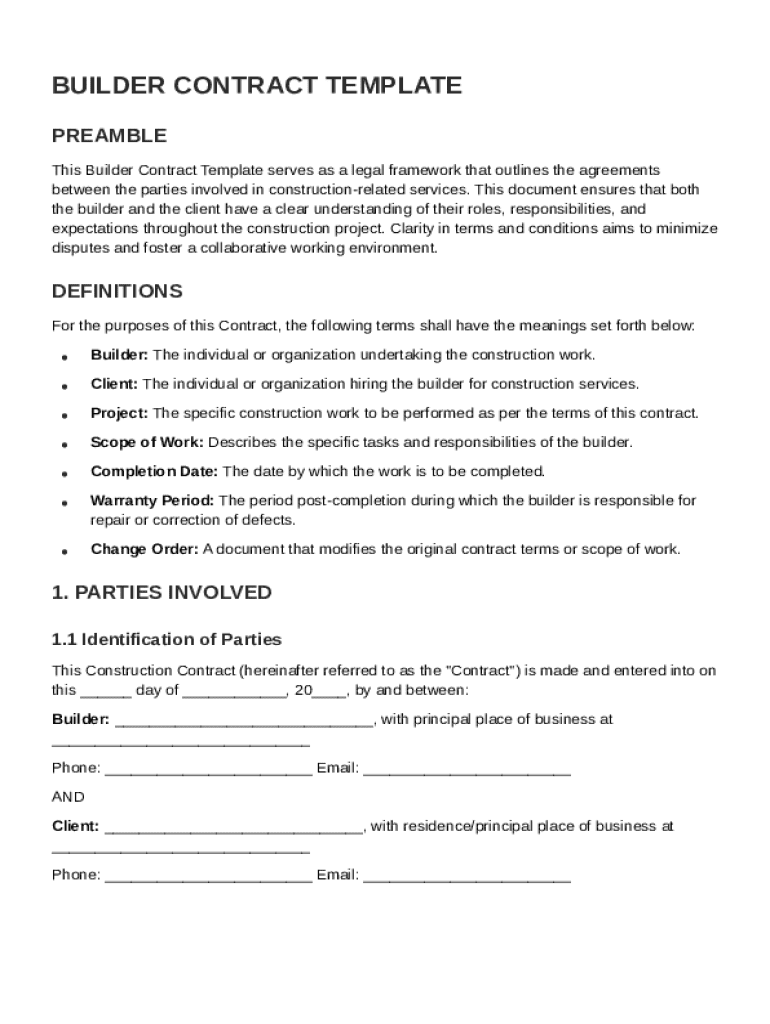
The Builder Contract Template serves as a comprehensive document that formalizes the agreement between builders and clients regarding construction services. This legal instrument outlines essential components such as roles and responsibilities, project scope, payment terms, and dispute resolution. By delineating these terms clearly, the document aims to minimize misunderstandings and conflicts, ensuring that both parties have a shared understanding of their obligations and expectations. The template is particularly useful for standardizing agreements across multiple projects, providing a consistent reference point for builders and clients alike.
- Roles and Responsibilities: The template specifies each party's duties, ensuring there's no ambiguity about who is accountable for various parts of the project.
- Project Scope: This section outlines the work to be completed, including timelines and deliverables, to avoid scope creep or under-delivery.
- Payment Terms: Specifies how and when payments will be made, including advance payments, milestones, and final settlement.
- Dispute Resolution: Provides mechanisms to address disputes, such as arbitration or mediation, offering a structured approach to resolve disagreements without litigation.
How to Use the Builder Contract Template
The Builder Contract Template is designed to streamline the process of drafting contracts for construction projects. Users can start by acquiring the template, which can then be filled out with project-specific details.
- Obtain Template: Download or access the template from a trusted source like DocHub, ensuring it meets your jurisdiction's legal requirements.
- Fill in Details: Input specific information such as builder and client names, project details, timelines, and payment schedules.
- Review and Customize: Tailor the template to address any unique aspects of the project or local legal requirements.
- Consult Legal Advice: Consider having the document reviewed by a legal professional to ensure compliance with applicable laws.
- Finalize and Sign: Once all parties are satisfied with the terms, sign the contract. DocHub allows for electronic signing, simplifying the process.
Key Elements of the Builder Contract Template
The Builder Contract Template is structured to include several key elements critical to establishing a firm legal framework for construction agreements.
- Identification of Parties: Clearly states who the builder and client are, including their contact information.
- Detailed Project Plans: Provides an overview of the construction project, encompassing deliverables, timelines, and quality standards.
- Financial Obligations: Details the financial relationship, encompassing all costs, payment methods, and schedules.
- Intellectual Property: Addresses ownership and rights concerning design plans, blueprints, and other intellectual properties generated during the project.
- Termination Clause: Outlines conditions under which the contract can be terminated, including notice periods and financial repercussions.
- Warranty Provisions: Describes any warranties provided by the builder regarding the quality and durability of their work.
Legal Use of the Builder Contract Template
The use of a Builder Contract Template in a legal context provides numerous advantages and assures compliance with industry standards.
- Compliance: Ensures that contract terms comply with both federal and state regulations concerning construction and labor.
- Binding Agreement: Establishes a legally enforceable framework that can be used in court if disputes arise.
- Modification and Amendments: Offers guidance on how contract amendments should be handled, requiring mutual consent and documentation.
- Risk Management: Mitigates risks by clearly outlining procedures and responsibilities, helping to avoid litigation by setting pre-defined pathways for resolving disagreements.
Who Typically Uses the Builder Contract Template
The template is widely used by various stakeholders in the construction industry and serves as a critical document for both business and legal purposes.
- Builders and Developers: Use it to formalize agreements with clients, ensuring that project terms are legally recognized.
- Clients/Homeowners: For clients embarking on construction projects, the template provides reassurance that all parties are protected under a clear legal agreement.
- Subcontractors and Suppliers: May also engage with the template to define their terms of work.
- Legal Advisors: Often reference the template when preparing or reviewing construction agreements.


Practical Scenarios and Examples of Using the Builder Contract Template
Several real-world scenarios illustrate how the Builder Contract Template can facilitate smooth project execution.
- Residential Construction: A homeowner hiring a builder for a new home can use the template to outline terms concerning design specifications, start and completion dates, and payment installments.
- Commercial Projects: For commercial development, the template helps in managing complex layers of subcontractors, suppliers, and service providers.
- Renovation Projects: When a property undergoes significant renovations, the document specifies timelines for completion and details on materials to be used, ensuring transparency.
State-specific Rules and Considerations
While the Builder Contract Template provides a strong foundation, users must also consider state-specific legal requirements that might affect the document's validity.
- Licensing Requirements: Some states require builders to hold specific licenses, and the contract may need to reference these credentials.
- Material Standards: Varying building material standards and regulations may necessitate amendments to the project scope or materials section.
- Environmental Regulations: Compliance with state environmental laws concerning construction practices and waste disposal might need to be included.
Versions or Alternatives to the Builder Contract Template
Several versions and alternatives to the traditional Builder Contract Template exist, tailored to fit different types of projects and contractual requirements.
- Standard Contract Forms: Templates available from construction industry associations, like the American Institute of Architects (AIA), provide standardized forms that are widely recognized and accepted across the industry.
- Custom Drafts: For unique projects, custom drafts may be essential, allowing for specific terms and conditions not covered by standard templates.
- Digital Versions: Platforms like DocHub offer digital contract templates that can be customized, edited, and signed electronically, providing modern conveniences for digitally-minded users.
These blocks provide substantial content on the functionalities and advantages of using the Builder Contract Template, addressing all necessary facets to ensure comprehensive understanding and application.