






Definition & Meaning
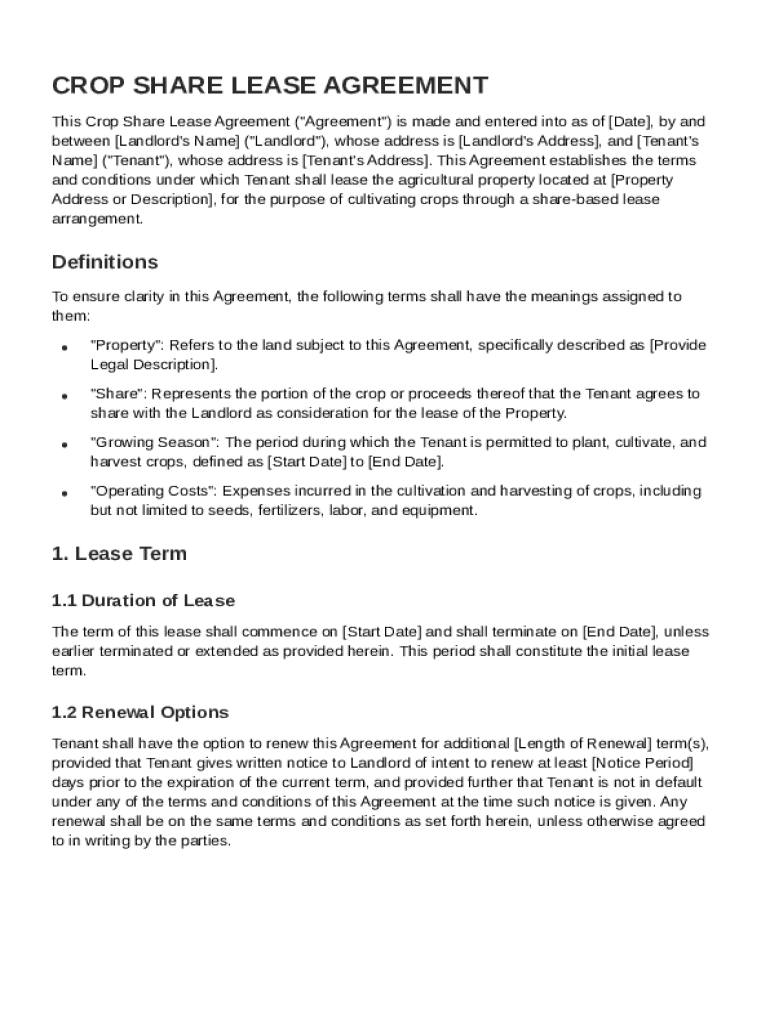
A Crop Share Lease Agreement Template is a legally binding document that outlines the terms and conditions between a landlord and tenant for leasing agricultural property for crop cultivation. This arrangement allows a tenant to farm the land, while both parties share the produce in predetermined proportions. The template typically includes details regarding the lease duration, responsibilities of both parties, the division of crop shares, and any specific conditions regarding the use of land and resources. The arrangement helps in establishing a clear understanding between both parties and avoids potential disputes by setting groundwork for conflict resolution and compliance with applicable laws.
Key Elements of the Crop Share Lease Agreement Template
The Crop Share Lease Agreement Template consists of several critical components. These include:
- Parties Involved: Identification of both the landlord and tenant, along with contact details and their legal representatives if any.
- Property Description: Detailed information about the agricultural property, including its location, size, and any pertinent characteristics.
- Crop Share Details: Exact proportions or percentages of crop shares allocated to each party, including specific crops covered by the agreement.
- Lease Term: Defining the duration of the lease, including start and end dates, as well as renewal or termination conditions.
- Responsibilities and Costs: Allocation of responsibilities such as land preparation, planting, maintenance, harvesting, and marketing. Also includes who bears the associated operating costs and expenses.
- Dispute Resolution: Methods for resolving any disputes arising from the agreement, such as mediation or arbitration clauses.
- Compliance and Laws: Provisions ensuring adherence to local, state, and federal agricultural laws and environmental regulations.
How to Use the Crop Share Lease Agreement Template
Utilizing a Crop Share Lease Agreement Template effectively involves a few sequential steps:
- Review the Template: Thoroughly go through the entire template to understand its structure and content. Ensure it aligns with specific needs and requirements.
- Customize the Template: Tailor the agreement to meet the specific needs of both parties. This customization might include adjusting terms related to crop shares, responsibilities, and any unique conditions related to the property.
- Consult Professionals: Engage with legal or agricultural professionals to review the customized agreement for compliance and legal soundness.
- Negotiate Terms: Discuss and negotiate terms between the landlord and tenant to reach a mutually satisfactory agreement.
- Finalize the Agreement: Once both parties agree, finalize the document by including all necessary details and ensuring accuracy.
- Signature and Execution: Both parties should sign the completed document, ensuring it is executed according to applicable legal standards.
Steps to Complete the Crop Share Lease Agreement Template
Successfully completing the Crop Share Lease Agreement Template requires attention to detail and structured steps:
- Gather Information: Collect all necessary details about the property, parties involved, and agreed-upon terms.
- Fill in Basic Information: Begin with filling out essential information such as the names of both parties, legal addresses, and a detailed description of the property.
- Define Lease Specifics: Specify the start and end dates of the lease, renewal terms, and the nature of the crops included in the agreement.
- State Crop Share Proportions: Clearly state the crop share percentage for both landlord and tenant.
- Outline Responsibilities: Specify tasks such as soil preparation, planting, and harvesting, along with who is responsible for each.
- Include Legal Provisions: Insert relevant legal clauses focused on compliance with agricultural laws, dispute resolution, and liability considerations.
- Review and Sign: Carefully review for any discrepancies or missing elements, and proceed with signatures from both parties.
Legal Use of the Crop Share Lease Agreement Template
Utilizing the Crop Share Lease Agreement Template legally ensures protection for both parties involved. This template assists in:
- Compliance with Regulations: Supports adherence to agricultural rules, environmental guidelines, and tenant-landlord laws.
- Legal Protection: Offers legal protection by clearly defining each party's rights and obligations, reducing the potential for disputes.
- Handling Disputes: Facilitates easier resolution of conflicts through predefined dispute resolution methods like mediation or arbitration.
- Assurance of Agreement Validity: By following legal standards, the agreement stands as a valid document in court if disputes arise.
State-Specific Rules for the Crop Share Lease Agreement Template
When using the Crop Share Lease Agreement Template, it's crucial to consider state-specific regulations. Each state may have unique laws that influence aspects of the lease:
- Property Laws: Differences in how properties are managed, taxed, and what is required legally for operation.
- Environmental Guidelines: State-specific environmental regulations that affect agricultural practices.
- Agreements and Disputes: Variations in how leases are enforced and disputes handled in different jurisdictions.
Landlords and tenants should check with local legal experts to ensure compliance with state-specific regulations. Adjustments might be necessary to align with local agricultural norms and legal expectations.
Examples of Using the Crop Share Lease Agreement Template
The Crop Share Lease Agreement Template can be applied in various scenarios, each providing insight into its utility:
- Family-Owned Farms: Families leasing parts of their land for additional income while retaining rights to portions of the harvest.
- New Farming Ventures: Aspiring farmers leasing land to start crops with shared risk and rewards.
- Corporate Agriculture: Companies leasing multiple parcels under similar agreements to manage diverse crops efficiently.
These examples illustrate the template’s versatility and applicability across different farming setups, offering structured and fair arrangements for both parties.
Software Compatibility for Managing Agreements
Integration with document management platforms like DocHub can streamline the usage of the Crop Share Lease Agreement Template. Benefits include:
- File Format Support: Compatibility with various file formats such as PDF, DOC, and XLS, ensuring easy manipulation and sharing.
- Digital Signatures: Facilitating legally binding electronic signatures, enhancing the agreement process.
- Collaboration Tools: Real-time collaboration features that allow multiple stakeholders to make necessary edits and provide input.
Utilizing such software solutions minimizes administrative burdens, enabling efficient document handling and secure storage.
Who Typically Uses the Crop Share Lease Agreement Template
This template caters to a diverse audience, primarily involving:
- Landowners: Individuals or entities leasing their land for agricultural use, seeking structured agreements.
- Farmers and Tenants: Those looking to farm on leased land while sharing crop-derived benefits with the landowner.
- Legal Advisors: Professionals assisting clients in drafting and implementing lease agreements that comply with laws and preferences.
Understanding this user base assists in creating more tailored agreements that meet the specific needs and objectives of each involved party.