






Definition & Meaning
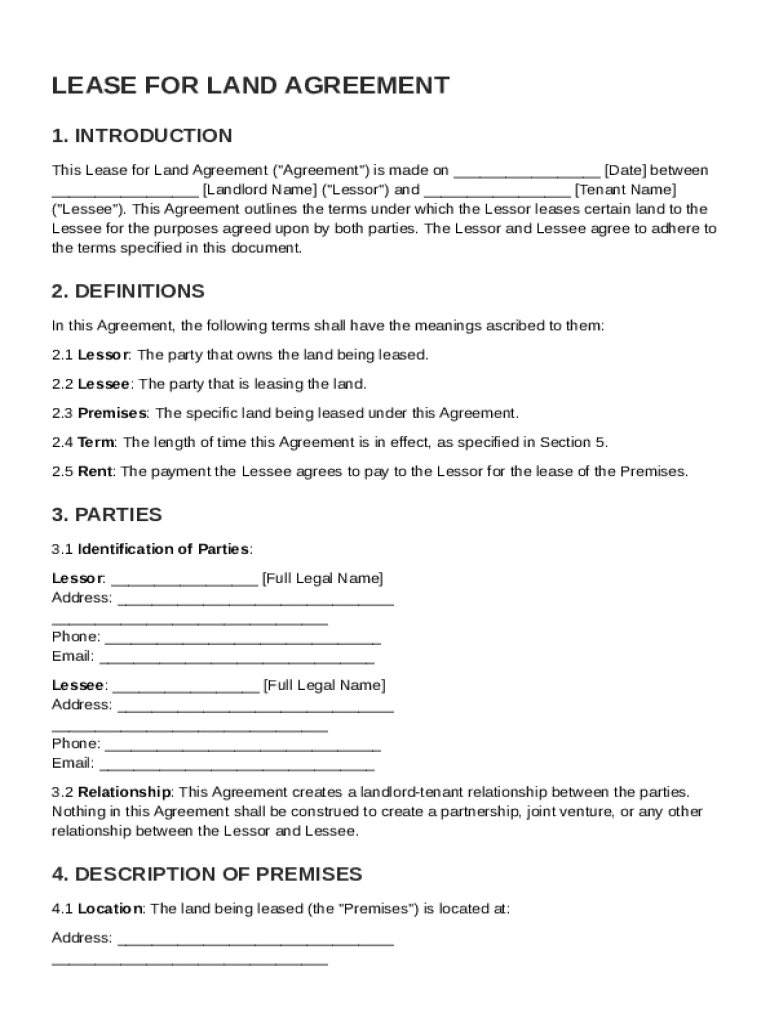
A Lease for Land Agreement Template serves as a formal contract outlining the terms under which a Lessor leases land to a Lessee. This document helps define the rights and responsibilities of both parties, ensuring a mutual understanding and paving the way for a stable landlord-tenant relationship. Key elements include identification of both parties, a description of the leased land, and the specific terms of the agreement.
Key Components
- Party Identification: Clearly identifies both the landlord (Lessor) and the tenant (Lessee), including full names and contact information.
- Premises Description: Provides detailed information about the land being leased, including location, size, and any structures on the property.
- Lease Terms: Specifies the duration of the lease, which could be yearly, monthly, or another agreed-upon term.
How to Use the Lease for Land Agreement Template
Using the Lease for Land Agreement Template effectively involves several steps to ensure that all necessary information is accurately captured and agreed upon by both parties. This template simplifies the documentation process, making it easier for users to draft a legally sound agreement.
Step-by-Step Guidance
- Download the Template: Obtain the template from a reliable source like DocHub, ensuring it is suitable for the specific needs of your agreement.
- Fill in Required Fields: Input all necessary details such as names, lease terms, and property description.
- Customize Terms: Adjust any standard clauses to better fit the unique circumstances of the lease agreement, such as rent payment schedules and maintenance responsibilities.
- Review with Legal Counsel: Consider having the completed document reviewed by a legal professional to ensure compliance with local laws and regulations.
Steps to Complete the Lease for Land Agreement Template
Completing the Lease for Land Agreement Template involves meticulous attention to detail to ensure that all elements of the lease are clearly defined and legally enforceable.
Detailed Steps
- Identify Parties: Begin by entering detailed information about both the Lessor and Lessee, including contact information and roles.
- Describe the Land: Provide a thorough description of the leased premises, including any unique characteristics or zoning laws applicable.
- Define Lease Tenure: Clearly state the start and end dates of the lease, along with any renewal options and procedures.
- Outline Rent Details: Specify the rental amount, payment frequency, and acceptable methods of payment. Include details on any penalties for late payment.
Key Elements of the Lease for Land Agreement Template
The Lease for Land Agreement Template is structured to include essential components that support the legal framework of a land lease. These elements are crucial for the validity and enforceability of the lease agreement.
Core Components
- Permitted Uses: Specifies the allowed uses of the land to prevent disputes about the Lessee's activities.
- Maintenance Obligations: Clarifies responsibilities for land upkeep, repairs, and improvements, detailed for both the Lessor and Lessee.
- Insurance Requirements: Details any insurance policies required for liability, property damage, or loss.
- Termination Clauses: Defines the conditions under which the lease can be terminated early, including notice periods and breach of contract scenarios.
Legal Use of the Lease for Land Agreement Template
The Lease for Land Agreement Template must comply with legal standards to ensure it is enforceable in a court of law. Understanding the legal framework surrounding the agreement helps avoid disputes and litigation.
Compliance Elements
- Governing Law: The agreement should specify which state's laws apply, particularly if the Lessor and Lessee are in different jurisdictions.
- Dispute Resolution: Include a clause that outlines the preferred method for resolving conflicts, whether through mediation, arbitration, or litigation.
- Force Majeure: Define the responsibilities of both parties in events beyond their control, such as natural disasters or government actions.
Who Typically Uses the Lease for Land Agreement Template
The Lease for Land Agreement Template is widely used across various sectors and by different user types, highlighting its versatility in handling diverse land leasing needs.

Typical Users
- Individuals: Homeowners leasing out additional land for personal use or for small-scale agriculture.
- Businesses: Companies requiring land for operations such as retail, agriculture, or storage facilities.
- Government Entities: Municipalities leasing publicly owned land to private entities for development or use.
Important Terms Related to Lease for Land Agreement Template
Understanding specific terms used within the Lease for Land Agreement Template is essential for navigating and drafting the agreement accurately.
Common Terminology
- Lessor: The party who leases the land to another, often the owner.
- Lessee: The party who obtains the right to use the land for a specified period under the lease.
- Premises: The specified land area described within the lease agreement.
- Indemnity: A provision ensuring one party will compensate the other for any particular losses.
Examples of Using the Lease for Land Agreement Template
Applying real-world scenarios can help demonstrate the effectiveness and practicality of the Lease for Land Agreement Template in different contexts.
Practical Scenarios
- Agricultural Lease: A farmer leasing additional farmland from a neighboring property owner to expand crop production.
- Commercial Real Estate: A retail company leasing a plot for setting up a temporary store or event space.
- Recreational Use: Individuals leasing land for seasonal activities like hunting or camping.
State-Specific Rules for the Lease for Land Agreement Template
Given the diverse legal landscape across different states, the Lease for Land Agreement Template may need adjustments to align with local regulations.
State Variations
- Zoning Laws: States or localities may impose specific zoning requirements that affect how the land can be used.
- Lease Duration Limits: Some states have restrictions on the maximum duration of certain types of land leases.
- Disclosure Requirements: Additional disclosures might be required in specific states, such as environmental hazards or future development plans.