






Definition & Meaning
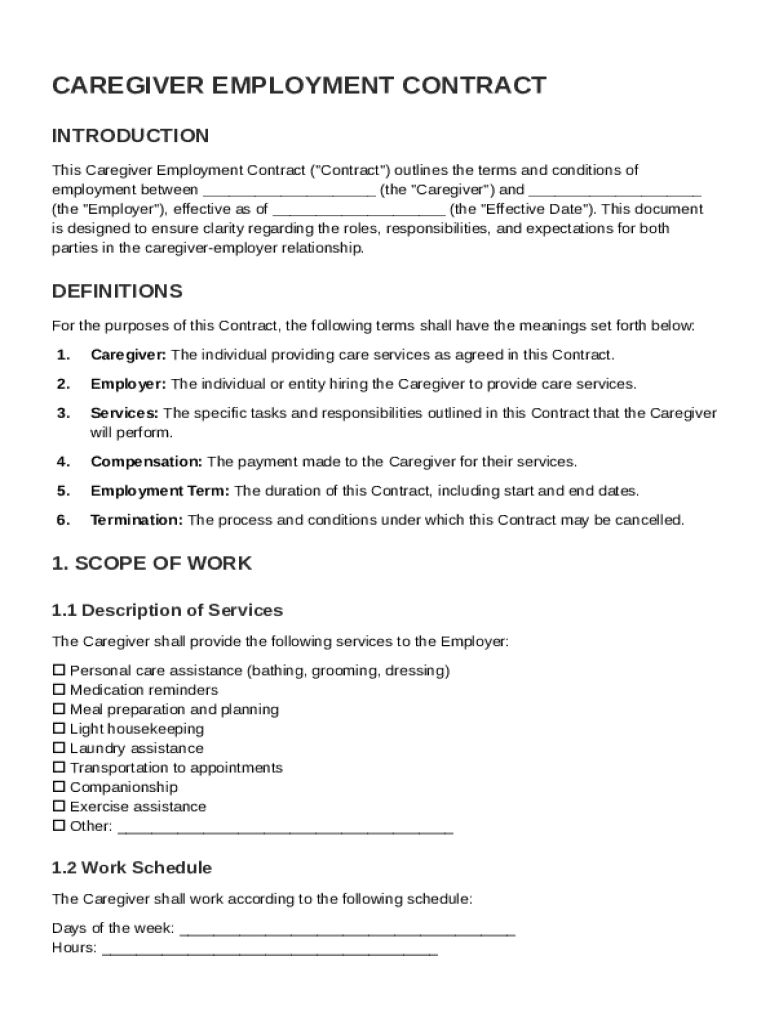
A Caregiver Employment Contract Template is a structured legal document that outlines the employment relationship between a caregiver and an employer. This document serves to clarify the terms of employment, specifying aspects such as job responsibilities, compensation, work hours, and duration of employment. The aim is to establish a clear understanding between both parties to prevent misunderstandings and to provide a framework for resolving potential disputes. In legal contexts, this contract may also cover confidentiality obligations, termination conditions, and any governing laws applicable to the agreement.
Key Elements of the Caregiver Employment Contract Template
Several critical components must be included in a Caregiver Employment Contract Template to ensure it is comprehensive and effective:
-
Scope of Work: Detailed description of caregiver duties, including specific caregiving responsibilities, daily tasks, and any additional services expected.
-
Compensation: Clearly documented wage or salary arrangement, including hourly rates, overtime pay, and payment schedule.
-
Employment Duration: Specification of start and end dates, or indication of an ongoing employment relationship without a fixed end date.
-
Responsibilities of Both Parties: Outline of expectations for employer and caregiver, such as providing necessary resources for caregiving and adhering to agreed schedules.
-
Confidentiality Obligations: Details on maintaining the privacy of sensitive information related to the care recipient.
-
Termination Conditions: Circumstances under which the agreement can be terminated by either party, and the notice period required.
-
Dispute Resolution: Procedures for resolving disagreements that may arise during the employment.
Steps to Complete the Caregiver Employment Contract Template
-
Review the Template: Familiarize yourself with the structure and contents of the template. This ensures you understand each section’s purpose and requirements for completion.
-
Fill in Basic Information: Start with basic details such as the names of the caregiver and employer, contact information, and employment start date.
-
Define Job and Compensation: Specify the caregiver’s job duties and compensation package, ensuring all parties agree on these terms.
-
Establish Employment Conditions: Fill in sections related to working hours, days off, benefits, and any other employment conditions.
-
Outline Legal Provisions: Include sections on confidentiality, termination, and dispute resolution, which should align with applicable state laws.
-
Seek Legal Advice: Consider consulting a legal professional to review the contract to ensure it complies with relevant regulations and adequately protects all parties involved.
-
Sign the Agreement: Once all information is accurately filled out and agreed upon, both parties should sign the contract to make it legally binding.
Legal Use of the Caregiver Employment Contract Template
In the United States, the Caregiver Employment Contract Template is used to formalize employment, offering legal protection to both the employer and caregiver. Legally binding when signed, it holds both parties accountable to their obligations. This contract helps in mitigating risks associated with verbal agreements, which may lack specificity and legal standing. Compliance with federal and state labor laws, such as minimum wage, overtime pay, and non-discrimination statutes, is critical when drafting and signing this document.
State-Specific Rules for the Caregiver Employment Contract Template
While a general template provides a foundational framework, it is essential to tailor the Caregiver Employment Contract to comply with state-specific regulations:
-
Employment Laws: Each state may have distinct requirements concerning minimum wage, working hours, and mandatory breaks.
-
At-Will Employment: Some states follow at-will employment doctrines, affecting termination clauses in the contract.
-
Worker Classification: Rules for classifying workers as employees versus independent contractors can differ significantly by state.
Employers should seek legal counsel familiar with local laws to ensure the contract adheres to regional standards.
Examples of Using the Caregiver Employment Contract Template
Real-world scenarios demonstrate the versatility and necessity of the Caregiver Employment Contract Template:
-
Family Caregivers: A family hiring a live-in caregiver for an elderly relative can utilize the template to outline expectations, ensuring clear communication and understanding.
-
Professional Agencies: Caregiver placement agencies can use the template to formalize job placements with clients, detailing agency and caregiver responsibilities.
-
Temporary Assignments: For short-term caregiving roles, such as post-surgical recovery, the template helps define the terms of limited-duration employment.
These examples illustrate the widespread applicability of the contract in both personal and professional caregiving situations.
Who Typically Uses the Caregiver Employment Contract Template
This template is broadly used by various individuals and organizations involved in caregiving services:
-
Private Employers: Individuals or households hiring caregivers for personal needs.
-
Home Care Agencies: Businesses providing professional caregiving services to clients.
-
Legal Guardians: Individuals responsible for the welfare of seniors, children, or disabled persons who require professional care assistance.
The template offers a standardized approach to establishing employment terms, fostering transparency and legal compliance.


Software Compatibility
When working with the Caregiver Employment Contract Template, compatibility with document management tools is crucial. Platforms like DocHub facilitate the efficient creation and electronic signing of contracts. Supported file formats include PDF, DOC, and TXT, ensuring the template is accessible for editing and sharing. These platforms also provide security features such as 256-bit SSL encryption, crucial for protecting sensitive data within employment contracts. The ability to import and export documents directly from cloud storage services like Google Drive enhances workflow efficiency and convenience for all users involved.