






Definition and Meaning of the Audit Contract Template
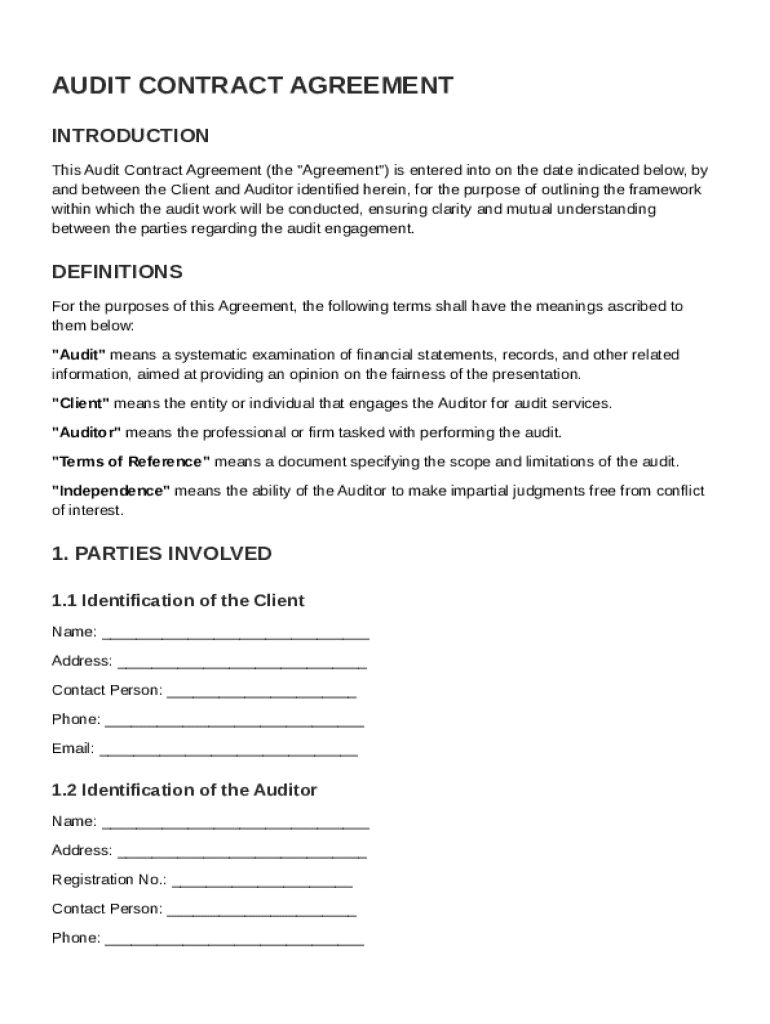
The Audit Contract Template is a standardized document used to outline the terms and conditions between a client and an auditor for audit engagements. This template provides a framework for defining the scope, objectives, and responsibilities associated with an audit. It sets out the deliverables and fees, stipulates confidentiality obligations, and addresses dispute resolution processes. This ensures that all parties have a clear and mutual understanding of the audit work to be conducted.
Key Elements of the Audit Contract Template
Scope and Objectives
- Audit Purpose: Define why the audit is needed and what it is intended to achieve.
- Audit Area: Specify the particular areas or departments that the audit will cover.
- Timeline: Establish the timeframe for completing the audit.
Terms and Responsibilities
- Client Responsibilities: Outline the materials and information the client must provide.
- Auditor Duties: Detail the tasks the auditor is expected to perform.
- Communication Protocols: Specify how parties will communicate throughout the process.
Legal and Confidentiality Clauses
- Confidentiality Terms: Ensure both auditor and client agree to keep sensitive information private.
- Liability Limits: Clarify the extent of liability for each party in the event of a breach.
Steps to Complete the Audit Contract Template
- Gather Preliminary Information: Collect all necessary details about both parties, including contact information and business details.
- Define Audit Scope: Specify the areas to be audited, objectives, and any limitations.
- Set Terms and Conditions: Clearly outline the deliverables, fees, and responsibilities of each party.
- Include Legal Clauses: Incorporate clauses related to confidentiality, liability, and dispute resolution.
- Review and Revise: Ensure all sections are completed accurately, revising where necessary.
- Sign and Date: Both parties should review the final document, sign, and date it to formalize the agreement.
Important Terms Related to the Audit Contract Template
- Engagement Letter: A document that confirms the agreement of the audit terms before the initiation of services.
- Standard Procedures: Established methods that the auditor will apply while conducting the audit.
- Materiality Threshold: A financial metric that dictates the significance of discrepancies in the audit findings.
Legal Use of the Audit Contract Template
Compliance with Regulations
- Understand the legal requirements for audit contracts under U.S. law, ensuring adherence to standards set by entities like the Financial Accounting Standards Board (FASB).
- Incorporate clauses that comply with federal laws governing business audits.
Electronic Signatures
- Use platforms like DocHub, which provide legally binding electronic signature functionality under the ESIGN Act, facilitating secure and efficient signing processes.
Who Typically Uses the Audit Contract Template
- Small to Medium Enterprises (SMEs): Often require audits for financial accuracy and stakeholder assurance.
- Publicly Traded Companies: Must undergo periodic audits to comply with Securities and Exchange Commission (SEC) requirements.
- Non-Profit Organizations: Engage in audits to maintain transparency and adhere to state or federal guidelines.


Examples of Using the Audit Contract Template
- Case Study 1: A Retail Company: A mid-sized retail chain uses an audit contract to establish clear expectations with an external auditor, ensuring that inventory and financial practices are scrutinized.
- Case Study 2: A Technology Firm: A tech startup uses a template to agree on the scope of an audit focusing on intellectual property and software licensing compliance.
State-Specific Rules for the Audit Contract Template
Each U.S. state may have specific regulations affecting the terms and execution of audit contracts:
- California: May require additional clauses reflecting state-specific privacy laws.
- New York: Might demand adherence to New York's regulatory stipulations regarding auditor qualifications and licensing.
Software Compatibility and Integration
Platforms like DocHub facilitate the use of digital audit contracts through integrations with Google Workspace, allowing seamless import and export of documents. Compatibility with various file formats, such as PDF, DOC, and XLS, is crucial for maintaining comprehensive documentation in auditing processes.