
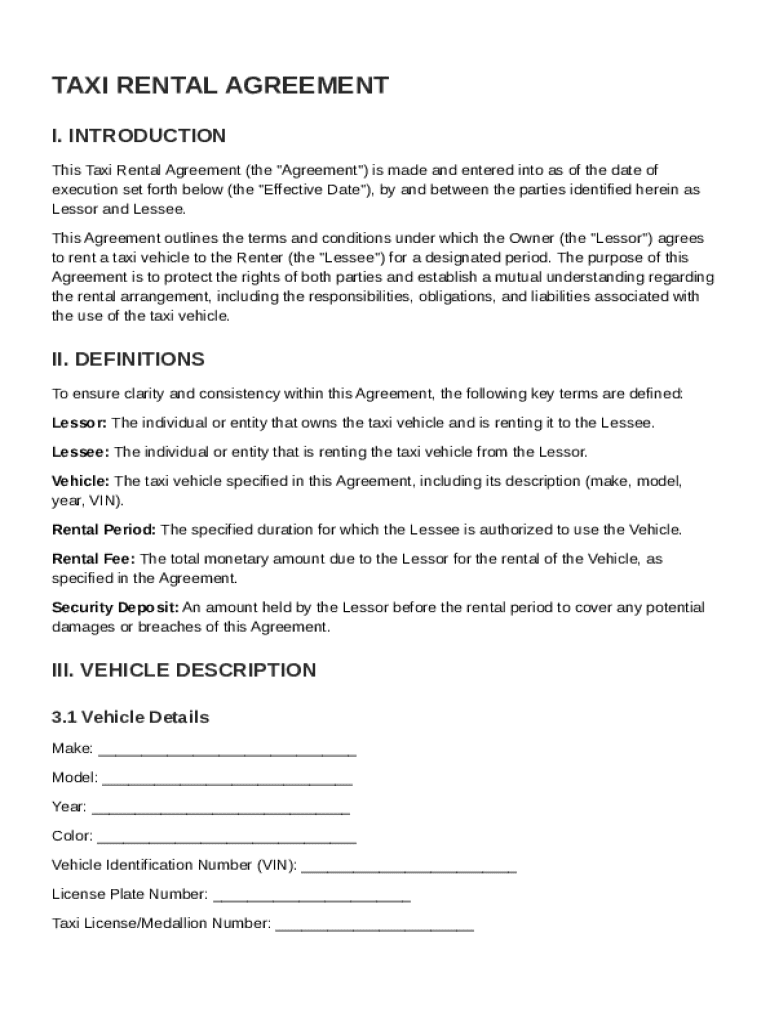







Definition of a Taxi Rental Agreement Template
A Taxi Rental Agreement Template is a structured document that delineates the legal terms and conditions for renting a taxi vehicle from a lessor (owner) to a lessee (driver). This template is utilized to formalize the relationship between the lessor and lessee, ensuring both parties are clear about their responsibilities, rights, and obligations throughout the rental period. The agreement is critical in minimizing potential disputes and protecting the interests of both parties by clearly outlining expectations regarding vehicle use, maintenance, fees, and termination conditions.
This template incorporates essential components such as the definitions of key terminologies, detailed vehicle descriptions including make, model, and identification numbers, rental period specifics, and associated fees. It may also include insurance obligations, liability and indemnification clauses, and the governing law applicable to the agreement. By using this template, both parties can ensure they are working within a framework that is legal and mutually beneficial.
Key Elements of the Taxi Rental Agreement Template
1. Detailed Vehicle Information
The template requires comprehensive information about the taxi vehicle to be rented. This includes the vehicle’s make, model, year, color, Vehicle Identification Number (VIN), and license plate number. Providing accurate vehicle details is crucial for identifying the specific taxi being rented and can serve as a reference in case of any disputes or legal issues.
2. Rental Period and Fees
A critical component of the agreement is the specification of the rental period and the fees associated with the rental. The rental period can be daily, weekly, or monthly, depending on the agreement between the parties. The fee structure must be detailed, including the base rental fee, any additional charges for mile overages, maintenance responsibilities, or late return penalties. Clear articulation of these financial terms helps prevent misunderstandings and ensures that both parties are aware of their financial obligations.
3. Insurance Requirements
The agreement stipulates the insurance coverage necessary for the operation of the taxi. It typically requires the lessee to maintain comprehensive coverage that includes liability, collision, and personal injury protection. The lessor might require proof of such insurance prior to the commencement of the rental period. Addressing insurance requirements within the template is essential, as it protects both parties from potential financial liability in the event of an accident or damage to the vehicle.
Steps to Complete the Taxi Rental Agreement Template
1. Review and Understand the Template
Begin by thoroughly reviewing each section of the template to ensure you understand its provisions. Each clause is vital for legal and operational clarity, so get clarification on any terms that may be unfamiliar or complex.
2. Fill in the Required Information
Populate the template with the necessary details such as vehicle information, lessee and lessor identification (name, contact information, and addresses), rental period, and fee structure. Ensure that details are accurate and cross-verified with official records or documents.
3. Sign and Witness the Agreement
Once all required information is filled in, both parties should carefully read the final document before signing. If possible, have the document witnessed by an impartial third party to further validate the agreement’s enforceability.
Legal Use of the Taxi Rental Agreement Template
The taxi rental agreement template serves as a legal document, binding the parties to the terms agreed upon. It's essential to ensure that the template complies with state and federal laws governing vehicle rentals and leases. Legal considerations also include compliance with transportation regulations, commercial licensing requirements, and any city-specific rules for operating a taxi service.
When drafting or completing this form, consulting with a legal professional is advisable, particularly if the rental arrangement involves unique terms or substantial financial commitments. This ensures that the agreement not only meets all legal requirements but also adequately protects the interests of both parties involved.
State-Specific Rules for Taxi Rental Agreements
Rental agreements can be subject to variations based on state-specific laws and regulations. For example, states might differ in how they handle vehicle insurance requirements or the specifics regarding liability. The agreement template should be reviewed to ensure that its terms align with the legal standards of the specific state where the taxi rental will take place. This may affect clauses related to safety standards, driver qualifications, and insurance levels.
Important Terms Related to the Taxi Rental Agreement Template
Understanding certain terminology used in the rental agreement can enhance clarity for both parties:
- Lessor: The owner of the taxi who rents it out to another party.
- Lessee: The individual or entity renting the taxi from the lessor.
- Indemnification: A clause to compensate for any losses incurred due to specific actions or events.
- Liability: Legal responsibility for any damage or loss.
- Termination Clause: Provisions for how and when the rental agreement can be ended by either party.
Why Use a Taxi Rental Agreement Template
Using a standardized template for taxi rental agreements ensures that both lessors and lessees operate with clear expectations. This template can significantly reduce the likelihood of misunderstandings or disputes by ensuring all necessary topics are addressed in a structured manner. The clarity offered by such agreements fosters a professional relationship and serves as a formal record of the agreed terms and conditions. Furthermore, relying on a template saves time and resources by providing a vetted baseline that can be adapted to specific needs.
Examples of Using the Taxi Rental Agreement Template
Consider a taxi fleet owner, based in California, who leases out vehicles to multiple drivers. This owner can use the template to outline specific rental terms for each driver, ensuring uniformity across agreements while allowing room for customization when necessary. Similarly, an independent driver looking to operate a taxi temporarily in New York can use the template to avoid the complexities of drafting an agreement from scratch, ensuring compliance with New York's regulations.
Adapting the template to address specific scenarios or business models—such as hybrid operational models where drivers share vehicles or alternate shifts—demonstrates the template’s flexibility and practicality in diverse situations.




