






Definition & Meaning
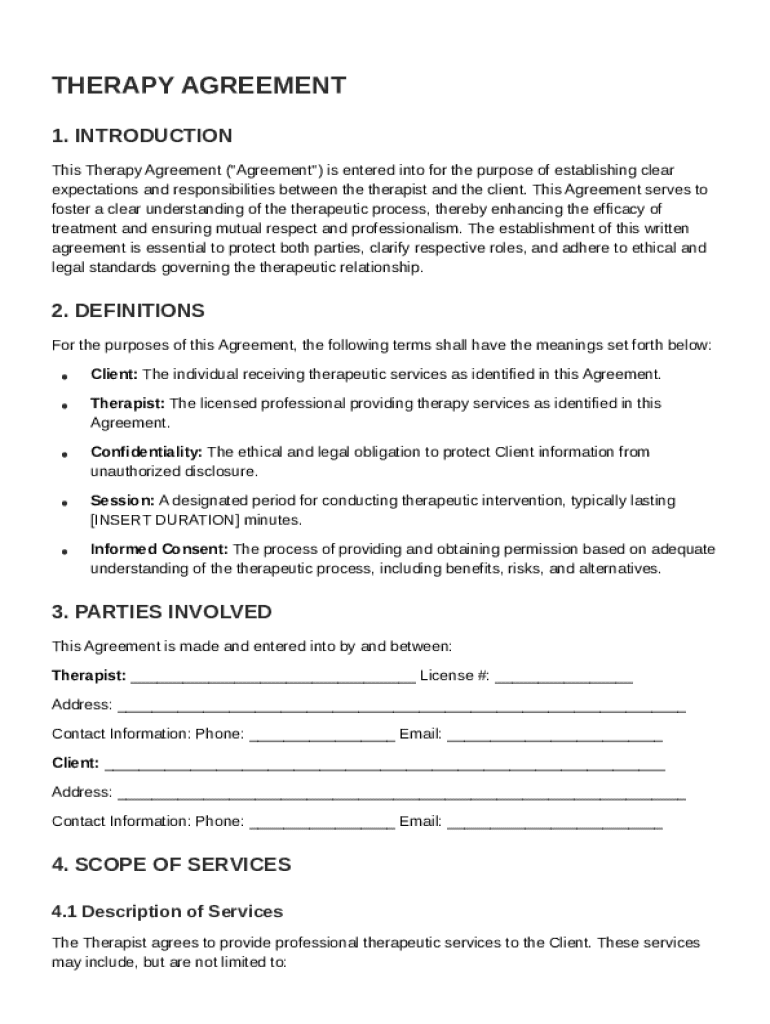
A Therapy Agreement Template is a structured document that formalizes the professional relationship between a therapist and their client. This template is designed to outline important aspects of therapy, such as the expectations and responsibilities of both parties, emphasizing key elements like confidentiality, professional conduct, and mutual respect. It also details the scope of services, pricing, payment terms, and provides guidelines on how sessions will be scheduled or terminated. By setting clear terms, this agreement enhances understanding and trust, creating a foundation for a successful therapeutic relationship.
Key Elements of the Therapy Agreement Template
The Therapy Agreement Template is composed of several essential components that guide the therapist-client relationship:
-
Confidentiality Clause: This section ensures that all client information shared during therapy sessions is kept private, in compliance with HIPAA and other relevant privacy regulations.
-
Scope of Services: Specifies the types of therapy or counseling services offered, and any limitations associated with them.
-
Payment Terms: Outlines fee structures, payment methods, billing cycles, and any applicable penalties for late payment.
-
Attendance and Cancellation Policies: Details the client’s responsibility to attend scheduled appointments and the procedure for cancelling or rescheduling sessions.
-
Termination Conditions: Defines the circumstances under which therapy services may be ended by either party and the procedures to follow.
These elements are crucial for setting clear expectations and protecting the interests of both the therapist and the client.
Why Should You Use the Therapy Agreement Template
Using a Therapy Agreement Template offers multiple benefits for both therapists and clients. For therapists, it ensures that the legal and ethical standards are maintained, providing a structured framework that can minimize misunderstandings and disputes. It also protects therapists from potential liabilities by clearly outlining the terms of service. Clients, on the other hand, gain a clearer understanding of what they can expect from their therapy experience, their rights, and responsibilities, thereby empowering them in their therapeutic journey.
Steps to Complete the Therapy Agreement Template
Completing a Therapy Agreement Template involves several carefully planned steps:
-
Review the Template: Thoroughly read through each section of the template to ensure you understand all the terms and conditions outlined.
-
Customize the Agreement: Fill in specific details such as the type of therapy provided, session schedules, fees, and any customized terms agreed upon by both parties.
-
Discuss with the Client: Go over the completed template with the client to clarify any questions and ensure mutual understanding.
-
Sign the Agreement: Both the therapist and the client must sign and date the document to confirm their agreement to the terms.
-
Retain Copies: Both parties should keep a signed copy for their records.
Following these steps ensures that the agreement is comprehensive and mutually agreed upon, thereby fostering a clear and trusting therapeutic relationship.
Important Terms Related to Therapy Agreement Template
Several critical terms are often included in a therapy agreement to ensure clarity and understanding:
-
Informed Consent: Clients agree to the therapy process with full awareness of associated risks and benefits.
-
HIPAA Compliance: Adherence to regulations protecting the privacy and security of client health information.
-
Dual Relationship: A situation where multiple roles exist between a therapist and client, typically discouraged to maintain professional boundaries.
-
Indemnification Clause: A statement protecting one party from liability due to the actions or decisions of another.
Understanding these terms can prevent confusion and legal complications, ensuring a smooth therapeutic process.
Legal Use of the Therapy Agreement Template
The Therapy Agreement Template must align with legal standards to ensure its enforceability. This includes compliance with federal laws such as the Health Insurance Portability and Accountability Act (HIPAA) and any relevant state-specific regulations. Lawyers or legal consultants often review these agreements to verify that they meet all necessary legal requirements and protect the interests of both the therapist and the client. Proper legal use helps mitigate potential disputes and reinforces the professional integrity of therapy practices.
State-Specific Rules for the Therapy Agreement Template
Each U.S. state may have specific legal requirements or standards relevant to the practice of therapy, which can affect the content of a Therapy Agreement Template:
-
Licensing Requirements: Varying prerequisites for therapist credentials across different states.
-
Insurance Regulations: State-specific policies on billing through health insurance providers.
-
Record Keeping: Mandated retention periods for client records may differ by state.
Therapists must be knowledgeable about these variances to draft legally compliant agreements tailored to their specific practice location.
Examples of Using the Therapy Agreement Template
The Therapy Agreement Template is applicable in various scenarios, enabling customization to fit specific needs:
-
Individual Therapy: Can be adapted to cover personal therapy sessions focused on mental health issues such as anxiety or depression.
-
Family Counseling: Adjusted to incorporate sections relevant to group dynamics and family therapy objectives.
-
Teletherapy Services: Includes clauses specific to online therapy sessions, like digital security and technology requirements.
These examples underscore the template’s flexibility and utility in different therapeutic contexts, making it an essential tool for any therapy practice.