






Understanding the Tenancy Extension Agreement Template
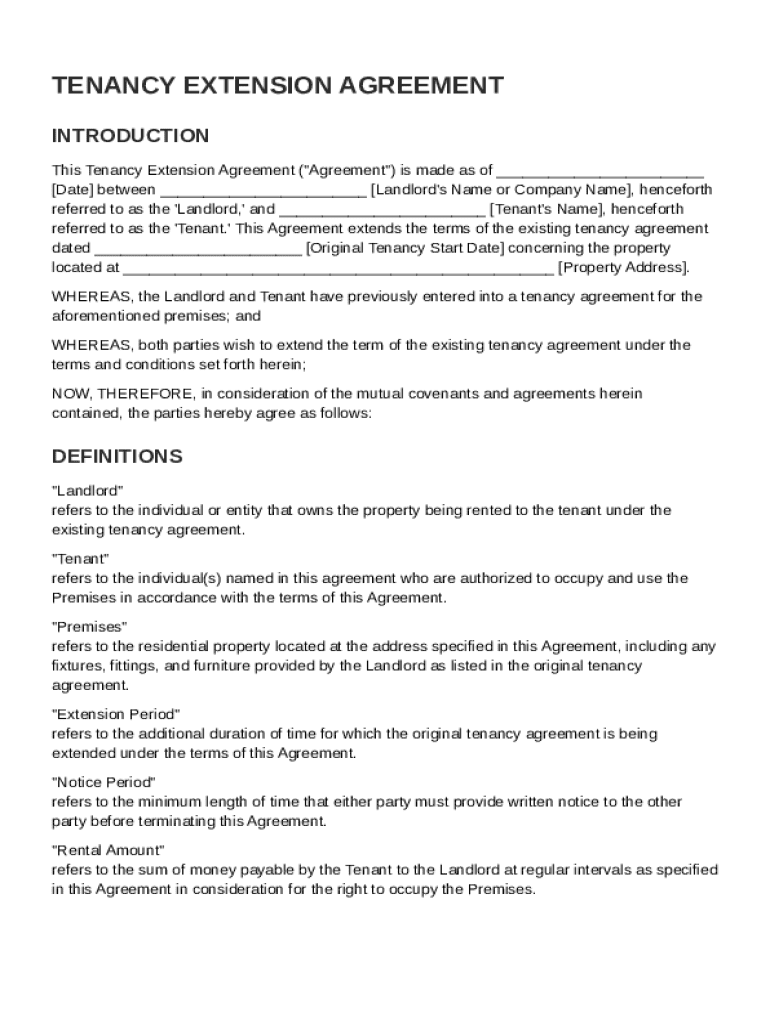
A Tenancy Extension Agreement Template is a formal document used to extend the period of an existing rental agreement between a landlord and a tenant. It ensures continuity of tenancy by formalizing the extension under mutually agreed terms without requiring a completely new lease. This section explores the fundamental aspects of a tenancy extension agreement, explaining its importance and how it functions within a legal context.
Key Elements of the Template
The Tenancy Extension Agreement Template typically includes several critical components that are essential for legal clarity and transparency:
- Effective Date: This specifies the beginning of the extended tenancy period.
- Rental Amount and Payment Terms: Outlines any changes or continuations of the previously agreed rental payments and schedules.
- Security Deposit Details: Clarifies any adjustments to the security deposit, if applicable.
- Maintenance Responsibilities: Specifies the responsibilities of both the landlord and tenant regarding property maintenance.
- Termination Rights: Features clauses on conditions under which either party can terminate the agreement, ensuring it aligns with local tenancy laws.
Steps to Complete the Tenancy Extension Agreement Template
To complete a Tenancy Extension Agreement Template, follow these steps:
- Review the original tenancy agreement to understand existing terms and what needs adjusting.
- Collect important details from all parties, such as names, addresses, and contact information.
- Customize the template by filling in specific details like the new lease period, changes to rental conditions, and updated contact information.
- Ensure all legal terms are compliant with state or local laws.
- Review the completed document thoroughly for accuracy and ensure all parties fully understand the changes.
- Obtain signatures from both landlord and tenant, confirming agreement to the new terms.
Importance of Using a Tenancy Extension Agreement Template
Using a Tenancy Extension Agreement Template provides several advantages:
- Legality and Enforceability: It ensures the extension is legally binding, offering protection to both parties.
- Clarity and Transparency: By documenting the agreement, misunderstandings over terms or conditions can be minimized.
- Efficiency: Extending a lease with a template is often quicker than negotiating a completely new lease.
Why You Should Use This Template
The Tenancy Extension Agreement Template is ideal for situations where both the landlord and tenant are satisfied with the current arrangement and simply wish to extend the tenancy. Instead of negotiating a new lease, the extension agreement formalizes the continued occupancy under similar terms. This is particularly advantageous when the existing lease terms suit both parties well, rendering significant alterations unnecessary.
Legal Use of the Tenancy Extension Agreement Template
In the United States, the legal use of a Tenancy Extension Agreement Template is tied to its alignment with the applicable tenancy laws within a specific state or jurisdiction. This means:
- Compliance with State Law: The agreement must adhere to state-specific rental laws to be enforceable in court.
- Amendment to Original Lease: This document serves as an addendum, ensuring any new terms are clear, legally compliant, and do not conflict with existing clauses.
- Validation through Signatures: For the extension to hold legal weight, both parties must sign the agreement, indicating their consent.
Who Typically Uses the Tenancy Extension Agreement Template
This template is primarily used by:
- Landlords: Property owners or managers prolonging a tenant's stay without creating a new lease.
- Tenants: Individuals or businesses wishing to continue renting the same property beyond the original lease term.


Cooperation Between Parties
Effective use of this template requires cooperation between landlords and tenants. Both parties must agree on the new terms and conditions for the extension to prevent disputes and ensure smoother tenancy continuity.
State-Specific Rules for Tenancy Extension Agreements
Each state in the U.S. may have unique regulations regarding tenancy agreements, which can impact the composition and legal enforceability of an extension agreement:
- Varying Maximum Lease Periods: Some states might have restrictions on how long a tenancy can be extended before needing a new lease.
- Rent Control and Caps: Jurisdictions with rent control laws could influence how much the rent can be increased upon extension.
- Required Notices: Laws surrounding how much notice is required before the tenant or landlord can opt not to renew the lease can vary.
Adapting to State Regulations
To ensure compliance, it may be necessary to adapt the Tenancy Extension Agreement Template according to state-specific clauses. Consulting legal resources or professionals familiar with the rental laws of the specific state can be beneficial.
Important Terms Related to Tenancy Extension Agreements
Understanding certain terminology is crucial when dealing with Tenancy Extension Agreements:
- Lease Amendment: Referring to changes in the terms of an existing lease.
- Holdover Tenant: A tenant who remains in rental property after the lease term has expired, without formal extension.
- Covenant: A legally binding promise within the lease or extension agreement, such as maintenance obligations.
Examples of Using the Tenancy Extension Agreement Template
Consider a scenario where a tenant's lease is approaching expiry, but they wish to remain in the property for an additional year. The landlord is amenable to this and uses the Tenancy Extension Agreement Template to formalize the continuation of tenancy. This use case highlights how straightforward the process can be when both parties are in agreement.
Scenarios and Edge Cases
- No Rental Amount Change: Instances where the only change is the lease term, resulting in a very straightforward extension process.
- Negotiation of New Conditions: Situations requiring the introduction of new terms, such as repair responsibilities or adjusted notice periods.
Compatibility and Flexibility in Document Management
Using tools like DocHub when dealing with tenancy agreements ensures:
- Compatibility Across Devices: Templates can be processed on desktop and mobile platforms seamlessly.
- Flexible Editing Options: Modify templates by adding or removing elements to suit specific needs.
- Security through Data Protection: Secure document handling with SSL encryption.
Conclusion: By understanding and utilizing the Tenancy Extension Agreement Template, landlords and tenants can efficiently extend rental arrangements while maintaining clarity and legal protection.