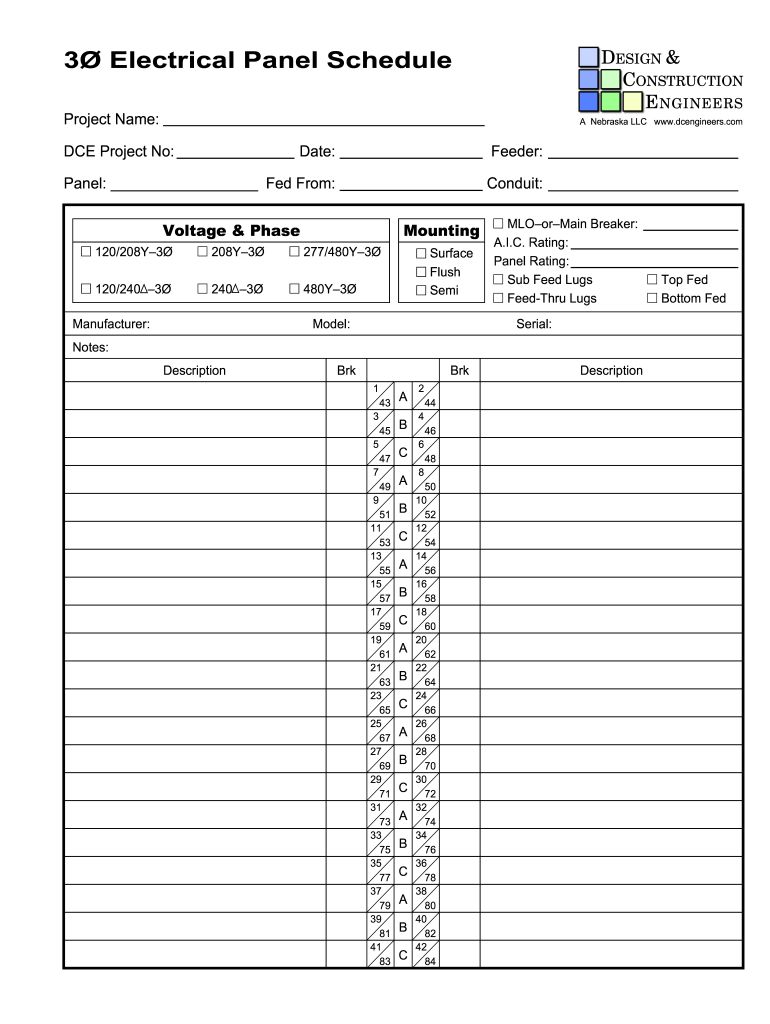







Definition and Purpose of a Panel Schedule Template
A panel schedule template serves as a structured framework for organizing and displaying the electrical panel setup in residential, commercial, or industrial buildings. It outlines critical information regarding the distribution of electrical circuits, ensuring all components of the electrical system are clear and easily accessible. A well-designed electrical panel schedule template typically includes the following elements:
- Project Information: Name of the project, location, and relevant date.
- Panel Ratings: Specifications for voltage, amperage, and phase type (single or three-phase).
- Manufacturer Details: Brand and model of the electrical panel to ensure compatibility and compliance with regulations.
- Circuit Breaker List: Descriptions of circuits, including the number of circuits, their ratings, and whether they are top-fed or bottom-fed setups.
Utilizing this template assists in maintaining safety protocols, compliance with codes, and enabling quick reference for troubleshooting and maintenance by electricians and building managers.
How to Use the Panel Schedule Template Effectively
Effectiveness in utilizing a panel schedule template hinges on the correct filling and maintenance of information. Here’s a step-by-step guide:
- Gather Necessary Information: Before starting, compile all relevant information such as load calculations, circuit descriptions, and equipment specifications.
- Fill in General Project Details: Input your project name, date, and panel type. Ensure these details are accurate for future references.
- Document Circuit Information:
- List each circuit individually.
- Specify the amperage ratings and types of circuit breakers.
- Include descriptions such as lights, outlets, or specialized equipment served by each circuit.
- Review for Compliance: Verify that the filled schedule complies with local electrical codes and standards, particularly regarding load calculations and circuit capacity.
- Keep Updated: Regularly update the schedule following any changes made to the electrical system, including adding or modifying circuits.
By following these steps, you ensure not only the reliability of the electrical setup but also promote safety and compliance.
Steps for Completing a Panel Schedule Template
Completing a panel schedule template involves a systematic approach to capturing all necessary details. Each stage is critical for ensuring a clear and functional document:
- Select a Suitable Template: Choose a free printable electrical panel schedule that best fits your needs, whether blank or pre-filled.
- Identify the Panel Location: Clearly mark where the panel is located within the building layout.
- Input Number of Circuits: Dedicate rows for each circuit, ensuring you leave space for additional details.
- Enter Load Information:
- For each circuit, specify the designed load in amperes.
- Detail the usage, such as lighting circuits, HVAC systems, and heavy machinery.
- Format for Clarity: Use clear headings and columns to separate circuit numbers, descriptions, and ratings, making it easy for a technician to read.
- Double-Check for Errors: Review your schedule thoroughly for any inconsistencies or errors in entries.
Taking the time to methodically fill out your panel schedule template enhances the document’s utility for operational and maintenance tasks.
Important Terms Related to Panel Schedules
Understanding specific terms associated with panel schedules enhances clarity and precision when developing and utilizing these templates. Key terms include:
- Voltage Rating: The maximum designed voltage the electrical system can handle.
- Amperage: The unit of measurement for electric current; crucial for sizing circuit breakers appropriately.
- Phase Type: Refers to the configuration of the electrical systems; either single-phase (most common in residential applications) or three-phase (often used for industrial setups).
- Load Calculation: The process of determining the total electrical load to ensure sufficient power availability and safety compliance.
- Breaker Types: Indicates whether breakers are standard, GFCI (Ground Fault Circuit Interrupter), or AFCI (Arc Fault Circuit Interrupter), each serving different safety functions.
These terms lay the groundwork for effective communication and understanding of electrical systems and panel schedules.
Examples of Using a Panel Schedule Template
Panel schedule templates can be applied across various scenarios to meet unique needs. Here are a few examples:
- Residential Projects: Typically used in homes to provide clarity on which circuits power specific rooms or appliances, aiding homeowners and electricians in managing electrical needs.
- Commercial Installations: In businesses, templates help track multiple outlets, lighting systems, and equipment, ensuring compliance with local regulations and efficient energy management.
- Industrial Applications: Large-scale operations use detailed templates to manage complex three-phase systems, highlighting critical machinery and safety equipment.
In each of these scenarios, tailored templates help streamline operations, maintenance, and safety compliance while providing a clear overview of the electrical distribution system.
Legal Use of Panel Schedule Templates in the United States
Adhering to legal requirements when using a panel schedule template is vital for compliance and safety. In the U.S., considerations include:
- National Electrical Code (NEC): Templates must align with NEC standards, which dictate specifications for electrical installations and configurations.
- Local Building Codes: Each state or municipality may have additional codes impacting how electrical systems are managed. It is essential to be informed of these codes when completing a panel schedule.
- Insurance Requirements: Some insurance policies may stipulate that electrical installations comply with specific codes, thus affecting how panel schedules must be documented.
Ensuring legal compliance in panel schedules helps protect both residential and commercial properties from potential liabilities and enhances safety for users.
Key Elements to Include in a Panel Schedule Template
Essential components of a comprehensive panel schedule template include:
- Header Information:
- Project name
- Address
- Date of creation
- Panel Information:
- Panel type and manufacturer
- Voltage and amperage ratings
- Circuit Details:
- Unique circuit numbers
- Design load descriptions
- Breaker sizes
- Device Identification: Clearly labeled circuits assist in quick identification for maintenance purposes.
These strategic inclusions create a holistic view of the electrical system, making it easier for technicians to manage and troubleshoot.
Versions or Alternatives to the Panel Schedule Template
While common standard templates exist, there are various versions and alternatives tailored to specific needs:
- Excel-Based Templates: These templates allow for easy data entry and adjustments, with built-in formulas for load calculations.
- PDF Templates: Useful for maintaining fixed layouts and sharing without the risk of alteration.
- Custom Software Solutions: Programs compatible with electrical design software can automatically generate panel schedules based on project inputs.
Selecting the appropriate version depends on user needs for flexibility, sharing capabilities, and compliance with codes.