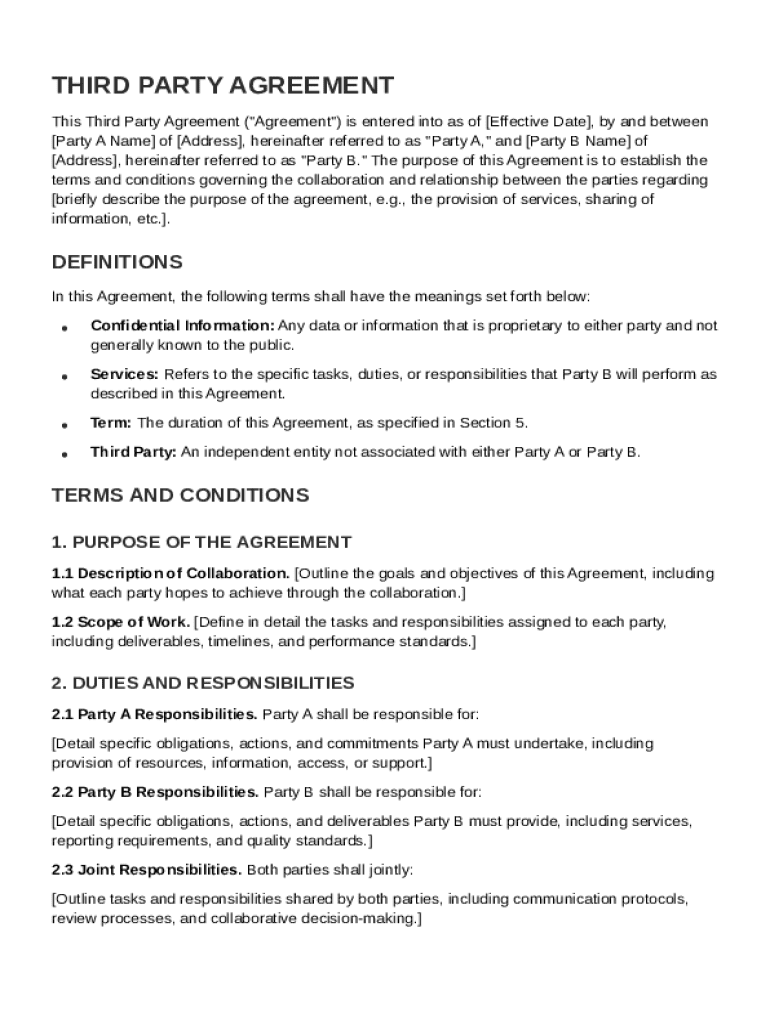







Key Elements of the Third Party Agreement Template
The Third Party Agreement Template serves as a crucial document for any collaboration between parties who are looking to establish clear guidelines and responsibilities. The core elements include:
- Definitions of Key Terms: Clearly outlining terms like "Confidential Information" ensures that all parties have a mutual understanding of the agreement’s language.
- Responsibilities of Each Party: Dictating the duties and obligations for each party involved, this section helps prevent future disputes by setting clear expectations.
- Compensation Details: Understanding payment structures or financial arrangements is essential for any agreement to ensure fair transactions between parties.
- Confidentiality Obligations: Protecting proprietary or sensitive information is a priority, and this clause details how each party must handle such data.
- Indemnification Clauses: These clauses define the extent to which each party will be responsible for any breaches or misdeeds, offering a layer of security against potential liabilities.
Examining these areas in-depth helps parties navigate their relationships more effectively by minimizing misunderstandings and protecting each party’s interests.
Legal Use of the Third Party Agreement Template
When utilized correctly, the Third Party Agreement Template adheres to legal standards, ensuring the arrangement is binding and enforceable. Key considerations include:
- Adherence to the ESIGN Act: With electronic signatures becoming standard, aligning with the ESIGN Act confirms signatures are legally admissible in court.
- Compliance with State Laws: Review and adapt the agreement to comply with specific state laws, especially since some jurisdictions might have unique requirements.
- Enforceability of Terms: Parties must ensure the terms agreed upon are not only clear but also enforceable under the U.S. legal framework to prevent potential nullification.
Understanding these legal aspects is crucial to create an agreement that not only safeguards interests but also stands up to legal scrutiny.
How to Use the Third Party Agreement Template
Making the best use of this template involves several practical steps to tailor it to specific situations:
- Customize Specific Sections: Modify definitions, responsibilities, and compensation details according to the exact needs of the parties involved.
- Incorporate State-Specific Provisions: Add any necessary clauses that address state-specific regulations or industry standards.
- Review by Legal Counsel: Have a legal expert go over the document to ensure accuracy, compliance, and comprehensive protection for all parties.
By following these steps, users can ensure the agreement is not only personalized but also effective and enforceable for their unique circumstances.
Steps to Complete the Third Party Agreement Template
Completing the Third Party Agreement Template requires careful attention to detail, ensuring that all elements are accurately filled out:
- Input Party Details: Include full legal names and contact information for each party.
- Outline Terms and Objectives: Clearly define the scope of work or collaboration, including specific goals and deliverables.
- Specify Duration and Termination Conditions: Provide start and end dates, as well as conditions under which the agreement may be terminated.
- Detail Financial Arrangements: Define payment schedules, methods of compensation, and any contingencies related to financial obligations.
- Include Indemnification and Confidentiality Clauses: Ensure these sections are complete to protect each party's interests.
Following a structured approach to completing the template ensures that all necessary components are thoughtfully addressed and legally sound.
Who Typically Uses the Third Party Agreement Template
Understanding who benefits most from utilizing a Third Party Agreement can enhance its application across various scenarios:
- Small to Medium Enterprises (SMEs): Engaging with vendors or partners often requires clear agreements to formalize the business relationship.
- Freelancers and Consultants: These professionals often need detailed agreements when working with larger organizations to ensure their work and compensation are well-defined.
- Corporations with Outsourced Operations: Organizations that rely on third-party services to handle different aspects of their operations need well-drafted agreements to manage risk and maintain quality control.
These use cases highlight the template’s versatility across different business contexts, ensuring mutual understanding and protection no matter the industry or size of the parties involved.


Important Terms Related to the Third Party Agreement Template
Grasping the terminology used in Third Party Agreements is essential for understanding and ensuring clarity in the document:
- Confidential Information: Refers to data or materials that are proprietary and shared between parties under strict confidentiality provisions.
- Indemnity: A contractual obligation of one party to compensate for losses incurred by another party.
- Force Majeure: A clause that frees both parties from liability or obligation when an extraordinary event or circumstance beyond their control prevents one or both from fulfilling their agreement.
These terms form the foundation of the agreement, ensuring that all parties have a common understanding of the legal and operational language used.
State-Specific Rules for the Third Party Agreement Template
Third Party Agreements can vary significantly depending on state laws and regulations. Considerations include:
- Varying Contractual Standards: Each state has particular contract laws governing enforceability and interpretation.
- Licensing and Regulation Compliance: Some states have specific guidelines that must be followed in agreements covering specific industries like finance or healthcare.
- Notarization Requirements: While not always necessary, some states require certain documents to be notarized to be legally binding.
It is imperative to understand these nuances to draft an agreement that remains effective across state lines and adheres to local legal standards.
Software Compatibility for Managing Third Party Agreement Templates
DocHub provides excellent software compatibility for managing agreements like these, offering several benefits:
- Integration with Google Workspace: Simplifies importing and exporting documents, ensuring seamless transitions between different platforms.
- Support for Multiple File Formats: Whether starting from DOC, PPT, XLS, or PDF documents, DocHub can accommodate and facilitate easy editing.
- Accessibility and Security: Users can manage documents easily from any device with strong encryption and secure authentication in place.
Such compatibility allows for efficient workflow management, reducing overhead and enhancing productivity by streamlining document handling processes.